


A borrower sits across from two mortgage professionals in the same week. Both know loan products. Both can explain the process. Both can quote competitive terms. Only one gets the callback.
It usually isn't the one with the fanciest script. It's the one who makes the client feel safe, respected, and understood within minutes.
That's why a business etiquette class matters so much in mortgage. In this industry, trust is the product before the loan closes. Clients don't just evaluate your knowledge. They evaluate your tone, your follow-up, your appearance on video, your timing, your listening, and whether you seem like the kind of person who can guide them through a high-stakes financial decision without creating friction.
Technical skill gets you licensed. Professional polish helps you win referrals, larger conversations, and better long-term relationships. If you want to become a Mortgage Loan Originator and build a high-income career with more control over your schedule, you can't treat etiquette like fluff. It's part of the job.
Beyond the Loan Rate The Untapped Power of Professional Polish
Two MLOs compete for the same affluent borrower. One jumps straight into rates, points, and timelines. The other starts with a calm greeting, asks smart questions, listens without interrupting, and explains the process in plain English. Same market. Same products. Different result.
The second professional usually feels easier to trust.
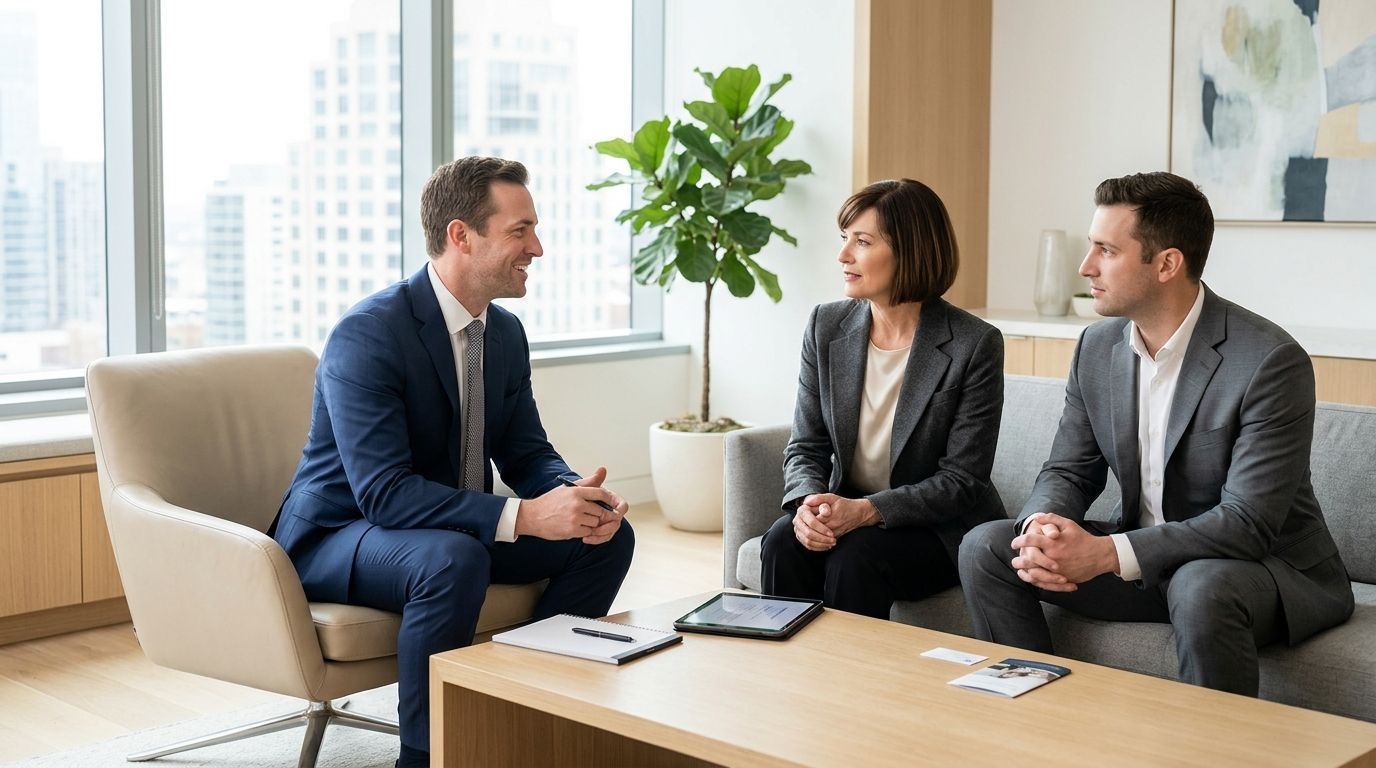
Mortgage is a relationship business. Clients remember whether you were polished when things got stressful. Referral partners remember whether you showed up prepared. Borrowers with strong incomes and complicated files notice whether you carry yourself like a professional who can handle pressure.
Polish signals competence before you prove it
Business etiquette isn't about acting stiff. It's about reducing doubt. Your greeting, your email structure, your meeting presence, and your wardrobe all send a message before you ever discuss underwriting or documentation.
If your professional image needs tightening, a practical modern office style guide can help you clean up the basics without overthinking it.
Practical rule: Clients rarely say, “I chose the other lender because your etiquette was weak.” They say things like, “I just felt better with them.”
That's the point. Professional polish changes how people feel in your presence.
This matters even more in mortgage
Most borrowers aren't relaxed when they talk to an MLO. They're anxious, rushed, and worried about making an expensive mistake. They want someone who sounds steady and acts predictably. A polished MLO lowers emotional friction.
That's why I tell new loan officers to stop separating manners from income. In mortgage, they're connected. Better etiquette leads to cleaner conversations. Cleaner conversations lead to stronger trust. Stronger trust leads to more signed applications, more referrals, and better odds of closing high-value business.
What Is a Business Etiquette Class Really About
A modern business etiquette class has almost nothing to do with memorizing old dining rules. It's training in professional credibility.
That means learning how to speak, write, present, and respond in ways that make clients and partners trust you faster. In mortgage, that's not optional. Borrowers decide quickly whether you seem reliable enough to guide them through a major financial decision.
Research used in etiquette training says people decide whether they like, trust, and find someone credible within the first seven seconds of meeting them, with 60% of that decision made almost immediately, according to the Cleveland School of Etiquette business etiquette overview. Treat that as a training principle, not a magic law. The lesson is still clear. First impressions shape outcomes.
It's a system, not a personality trait
Some people think etiquette is natural charm. Wrong. It's learned behavior.
A strong business etiquette class teaches repeatable habits that reduce avoidable mistakes in high-stakes conversations. You learn how to introduce yourself clearly, manage tone, show respect without sounding scripted, and stay composed when the client is confused or frustrated.
That matters because mortgage clients don't need perfection. They need consistency.
The three pillars that matter most
Most worthwhile etiquette training revolves around three areas:
- Professional communication: Email tone, call structure, active listening, concise explanations, and timely follow-up.
- Professional image: Dress, posture, facial expression, background setting on video, and the small details that influence credibility.
- Digital conduct: Camera use, meeting etiquette, chat behavior, scheduling, and how to communicate clearly when you're not in the same room.
Business etiquette works best when you treat it like risk control for communication, not as a charm lesson.
That's why this topic belongs in mortgage career development. A business etiquette class teaches you how to manage perception under pressure. And that's exactly what MLOs do every day.
Core Skills Taught in a Modern Etiquette Course
The best business etiquette class is practical. You should leave with behaviors you can use on your next borrower call, referral lunch, or Zoom consultation. Nothing vague. Nothing ornamental.
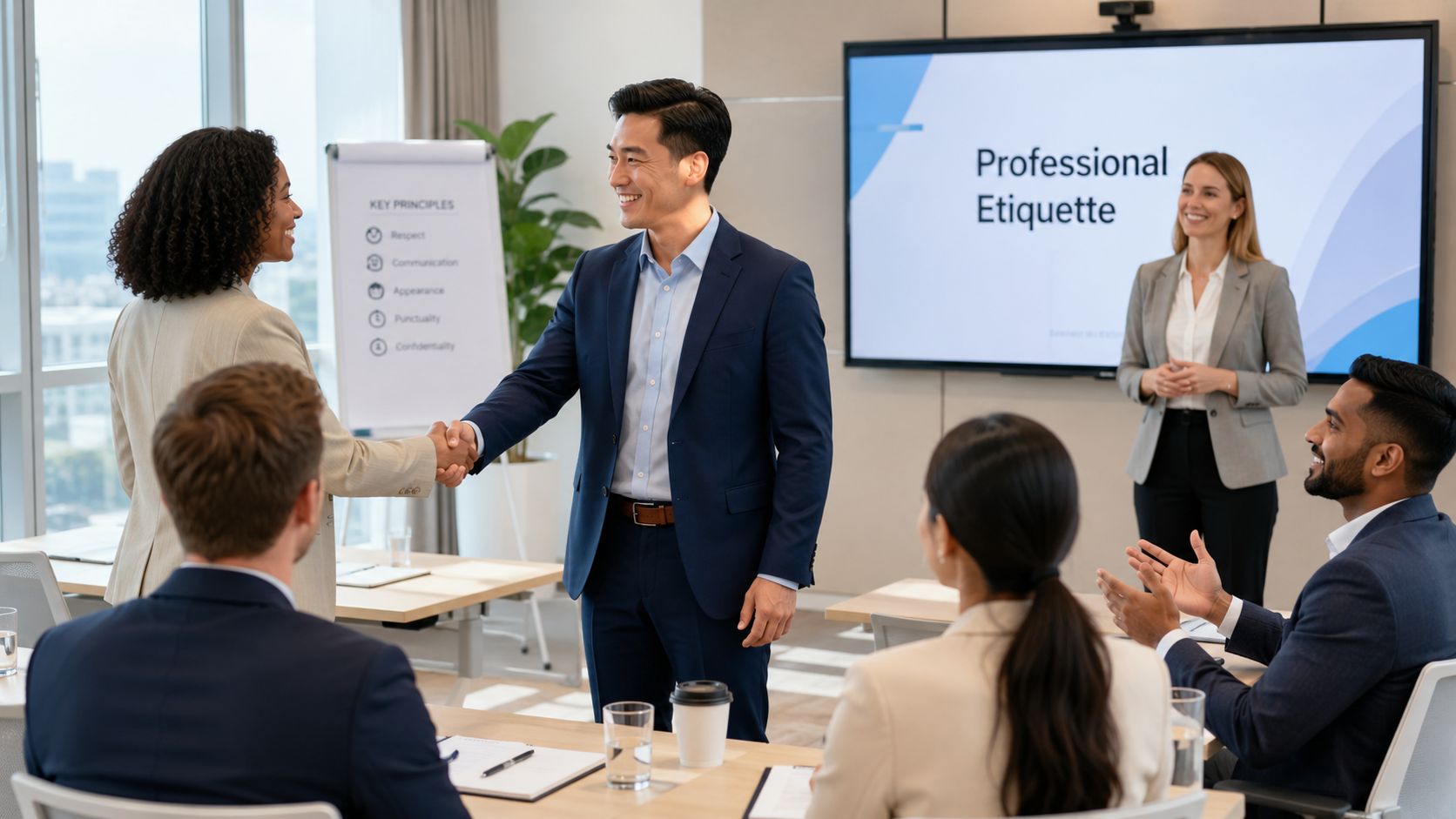
A 2023 survey of 1,548 business leaders found that 45% of companies were already offering business etiquette classes, while 18% planned to implement them by the end of 2024. Among companies already offering training, 60% required all employees to participate. The same survey found that 78% selected making polite conversation, 75% selected dressing professionally, and 69% selected writing professional emails as key skills, according to the MATC Group report on business etiquette training.
That tells you exactly where the market places value.
Communication that sounds competent
This is the center of the course. Mortgage professionals live inside conversations.
You need to know how to write emails that are clear, brief, and calm. You need to answer questions without burying clients in jargon. You need to leave voicemails that sound organized, not scattered. And you need to know when a situation calls for email, phone, text, or video.
If you want to sharpen the way you speak in higher-stakes conversations, this guide on how to develop leadership communication skills is worth reading. The best MLOs don't just explain. They lead the conversation.
Professional image that matches the role
Borrowers notice whether you look prepared. So do branch managers and referral partners.
This doesn't mean dressing like you walked out of a boardroom in 1998. It means your appearance should support your authority, not distract from it. Clothes, grooming, lighting, and posture all matter because they shape first impressions before your expertise gets a chance to speak.
Social confidence in live settings
Networking events, coffee meetings, and client lunches still matter. So does knowing how to move through them comfortably.
A business etiquette class should teach how to greet people, enter conversations without awkwardness, introduce two people smoothly, and avoid dominating the room. In mortgage, social grace creates opportunity. It helps you build referral relationships without sounding transactional.
Digital meeting presence
Many courses still fall short in this area. Your virtual etiquette has to be as strong as your in-person presence.
A sharp curriculum should cover:
- Camera discipline: Eye line, framing, background, and when camera-off choices hurt trust.
- Meeting flow: How to avoid interrupting, use chat appropriately, and keep remote clients included.
- Follow-up habits: Sending concise summaries, next steps, and document requests without confusion.
Trust-building habits that actually convert
The final layer is consistency. Great etiquette isn't one polished moment. It's the ability to stay professional through the entire borrower journey.
If you want a mortgage-specific example of that, this article on how to build rapport with mortgage clients in Allentown, PA gets at the same principle. Clients stay loyal when your behavior feels steady from first contact to closing table.
The MLO Advantage Why Etiquette Drives Mortgage Success
Mortgage professionals don't get paid for being “nice.” They get paid for earning trust fast enough to move people forward.
That's why etiquette has real economic value in this business. It improves how clients experience your competence. And in mortgage, perceived competence often determines who gets the application.

Dale Carnegie's curriculum ties etiquette to outcomes such as demonstrating professionalism, establishing rapport, communicating well, and solving customer problems, as described on its business etiquette course page. That is almost a job description for a successful MLO.
Where etiquette changes the game
An MLO uses etiquette in moments that directly affect income:
| Situation | What poor etiquette does | What strong etiquette does |
|---|---|---|
| First call with a nervous borrower | Creates tension and confusion | Builds calm and confidence |
| Difficult conversation about conditions | Sounds defensive or rushed | Preserves trust while delivering hard news |
| Referral lunch or coffee meeting | Feels salesy | Feels professional and collaborative |
| Virtual consultation | Makes you look unprepared | Signals reliability and control |
The technical side of mortgage matters. But clients can't always judge your technical depth. They can judge whether you communicate clearly, follow through, and treat them with respect.
Referral partners notice polish immediately
You don't win long-term referral relationships by asking for business too early. You win them by showing up prepared, listening well, and making the other professional look good for sending clients your way.
That's why networking etiquette matters. If you want more intentional outreach, this piece on ways mortgage brokers can network with agents fits the same playbook. Relationships grow when your professionalism is obvious from the first handshake or first Zoom.
A polished MLO doesn't just answer questions. They lower stress in every interaction.
Higher-value clients expect more
Clients with complex income, multiple properties, or larger loan scenarios aren't just comparing rates. They're comparing confidence.
They notice whether you're punctual. They notice whether your email reads cleanly. They notice whether you can explain a snag without sounding rattled. If you want higher commissions, start acting like the kind of professional high-value clients expect to work with.
That's the MLO advantage. Etiquette turns technical skill into trust. Trust turns into signed business.
A Sample Business Etiquette Syllabus for MLOs
Most business etiquette classes still lean too heavily on generic office behavior. Mortgage professionals need something sharper. They need training that reflects how they work now, especially across phone, video, text, and email.
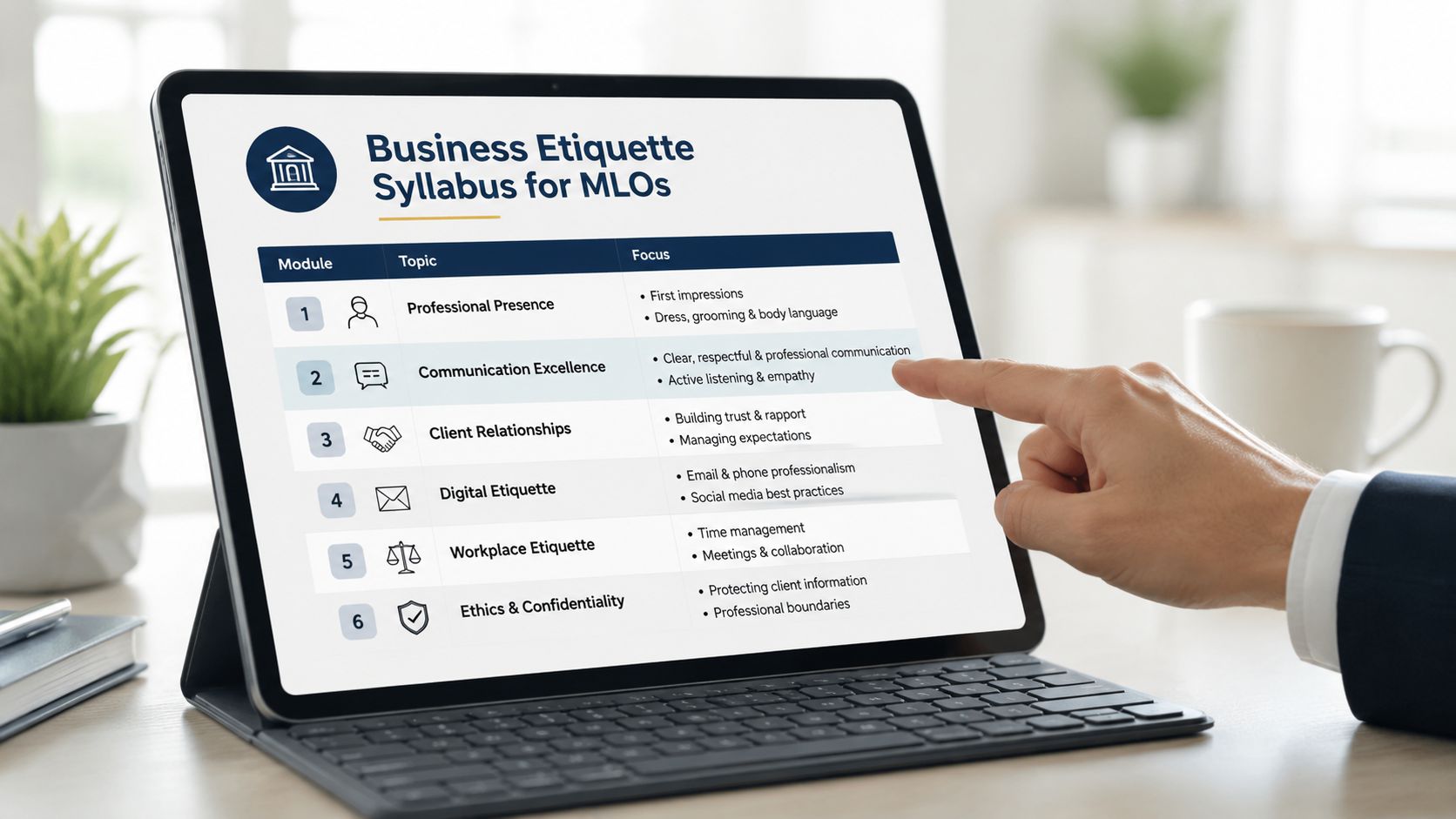
That matters because current etiquette coverage often misses digital-first behavior. The California Manners business etiquette page highlights a gap around hybrid and remote norms, including camera behavior, chat etiquette, scheduling across time zones, and virtual meeting inclusion. For MLOs, that isn't a side topic. It's daily work.
A practical syllabus that fits the job
Here's what I'd put in a business etiquette class built specifically for mortgage professionals:
First impression framework
How to greet, introduce, and position yourself with confidence in person and on video. This includes eye contact, pacing, tone, and opening questions that calm anxious borrowers.Borrower communication mastery
Writing cleaner emails, structuring update calls, explaining document needs without sounding robotic, and delivering bad news without damaging trust.Professional presence and dress
Matching your look to your market, choosing video-ready attire, and making your workspace look credible on camera. The color story of your environment is also important. Clean visual cues like #023374, #29abe3, and #e1e8ed feel polished and modern without trying too hard.Virtual meeting etiquette
Camera use, muting, turn-taking, screen sharing, chat behavior, and post-meeting recap habits.
The modules most courses leave out
The strongest curriculum also needs scenario drills. Not just theory.
- Rate shock conversations: How to stay composed when the borrower reacts emotionally.
- Referral introductions: How to thank a partner, set expectations, and move quickly without sounding pushy.
- Mixed-channel etiquette: When to text, when to call, and when an email thread is creating more confusion than clarity.
- Cross-cultural awareness: How to adapt to different expectations around formality, directness, and pace.
The goal isn't to memorize rules. The goal is to perform well when the conversation gets uncertain.
What good training should feel like
A worthwhile course should feel specific, current, and usable immediately. If the material never talks about Zoom, chat, response timing, or digital professionalism, it's outdated.
Mortgage professionals need etiquette training that fits the actual shape of the work. Borrowers are busy. Partners are busy. Many interactions happen remotely. Your etiquette has to hold up whether you're in a branch office, on a laptop at home, or meeting a client between appointments.
Your Online Path to Professional Excellence
Professional polish matters. But first you need the license.
If you're serious about becoming a Mortgage Loan Originator, don't overcomplicate the starting point. Get your education done online, get prepared for the exam, and get into the field. You can refine your client-facing skills as you grow, but you need a clean path into the industry first.
Start with the right foundation
The mortgage business rewards people who move with purpose. That includes career changers, sales professionals, recent grads, and people who want more control over their schedule. MLO work can offer strong earning potential, remote flexibility, and commission-based upside. It's a practical career for people who want income growth without waiting years to get started.
And yes, it can be straightforward when you choose the right training provider.
What to look for in an online MLO course
Choose a provider that gives you more than a basic class seat. You want approved education, clear support, and exam preparation built in.
A strong online option should include:
- NMLS-approved education: Approval matters. Don't gamble with a course that creates licensing headaches.
- Exam prep support: Pre-licensing education is only part of the job. You also need help getting ready to pass.
- A fast path: If you're motivated, you should be able to complete your education quickly and move toward the next step.
If you're comparing options, this breakdown of why to take a mortgage license class online is a useful starting point.
Professional excellence is built in layers
Your loan knowledge opens the door. Your etiquette helps you keep it open.
That combination is powerful. A licensed MLO who communicates well, dresses appropriately, handles video meetings professionally, and keeps clients calm has a real advantage. Those are the people borrowers remember. Those are the people partners refer. Those are the people who build a business instead of chasing random transactions.
And that's the opportunity here. Mortgage can give you independence, income potential, and room to grow. Professional polish helps you capture more of it.
Frequently Asked Questions About Business Etiquette
Is a business etiquette class still relevant if work is more casual now
Yes. Casual dress didn't erase professional judgment. It just made the signals more subtle.
Clients still notice whether you're prepared, responsive, respectful, and easy to work with. In mortgage, where borrowers are already stressed, polished behavior stands out even more because it makes the process feel safer.
Can you learn etiquette quickly, or does it take forever
You can learn the essentials quickly. Some professional courses condense the topic into a 2-hour format, according to the Atlanta Technical College business etiquette course listing. That makes sense because the core behaviors are practical and repeatable.
You don't need months of theory. You need direct instruction, repetition, and real scenarios.
Does etiquette really help an MLO earn more
Yes, because it improves trust. And trust drives applications, referrals, repeat business, and smoother client relationships.
Etiquette won't replace product knowledge or work ethic. It will make both more visible. That matters when clients are deciding who gets their business.
Is this mainly about dressing better
No. Dress is only one piece.
A real business etiquette class also covers email tone, phone presence, meeting behavior, digital communication, social confidence, and how to handle awkward moments without losing credibility.
What should a new MLO fix first
Start with the basics that affect every interaction:
- Email clarity: Shorter messages, cleaner structure, obvious next steps.
- Greeting style: Confident introductions, calm tone, and better listening.
- Video presence: Good lighting, professional background, camera awareness.
- Follow-up discipline: Prompt replies and clear summaries after meetings.
Those changes are simple. They also make an immediate difference.
If you're ready to launch your mortgage career, 24hourEDU makes it easy to get started. Their online NMLS-approved training is built for aspiring MLOs who want a straightforward path into the industry, and it includes a free exam prep package to help you move forward with confidence. 24hourEDU is a fully approved NMLS provider, Provider ID 1405107, and many students complete the required education in two weeks or less. If you want a practical first step toward a flexible, high-income mortgage career, this is a smart place to begin.

