


Concord's NMLS pre-licensing path requires 20 hours of NMLS-approved education plus New Hampshire-specific law instruction. With online coursework and exam prep included, a motivated student may be able to finish the course in about two weeks, though testing, background checks, and application processing can take additional time.
Maybe you're at the kitchen table after work, comparing career options and wondering whether mortgage origination is realistic without putting your life on hold. The licensing steps are manageable when you take them in order, and online study can make it easier to fit training around work or family commitments.
A Concord NMLS pre-licensing course should cover the national SAFE curriculum and the New Hampshire component that applies to new state-licensed MLOs. The course is the education step, not the license itself. You'll also need to meet New Hampshire's testing and application requirements before you can originate loans.

Why Aspiring MLOs in Concord Are Choosing This Path
Mortgage origination can appeal to people who want a client-facing career with room to build their own professional style. A career changer may bring customer-service experience, a recent graduate may be looking for a focused entry point into finance, and a parent may value having some control over where and when work gets done. A current housing professional might also explore origination as a separate career path, provided they meet the relevant licensing rules.
The work centers on helping people manage mortgage applications and loan options. That can involve explaining documentation, keeping a borrower informed, and coordinating with other professionals involved in a transaction. It takes care, clear communication, and the ability to manage a pipeline. For people who enjoy problem-solving and working with clients, those responsibilities can make the role rewarding.
A practical starting point
Licensing begins with education, but completing a course doesn't automatically authorize you to originate loans. New Hampshire requires applicants to complete approved education and pass a written test that meets state requirements before licensure. You'll then need to handle the state application and other eligibility steps.
Online study can make the education portion easier to plan around. You can set regular study blocks at home rather than commuting to a classroom, and exam preparation can help you identify topics that need another review before test day. Finishing the course in about two weeks may be feasible for a motivated learner, but it's a planning estimate, not a guarantee of when you'll be licensed.
A useful mindset: Treat the course as the first milestone in a licensing process, not as the finish line. A clear checklist makes each next step easier to manage.
The career also offers different work arrangements depending on the employer and role. Some MLOs work in an office, while others may work remotely or combine home-based work with client meetings. Compensation arrangements vary, and income can depend on the employer, the work performed, and production. Rather than counting on a particular earnings outcome, focus first on learning the job and building reliable client service habits.
What the 20-Hour NMLS Pre Licensing Course Actually Covers
The national SAFE pre-licensing curriculum is divided into four subject areas. This structure helps you understand how federal rules, ethical responsibilities, mortgage products, and day-to-day origination fit together. New Hampshire-specific law instruction is also part of the education picture for new state-licensed MLOs, so check that the course you select includes the state content you need.
The national hour breakdown is defined by the NMLS SAFE pre-licensing education curriculum.
| Education Stage | Topic Area | Required Hours |
|---|---|---|
| Pre-licensing | Federal law and regulations | 3 |
| Pre-licensing | Ethics, including fraud, consumer protection, and fair lending | 3 |
| Pre-licensing | Lending standards for nontraditional mortgage products | 2 |
| Pre-licensing | General mortgage-origination instruction | 12 |
| Pre-licensing | New Hampshire law instruction | Required state-specific component; confirm the approved course details |
| Renewal | Annual continuing education baseline | 8 |
The four national subject areas total 20 hours. The New Hampshire law component is separate from that national breakdown, so don't assume every generic national course automatically includes the state content you need. Confirm the course's New Hampshire coverage before you enroll.
What the subjects mean in practice
Federal law lessons introduce the rules that shape mortgage origination. Ethics lessons cover issues such as fraud, consumer protection, and fair lending. The nontraditional lending portion helps you understand standards for mortgage products outside conventional lending patterns, while general origination instruction gives you a broader foundation in the work itself.
Pre-licensing education is different from continuing education. The initial course prepares you to pursue a license; continuing education helps state-licensed MLOs maintain it. NMLS identifies 8 hours of annual continuing education as the baseline, with state-specific requirements potentially added. Use the table as a planning guide, then confirm the New Hampshire education details that apply to your license and renewal.
Who Needs the Course and Why It Matters
The licensing question depends on what you do, not what your job title says. If you take a residential mortgage-loan application or offer or negotiate the terms of a residential mortgage for compensation or expected compensation, your duties may fall within the MLO definition. That can matter even if your business card uses a different title.
Consider three examples. A loan officer at a community bank branch in Concord may handle applications and discuss mortgage terms. An independent originator working from home may perform similar duties for a mortgage company. A professional in another housing-related role who plans to add mortgage origination should check the licensing rules before taking on those activities.
State-licensed and registered roles
Many MLOs working for non-depository mortgage companies need a state license and NMLSR registration. Employees of covered federally regulated financial institutions, such as banks or credit unions, generally follow a registration path instead of obtaining a state license. The Consumer Financial Protection Bureau's SAFE Act rule describes the eligibility checks states must make for state-licensed originators, including approved education, a passing test, background history, and evidence of financial responsibility, character, and fitness.
For a fuller checklist, review these Mortgage Loan Originator license requirements. Your employer and the work you'll perform can affect which licensing route applies, so clarify your role before you submit an application.
NMLS Provider ID 1405107 identifies 24hourEDU as an education provider in the NMLS system. Check the provider and course details against the education requirements for your application so you can confirm that the hours you complete will count.
From Sign-Up to Sponsorship in About Two Weeks
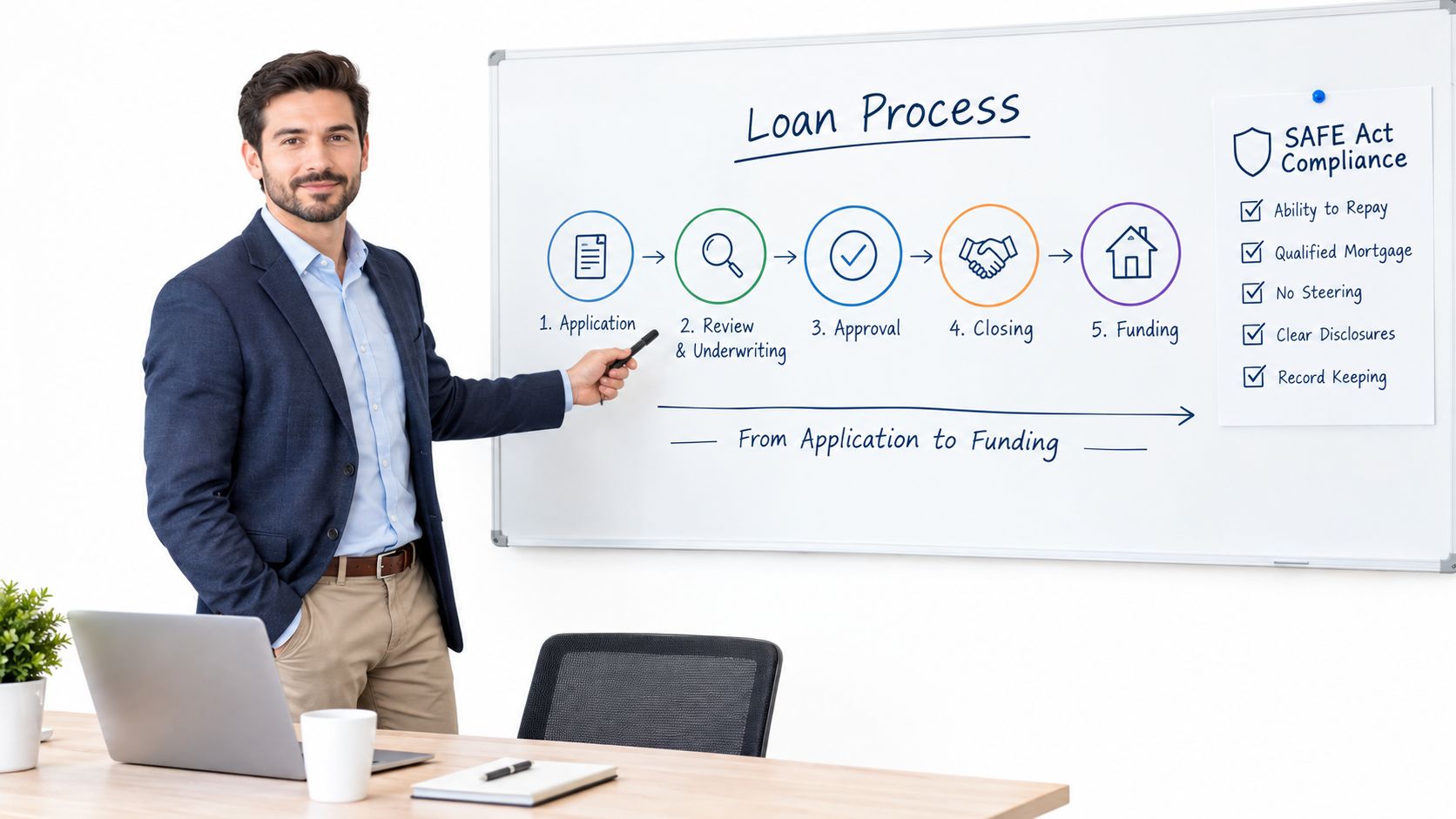
A two-week course plan can give you a useful target for completing the education, but the full licensing sequence includes more than study time. New Hampshire requires approved education and a passing written test before licensure, and applicants must also complete the applicable state process. NMLS guidance identifies both the national education package and New Hampshire-specific law instruction for new state-licensed MLOs, as summarized in this state licensing information from Connecticut's Department of Banking.
Set up, study, and prepare to test
Start by creating your NMLS account and reviewing the New Hampshire application requirements. Keep your personal and employment information consistent across your records, and make a note of any requested background-check steps. If you're unsure which license type applies to your intended role, ask the prospective employer or consult the state's current instructions before proceeding.
Next, enroll in an approved course that includes the required New Hampshire content. Work through the lessons in a steady routine, record topics that feel difficult, and use practice questions to find gaps in your understanding. When you finish, make sure your course completion is reported in NMLS and check that the record appears as expected.
Schedule the exam and complete the application
Once you're ready, schedule the SAFE Mortgage Loan Originator Test with Uniform State Content and prepare the documents needed for your application. Passing the test is a separate requirement from completing education. A practice exam can help you spot weak areas, but it doesn't replace the official test.
Then complete the state application and any required background-check steps. Fingerprint scheduling or incomplete employment disclosures can slow progress, so review each item before submission. Sponsorship may also be part of the licensing process depending on the role and employer. Completing the course alone doesn't grant authority to originate mortgages; wait until the required approvals are in place.
How the National Course Travels With You Across States
The national education core can provide a portable foundation if you move or seek authorization in another state. But portability doesn't mean every state has identical education rules. Federal requirements set the national baseline, while states can add their own law instruction or application steps, as reflected in the federal SAFE Act education regulation.
New Hampshire applicants need to account for state-specific law instruction alongside the national curriculum. Massachusetts, for example, requires 3 hours of Massachusetts law and regulation as part of its education requirements, according to the state's mortgage loan originator license application guidance. That Massachusetts component isn't a substitute for New Hampshire requirements, and New Hampshire law training won't automatically satisfy another state's distinct requirements.
Course approval is not the same as license eligibility
A course can be approved for education purposes without guaranteeing that you're eligible for a license in every jurisdiction. You still need to check the target state's application, testing, education, and other requirements. If you relocate, ask whether you need an additional state-law module and whether your existing course record meets the new regulator's rules.
This distinction matters if you're planning a career that could cross state lines. The national core may transfer, but regulators determine the final requirements for each license. A guide to pursuing an MLO license in multiple states can help you plan questions to ask before you expand into another jurisdiction.
What Makes Our Online Course a Smart Fit for Concord Students
Online learning can suit people who need to fit licensing education around existing responsibilities. A parent might study after the household settles down, while a career changer may work through lessons outside a day job. For Concord residents, web-based delivery also avoids the need to travel to a classroom.
24hourEDU offers an NMLS-approved 20-hour SAFE course with instructor-led video lessons, an e-textbook, a bonus state law module, exam-preparation materials, phone and email support, and NMLS hours reporting upon completion. The course's NMLS Provider ID is 1405107. Before enrolling, review the course details to confirm the New Hampshire content and licensing fit you need.

Make the format work for you
Online education doesn't remove the need to study carefully, but it can reduce the logistical friction of getting started. Look for clear lesson materials, a way to revisit challenging topics, exam practice, and help when you have a question about course completion or reporting. Those features can make it easier to keep moving when your schedule changes.
You may be able to finish the coursework in about two weeks if you keep a consistent routine. Build in time for review rather than rushing through lessons, and remember that exam scheduling and state processing are separate from course completion. A realistic plan balances focused study with enough preparation to feel ready for the test.
Your Two-Week Action Plan After the Course
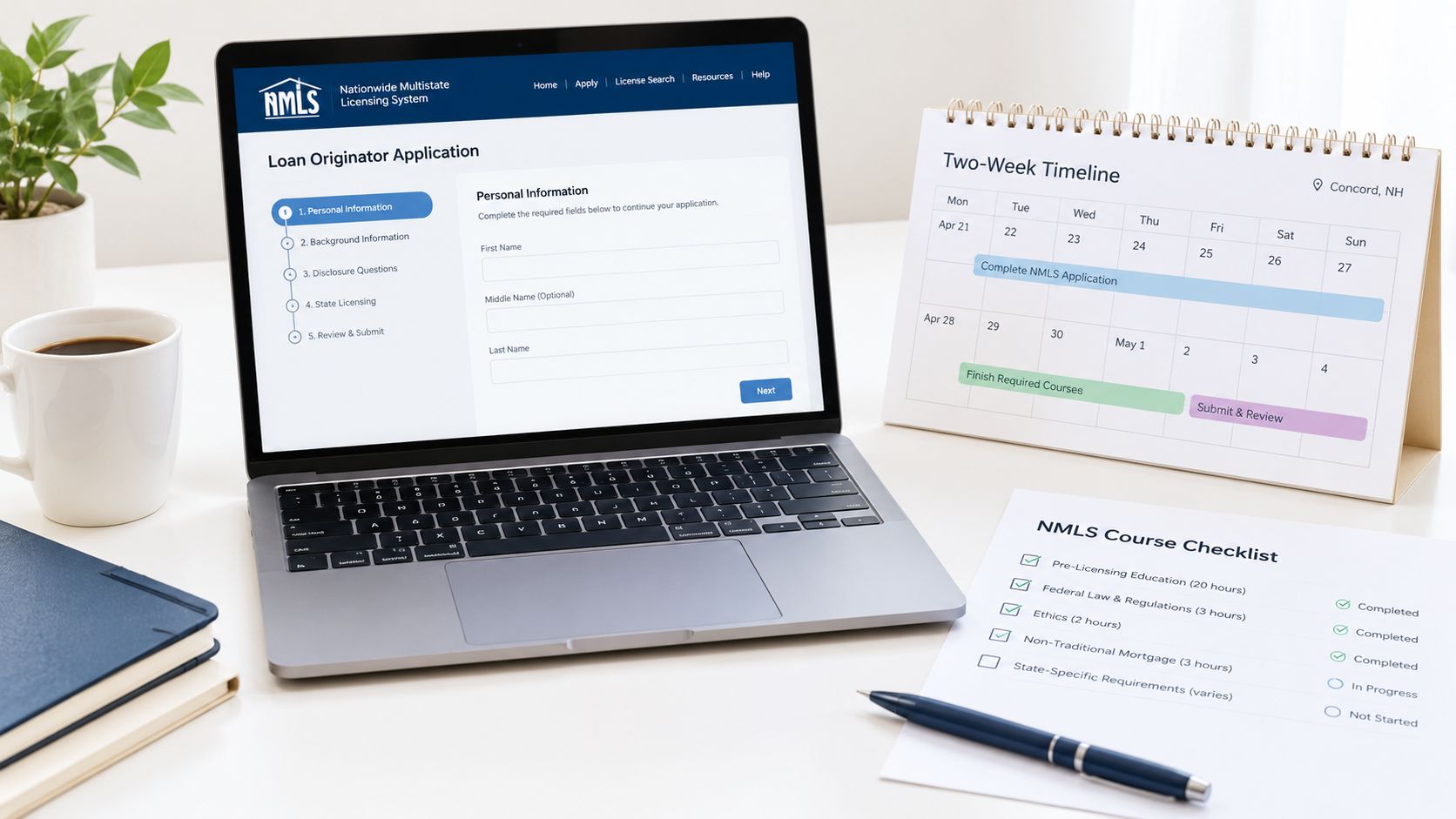
Use the schedule below as a study framework, not a promise that your license will be issued within two weeks. Your test date, background-check steps, application review, and any employer sponsorship process can affect the overall timeline.
- Days 1–3: Create your NMLS account, review New Hampshire's current requirements, and enroll in an approved course with the appropriate state-law content.
- Days 4–12: Complete the SAFE pre-licensing lessons, take notes on difficult subjects, and use the included exam prep to review them.
- Day 13: Take a practice exam, review missed questions, and revisit the relevant course material.
- Day 14: If you're prepared, schedule the SAFE test and begin assembling your state application materials. Complete each remaining application and background-check requirement before assuming you're authorized to originate.
Keep learning after licensure
After you're licensed, plan for continuing education as part of maintaining your credentials. NMLS sets an 8-hour annual continuing-education baseline, while state rules can add jurisdiction-specific education. The NMLS education guidance describes state-law requirements in its discussion of approved course topics and annual education. Confirm the requirements that apply to New Hampshire when renewal approaches.
You can also begin building professional relationships by introducing yourself to mortgage colleagues, local business groups, and potential referral partners. Strong communication and dependable follow-through help establish trust over time. Use this NMLS exam study guide to organize your review, then choose a study routine you can sustain.
24hourEDU offers online NMLS-approved pre-licensing education with exam prep and support for aspiring mortgage loan originators. Review the Concord course details and begin your licensing plan at 24hourEDU.

