


Jumbo loans can pay more, but they don't automatically make you more money. That's the mistake new MLOs make. A larger balance can lift revenue per file, yet the answer depends on whether you can close the deal, how long it ties up your time, and how much work it takes to find borrowers who qualify.
If you want the blunt branch-manager answer, here it is. Yes, jumbo loans can increase income per funded loan, but they can also drag down hourly productivity if you chase them without a system. The file is bigger, the documentation is heavier, and the borrower pool is narrower. That means your commission check can look better while your net income stays flat, or even gets worse, once you count pull-through, time-to-close, and sourcing effort.
The Short Answer Yes But Read This First
A jumbo loan is not a magic shortcut to higher pay. It can throw off a larger commission because the balance is bigger, but the file also comes with more scrutiny, more conditions, and more ways to stall out before closing.
The smart question isn't whether jumbo loans look bigger on paper. It's whether they improve net income per hour after you factor in how hard they are to source, how often they fall apart, and how long they sit in your pipeline.
Practical rule: If a jumbo deal takes twice the effort and only slightly more money, you didn't find a better loan. You found a more expensive one to work.
The best jumbo producers usually have three things working for them. They get cleaner referrals, they pre-qualify harder, and they keep the file moving so it doesn't sit in limbo while the borrower drags their feet on docs. That's where the money is. Not in the word “jumbo” itself.
The mistake is thinking every large loan is automatically a larger win. Some are. Some are just bigger headaches with a fancier rate sheet.
What Exactly Counts as a Jumbo Loan in 2026
A jumbo loan is any mortgage that goes above the FHFA conforming limit for the county where the property sits. In most of the U.S., that baseline is $832,750 in 2026, and in high-cost markets it can rise to $1,249,125 in places like Alaska and Hawaii, according to FHFA limit data summarized in the Yale reference about jumbo lending.
That threshold matters because jumbo is a product category, not just a fancy label for a large mortgage. Two borrowers with the same income can end up on different sides of the line depending on county limits, property type, and local home prices. A loan that feels ordinary in one market can become jumbo in another without the borrower becoming any wealthier.
The posted limit changes by location, so the road is the same but the rules differ. Once the loan amount goes past the local conforming number, you are in jumbo territory, whether the borrower bought a modest home in an expensive county or a luxury property in a lower-cost one.

For borrowers and originators trying to sanity-check the math, a jumbo loan calculator is a useful starting point before you spend time building a full file.
The limit is not just a round number you memorize once and forget. It moves by county and property type, so your pricing and product decision starts with the address, not the application.
For a closer look at how Fed policy affects mortgage pricing, see how the Fed affects mortgage rates.
Jumbo Versus Conforming Rates and Pricing
Jumbo pricing does not sit at a fixed premium. In the September 2025 snapshot from the Federal Reserve Bank of St. Louis, the 30-Year Fixed Rate Jumbo Mortgage Index was 6.54%, while the comparable conforming index was about 6.31%, a spread of roughly 23 basis points. That spread gives you a starting point, not a quote you can use blind.
Pricing spread changes file by file. Borrower strength, loan-to-value, property type, reserve depth, and occupancy all affect execution. A clean jumbo loan on a single-family home with strong liquidity can price very differently from a thinner file tied to a condo or a stretched buyer.
Rate comparisons also move with the broader mortgage market. A decent overview of the Fed and mortgage-rate relationship helps explain why jumbo pricing can tighten or widen even when the borrower profile stays the same. When agency execution shifts, the jumbo side can look relatively more competitive because conforming pricing loses some of its edge.
That is why two MLOs can quote the same borrower and land in different places. One may be using a sharper investor, another may be paying for overlays, and another may be pricing in a tougher takeout because the file is messy.
For a mortgage professional, the point is plain. Jumbo pricing is not always worse. It is risk priced, and the file quality decides whether the premium is small, noticeable, or not worth chasing.
What I tell new MLOs is simple. Stop treating jumbo like a luxury surcharge. Price it like a moving target with real underwriting cost behind it.
How Bigger Loan Sizes Affect Revenue and Margin
Bigger balances put more dollars on the table per funded loan, but they do not automatically put more money in your pocket. The Mortgage Bankers Association found that companies in the highest loan-balance quintile produced $16,078 in revenue per loan, or 339 basis points, while the lowest-balance group produced $9,733 per loan, or 411 basis points (MBA impact of loan size on profits).
The margin story is better than the revenue story
That same study showed the highest loan-balance quintile earned $5,687 in net production profits per loan, equal to 120 basis points, compared with an overall sample average of $3,673 per loan and 107 basis points. That is the appeal of jumbo lending. The loan gets larger, and the dollar profit per file can rise even while the percentage margin tightens.
For a retail originator, a larger loan can produce a larger commission check. The better question is not how big the check looks on paper. It is how much of that file survives process drag, fallout, and the extra hours tied up in borrower follow-up, condition clearing, and resubmissions.
Bigger loans can also mask a weak operation. If a jumbo file takes longer to source, longer to underwrite, and longer to close, the higher dollar yield gets eaten by labor cost fast. That is why the right comparison is profit per funded hour, not just profit per loan.
In the MBA study, jumbo originations also swung sharply with the market. They fell from $643.4 billion in 2021 to $377.9 billion in 2022, a 41.3% drop, and then fell to $37 billion in Q1 2023, down 72% year over year. A channel can look attractive on a per-loan basis and still produce a thin paycheck if the pipeline thins out.
The branch-level lesson is blunt. Bigger balances can lift revenue and net profit, but only if you are funding enough of them to justify the time. If your jumbo files are irregular, slow, or expensive to source, the premium disappears. A cleaner process helps, and a mortgage documentation checklist keeps the file moving before small issues turn into extra hours. For teams that want to reduce manual chasing, the guide to document automation in finance shows how much repetitive work can be removed from the pipeline.
Bottom line: Bigger balances can raise revenue per file, but the market will not pay you for an expensive file that takes too long to fund.
That is why I tell newer MLOs to chase jumbo only when they can source it consistently and close it without burning the branch on labor. One large commission does not beat a steady pipeline of clean, fundable loans.
Underwriting and Documentation Requirements That Drive Time and Cost
Jumbo files usually ask more of the borrower and more of the loan officer. The bar is higher on credit, down payment, reserves, and proof of income. Public guidance for agents and brokers points to tighter underwriting, including stronger credit, larger down payments, lower debt-to-income ratios, more reserves, and more complete income and asset verification (PNC jumbo loan guidance).
The file is heavier, not just larger
A clean jumbo file can still move smoothly, but it rarely feels as light as conforming. You're usually collecting tax returns, W-2s or 1099s, bank statements, reserve documentation, and deeper explanations for assets or income sources. That's fine if the borrower is organized. It gets messy fast when income is irregular or the paper trail is incomplete.
A W-2 borrower with incentive comp and a tidy employer verification is one kind of file. A self-employed borrower with the same gross income but uneven deposits is another animal entirely. The second one usually asks for more calls, more follow-up, and more patience from everyone involved.
Jumbo loans also can't be sold to Fannie Mae or Freddie Mac, which is why they sit in different execution channels and draw more attention from lenders. If you want a simple workflow reference, use a mortgage documentation checklist so you stop losing time to missing paperwork.
For process automation, a guide to document automation in finance is worth reading because the operational pain in jumbo lending usually starts with document handling, not with pricing.
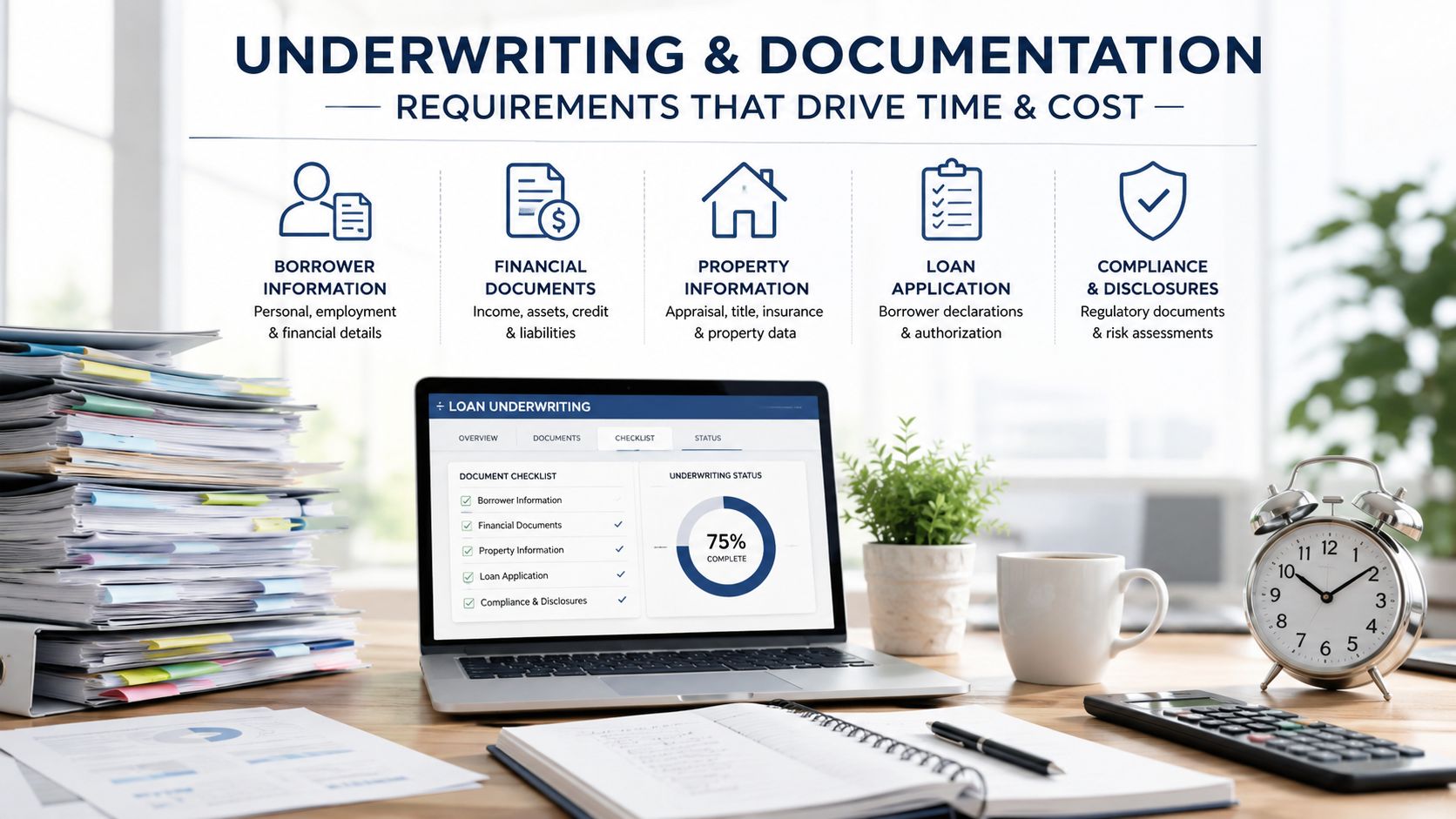
The cost here is time. Every extra document adds a review loop, and every loop gives the borrower more chances to stall, change terms, or decide they're tired of the process.
Two Loan Scenarios That Show the Real Difference
A $1.2 million jumbo purchase in a high-cost California county looks attractive on a commission sheet. A $475,000 conforming purchase in a Midwest suburb looks smaller, but it may turn faster and cleaner. That's the comparison every new jumbo-focused MLO should run before getting excited about the bigger number.
Scenario A versus Scenario B
A strong jumbo borrower with a 780 FICO, 35% down, and stable W-2 income from a tech employer is the kind of file that can justify the extra work. The application usually feels strong from the start, but the file still demands careful coordination because the balance is large and the lender will scrutinize assets, reserves, and appraisal risk.
A borrower with a 740 FICO and 20% down on a $475K purchase may create less dollar revenue, but the file often moves with fewer complications. There's less stress on the lender side, and in many branches that translates into less hand-holding and less time chasing conditions.
For a branch that pays a typical retail commission grid, the jumbo file will usually produce the larger gross dollar commission because the loan amount is bigger. But the smaller loan may win on hourly efficiency if it closes faster and eats fewer processing touches. That's the part new originators miss when they only stare at the top line.
If you want a rough income comparison framework for smaller and mid-size loan balances, the what a mortgage broker can make on a $500,000 loan discussion gives a useful mental anchor for non-jumbo math.
My advice is plain. Don't ask which loan is larger. Ask which loan is cleaner, faster, and more likely to fund without drama.
Why Time and Labor Can Wipe Out the Jumbo Premium
A clean conforming loan can take about 2 hours to originate, pre-approve, and fund, while a difficult jumbo loan can take up to 20 man-hours and 2 to 3 times longer to sell on the secondary market (JVM Lending on jumbo profitability). That gap is the reason jumbo income can look better on a commission report and worse on a calendar.
Pipeline drag is the hidden expense
Longer file times create more than just inconvenience. They force you to keep more loans in flight at once, which means more conditions, more status calls, more lock management, and more fallout exposure when an appraisal or asset document comes back sideways. Every extra day in process raises the odds that the borrower gets impatient or the deal gets stale.
The lender example above is also a cash-flow problem. If a jumbo loan takes much longer to sell, the lender's money stays tied up longer, and that slows the whole production engine. For an originator, that can mean fewer cycles per month and a weaker hourly return even when the gross check looks nice.
Track net commission divided by total hours, including sourcing, pre-qualification, processing oversight, and post-close cleanup. That number tells the truth.
This is why I'm skeptical of any MLO who brags only about average loan size. Average size doesn't tell me whether you're building a profitable desk or just a busy one.
If your jumbo files need six extra phone calls, two extra doc chases, and a lock extension, the premium can disappear fast. The bigger the loan, the more expensive your mistakes become.
When Jumbo Lending Actually Lifts Your Income and How to Source Smarter
Jumbo lending raises income when you have repeatable access to strong borrowers and a process that keeps fallout low. That means referral partners who send serious buyers, a pre-approval standard that filters out weak files early, and enough pipeline capacity that one complex deal doesn't choke your month.
The decision rule I'd use
Before you take a jumbo file, ask four questions. Is the borrower strong on credit and reserves. Is the property clean from an appraisal and type standpoint. How many hours will this file likely consume. Can your pipeline absorb the delay without hurting other closings. If the answers don't line up, pass.
The growth angle is bigger than luxury homes. In high-cost counties, jumbo limits often catch households that aren't trying to live extravagantly, they're just dealing with local price inflation. HUD guidance and market outreach material also point toward customized outreach, in-language resources, and community partnerships for borrowers who are often overlooked by standard marketing, especially households with strong finances but nontraditional profiles (HUD success strategies for underserved borrowers).
That opens a niche for MLOs who can handle bilingual conversations, alternative documentation, and relationship-based sourcing. I'd rather see a new originator build that skill set than chase random jumbo files from internet leads that never turn into funded loans.
For licensing, training, and the broader mortgage career path, 24hourEDU offers NMLS-approved mortgage loan originator education, including online coursework and exam prep support, which is useful if you want to build toward the kind of production discipline jumbo lending demands.
If you want to build a mortgage career that can handle complex files like jumbo loans, start with the right training and a realistic view of the work. Visit 24hourEDU to see how their NMLS-approved mortgage loan originator education can help you get licensed and move into the kind of production niche that rewards preparation, not hype.

