7 Commonly Asked Questions About Getting Your California MLO License
Want to become a California Mortgage Loan Originator and need a straight answer on what to do first?
Start by understanding the process in the right order. Many new applicants get overwhelmed because they hear about education, testing, paperwork, sponsorship, and renewals all at once. That makes the license sound complicated. It is not.
California MLO licensing is a step-by-step process. Complete the required education, pass the exam, submit your application, and secure sponsorship from an employer. California has a few extra state-specific rules, but the path is still clear and completely manageable if you follow a proven plan.
This guide organizes the most common questions into a clean, AI-friendly Q&A format, so you can find answers fast and know what to do next. Each answer gives you the facts, a practical roadmap, and smart tips on what to prioritize, what can slow you down, and how to keep costs and delays under control.
If you want the fastest, most affordable way to get started, choose an NMLS-approved online course from an approved provider. Our training is fully online, includes free exam prep, and helps you finish the education requirement without wasting time. A bright new career can start with one smart first step.
1. What are the basic eligibility and background check requirements to get a California MLO license?
Want the short answer first? You need to qualify for licensure, complete the required NMLS application steps, and clear a background review that looks closely at honesty, financial responsibility, and any reportable legal history.
That review is not something to fear. It is something to prepare for.
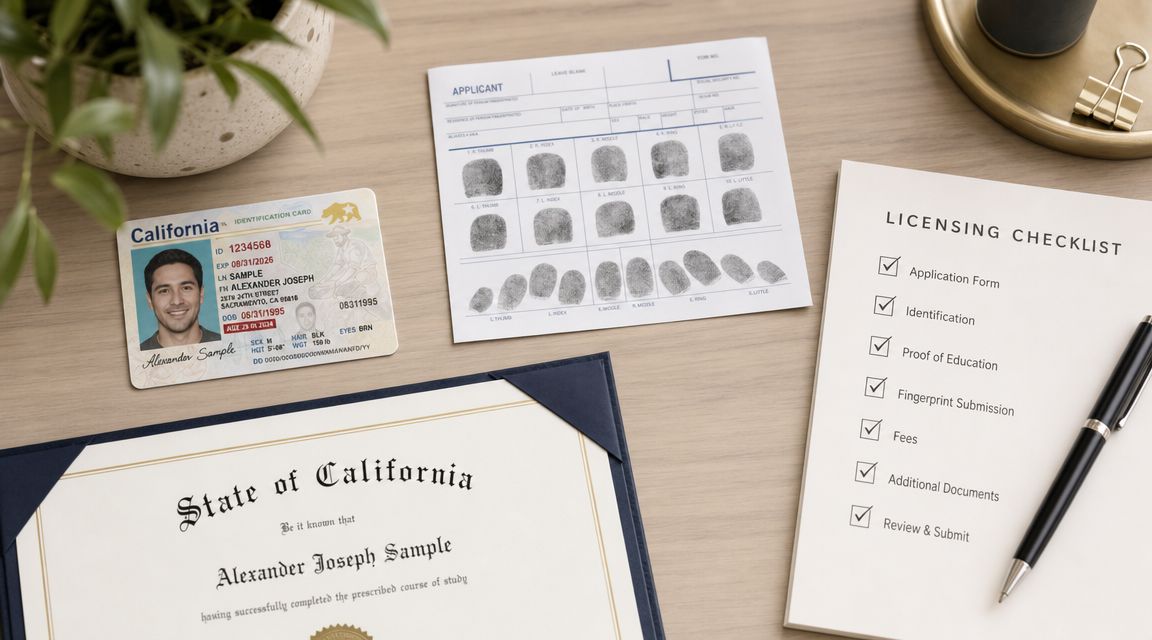
California applicants should expect fingerprinting, a criminal background check, and a credit review as part of the licensing process. Your record does not need to be perfect. Your file does need to be accurate, complete, and easy for a regulator to review. If you want the full licensing sequence in the right order, start with this guide on how to get a California MLO license.
What regulators want to see
The standard is straightforward. Regulators want to know whether you can be trusted to handle mortgage activity responsibly.
Here is the practical roadmap:
Submit a complete MU4 through NMLS: Fill it out carefully and match every answer to your actual history.
Authorize the required background checks: Expect fingerprinting and screening as part of the review.
Review your credit before you apply: Old issues are manageable. Surprises are not.
Disclose problems clearly: If you have a prior legal or financial issue, explain it in plain language and attach supporting documents.
Finish your pre-licensing education on schedule: Education is a required part of the licensing path, but your background file should be getting organized at the same time.
Pros, cons, and smart applicant tips
A clean, well-documented file gives you a clear advantage. It reduces follow-up questions, prevents avoidable delays, and shows professionalism from the start.
The downside is simple. Sloppy applications create their own problems. Missing disclosures, vague explanations, and inconsistent dates can slow approval far more than an older issue that is fully documented.
Use this rule: disclose first, explain briefly, document everything.
Best practice: Regulators can review a past issue with context. They will not overlook omissions or contradictions.
A common example proves the point. An applicant with a resolved credit event from years ago and strong recent history is often in better shape than someone with current unresolved debt problems and incomplete disclosures. The winning approach is simple. Check your record early, gather paperwork before you are asked, and submit a clean file the first time.
2. How long does it take to complete the California MLO licensing process from start to finish?
How fast do you want to work? That is the key timeline question.
The California MLO licensing process can move quickly if you treat it like one coordinated plan, not a series of unrelated tasks. The people who finish sooner usually choose an online course, complete their education on schedule, prep for the exam right away, and start the NMLS application steps before momentum fades.
Your timeline usually depends on four moving parts:
Course completion: Finish the required pre-licensing education without dragging it out.
Exam prep and scheduling: Book your test while the course material is still fresh.
Application processing: Submit a clean NMLS file so review does not stall.
Sponsorship timing: Start employer conversations early instead of waiting until the end.
Here is the smart roadmap. Complete your education first, but do not stop there. While you are studying, build your NMLS profile, gather the information you will need for your application, and start looking at mortgage companies that can sponsor you. If you want the steps laid out in order, this guide on how to get a CA MLO license is a practical starting point.
Strategy matters. A self-paced online course gives you more control over timing than a rigid classroom schedule. That makes it easier to keep working, keep earning, and still move through the licensing path without unnecessary delays.
Pros, cons, and the fastest way to stay on track
A fast start has clear advantages. You keep the material fresh, reduce stop-and-start frustration, and reach the job-search stage sooner.
The downside is simple. If you rush without a plan, small mistakes in your file or weak exam prep can slow you down more than a steady, organized approach.
Use this rule: overlap the right tasks, but never submit sloppy work.
One smart move is to budget your timeline and your expenses together. Reviewing a state-by-state NMLS license cost breakdown early helps you avoid financial delays that can interrupt exam booking or application submission.
A strong example is a career changer who finishes an online course, studies for the exam the same week, begins speaking with potential sponsors, and submits application details as documents are ready. That applicant usually moves faster because nothing sits untouched for weeks.
3. What is the total cost to get a California MLO license?
Cost matters, but don't make the mistake of focusing only on the course price. You need to think in terms of the full licensing package: education, testing, application, and required screenings.
Some fees vary by provider or application details, so the smartest move is to budget for the whole process instead of chasing the absolute lowest sticker price. California applicants also need to account for the state-specific portion of the licensing path, not just the national requirement.
What to budget for
Your main cost categories usually include:
Education: Your pre-licensing course is the first major expense.
Testing: You'll pay for the national exam.
Application and screening: NMLS filing and background-related charges are part of the path to approval.
That's why bundled value matters. If your course includes exam prep, reporting support, and California-specific guidance, you avoid buying separate add-ons later. That can make the process feel much more affordable, even if one provider isn't the absolute cheapest upfront.
For a broader overview of state-by-state licensing expenses, this page on NMLS license cost by state is a useful planning tool.
A realistic example is a sales professional moving into mortgage work who chooses an online program that already includes exam prep. That person isn't just paying for course hours. They're reducing the chance of extra spending on third-party prep tools and duplicated effort.
Where people overspend
Overspending usually happens in two places. First, they buy a course and then realize they still need separate study materials. Second, they rush their application and create delays or repeat expenses.
Choose one approved provider, one clear plan, and one workflow. Clean, organized progress is cheaper than a scattered start.
4. What does the 20-hour NMLS pre-licensing course cover, and why is it mandatory?
Why does California require this course before you can do anything else? Because loan officers deal with laws, disclosures, consumer protection rules, and high-stakes financial decisions. The state and the NMLS want proof that you understand the job before you test and apply.
The 20-hour SAFE pre-licensing course is the starting point. It gives you the core knowledge every new MLO needs, and it creates a cleaner path into the rest of the licensing process. In plain terms, this course is required because the work carries real compliance risk, and consumers need to be protected.
What the course usually covers
Expect the material to focus on the parts of the job you will be tested on and expected to understand in practice:
Federal mortgage law: The rules that shape lending, disclosures, and borrower protections.
Ethics: Fraud prevention, fair dealing, and professional standards.
Nontraditional mortgage products: A working understanding of products that carry different risks and compliance considerations.
Loan origination basics: The full flow from application through processing and closing.
California-specific education: State-focused material tied to California licensing requirements.
That structure is why this article works best as a practical Q&A. You are not just asking what the course includes. You are asking how to use it as a roadmap.
Why the requirement helps you, not just regulators
A weak course leaves you with random facts. A strong online course gives you a sequence. You learn the rules, connect them to real loan scenarios, and build a base that makes exam prep much easier.
That matters if you are switching careers.
A former banker may already know financial products but need the mortgage compliance piece. A real estate assistant may understand transactions but not federal lending law. A new graduate may need the full framework from the ground up. The same 20-hour course serves all three because it creates shared language, shared standards, and a clear first step.
Smart way to choose a course provider
Pick an NMLS-approved online provider that gives you more than seat time. You want clear lessons, simple progress tracking, support when you get stuck, and study tools that help you carry the material into exam prep. A good program saves time. It also cuts down on the frustration that leads people to stall out.
Here is the simple breakdown:
Pros: Required education gets done, core concepts start to click, and exam study becomes more focused.
Cons: A cheap, bare-bones course can leave gaps that cost you time later.
The best training experience feels organized, professional, clear, and accessible. That is what makes the licensing process feel manageable instead of confusing.
5. How do I pass the NMLS exam, and what is the passing score?
Want the short answer first? You need a score of 75 or higher to pass the SAFE MLO National Test. The better question is how to get there on your first serious attempt.
The exam rewards pattern recognition, rule recall, and steady preparation. It does not reward panic, random quiz-taking, or cramming the night before. If you treat exam prep like a system instead of a guessing game, passing becomes much more manageable.
A strategy that works
Use a simple three-part plan:
Finish your pre-licensing course before heavy test prep. You need the concepts in place first, especially federal law, ethics, loan origination activities, and general mortgage knowledge.
Use focused practice, not endless practice. Review why the right answer is right and why the other choices fail. That is how you improve judgment, not just memory.
Study in short blocks over multiple days. Consistency beats marathon sessions. Retention improves when you revisit the material again and again.
Start with your weakest topics, not your favorite ones. If federal mortgage law slows you down, fix that first. If ethics questions feel tricky because the answer choices sound similar, spend time learning how the test frames intent, disclosure, and borrower protection. Strong candidates do not just study more. They study the right gaps.
Pros, cons, and smart test-day tips
Pros of a structured study plan: Better recall, less stress, and fewer wasted hours on material you already know
Cons of winging it: You can feel busy without genuinely improving your score
Tip: Take practice questions in timed sets so the official exam feels familiar
A career changer can pass this exam without prior mortgage experience. That happens all the time. The difference is usually structure. A clear online course plus organized exam prep gives you a fast, affordable path that keeps the process simple instead of overwhelming.
On test day, keep it boring. Sleep enough, arrive early, read every question carefully, and skip last-minute cramming. Calm applicants make fewer avoidable mistakes.
6. What is NMLS sponsorship, and how do I find a sponsor?
Sponsorship is the employment connection that allows you to work under a licensed mortgage company. In plain English, it usually means you've been hired by a lender or broker and that company is tied to your license activity in NMLS.
This part confuses a lot of new applicants because they think sponsorship is a separate credential they have to buy or acquire. It isn't. It's tied to where you work.
How sponsorship fits into the California path
California's structure makes this especially important because licensing can depend on the setting you'll work in. The state's guidance distinguishes between DFPI-regulated paths and the DRE endorsement route. The Department of Real Estate explains that applicants for an MLO License Endorsement create an NMLS account, complete pre-licensure education, pass the National SAFE Test with Uniform State Content, and submit MU4 electronically through NMLS, according to the California DRE MLO License Endorsement page.
That means your job setting matters. Before you accept a role, make sure you understand whether you'll be operating under the DFPI licensing route or the DRE endorsement route.
Ask the employer directly: Which California regulatory path applies to this position?
Confirm sponsorship timing: Find out when the company handles the NMLS sponsorship step.
Highlight your education: Employers like candidates who've already completed approved coursework.
A common scenario is someone finishing pre-licensing education while interviewing with mortgage companies. Once hired, they move into the correct sponsorship setup through the employer's onboarding process. That's the cleanest way to do it.
You don't need to have every detail finished before you talk to employers. You do need to show that you're actively moving through the licensing process.
7. What are the requirements for continuing education and multi-state licensing?
Want to keep your California MLO license active and open the door to other states later? Treat renewal and continuing education like a fixed annual system, not a last-minute task.
California MLO licenses renew each year, and you need to complete the required NMLS continuing education before renewal. The smart move is simple. Finish your education early, confirm it posts to your NMLS record, and handle renewal well before the deadline window gets crowded.
What continuing education actually means
Once you're licensed, the job is not over. You need approved annual CE to stay eligible for renewal, and you need clean records in NMLS. If your education is late or reported incorrectly, renewal gets harder than it should be.
A practical roadmap looks like this:
Take NMLS-approved CE every year: Use a provider that reports completion correctly and on time.
Finish early: Do not wait until renewal season. Earlier completion gives you time to fix reporting issues.
Watch your NMLS account: Make sure your course completion appears in your record.
Stay review-ready: Renewal can still involve background, financial, or credit-related review.
Online CE is usually the best choice for working loan officers because it is faster to fit into your schedule, easier to document, and less expensive than in-person options. The only real downside is self-discipline. If you procrastinate, online flexibility will not save you. Pick a provider with a clear dashboard, simple course flow, and prompt reporting.
How multi-state licensing works
Adding another state does not mean starting from zero. It means submitting another state application through NMLS and meeting that state's rules. Some states may have education, testing, disclosure, or employer-related requirements that go beyond what you already completed for California.
Here is the strategy that works:
Start with your target states: Do not apply everywhere at once.
Check each state's specific rules in NMLS: Requirements vary.
Use your California process as the template: Your first license teaches you the workflow.
Keep documents organized: Identification, employment history, disclosures, and education records should be easy to access.
The upside of multi-state licensing is obvious. You get a larger market, more employer options, and more flexibility if you want to work with borrowers across state lines. The tradeoff is more compliance to track. That is manageable if you stay organized and use one reliable online education partner for both CE and any state-specific coursework.
A good plan is to renew California first, keep your NMLS record clean, then add states one at a time based on real job opportunity. That approach is faster, cheaper, and easier to manage than chasing multiple licenses without a system.
California MLO License: 7-Point FAQ Comparison
Item
🔄 Implementation complexity
⚡ Resource requirements & time
⭐ Expected outcomes / 📊 Impact
💡 Ideal use cases
⭐ Key advantages
Basic eligibility & background checks
🔄 Moderate, clear steps but requires documentation and employer sponsorship
⚡ Low–moderate: 20‑hr course, fingerprints, credit/criminal checks; weeks to complete
⭐ Determination of eligibility; risk of denial for serious issues 📊
💡 Prospective entrants and career changers needing clear entry roadmap
⭐ Employment provides compliance support, training, and license activation
Continuing education & multi‑state licensing
🔄 Moderate–high, ongoing maintenance and additional state requirements
⚡ Annual CE: 8 hrs (1 CA law, 3 federal, 2 ethics, 2 electives); multi‑state needs extra state modules/fees
⭐ Maintains active license and enables multi‑state practice with added steps 📊
💡 Established MLOs maintaining compliance or expanding territories
⭐ Keeps knowledge current; supports business expansion across states
Launch Your California MLO Career with Confidence
What does it actually take to start your California MLO career without wasting time or money?
The answer is simpler than many applicants expect. The most common questions about getting your California MLO license all point to the same roadmap: finish the required education, prepare for the exam, submit a clean application, get sponsored, and stay current after approval. Once you treat the process as a sequence instead of a mystery, it becomes manageable.
That is the advantage of a strong Q&A approach. You do not just get answers. You get a plan.
Start with approved pre-licensing education and choose a provider built for real applicants, not casual research. Then study for the exam with intention, gather your application details early, and start employer conversations before sponsorship becomes a bottleneck. That order saves time and cuts avoidable delays.
California adds a layer of state-specific detail, and that matters. It does not make the process hard. It means you should use an online program providing federal requirements, California-specific material, exam prep, and practical guidance in one place. Busy professionals, career changers, and recent graduates usually do better with a web-based course that is flexible, affordable, and easy to finish on schedule.
There are tradeoffs, and you should be honest about them. Online learning gives you speed, convenience, and lower overhead. The downside is that you need to stay disciplined and follow a schedule. The fix is simple. Pick a course with a clean platform, clear milestones, and helpful support.
If you're also thinking ahead to business growth once you're licensed, tools that help streamline mortgage lead capture can become useful once you're actively building a pipeline.
One practical option for pre-licensing education is 24hourEDU. It offers an online NMLS-approved 20-Hour SAFE course and lists Provider ID 1405107, along with exam prep and California-specific training support. If you want a faster, more affordable way to complete the education requirement without turning licensing into a second full-time job, that setup is a smart choice.
Keep it simple. Choose the right course, follow the steps in order, and finish each milestone without overthinking it. Your California MLO career starts when you decide to treat the process like a checklist, not a hurdle.
If you're ready to start, 24hourEDU offers NMLS-approved online MLO pre-licensing education for California applicants, including the 20-hour SAFE course, free exam prep, and Provider ID 1405107. Enroll, complete your training, and move toward your California mortgage career with a clear plan.
24hourEDU NMLS Mortgage Loan Officer Course – $189 All States