

You're sitting with two rate sheets in front of you, one fixed and one adjustable, and the choice feels simple until you start thinking about how long you'll keep the home, what happens if rates move, and how much payment change you can really live with. That's the core tension in fixed rate vs adjustable rate mortgages. One loan buys certainty, the other buys flexibility, and the right answer depends on the borrower, not the label.
A fixed-rate mortgage keeps the same interest rate and the same monthly principal-and-interest payment for the full term. An adjustable-rate mortgage, or ARM, usually starts with a lower introductory rate that changes later at preset intervals. If you want a plain-language comparison of how long people stay committed to one path in other financial products, the idea behind an adjustable policy for families is a useful mental model, because the early structure can look stable before the long-term variables show up.
| Mortgage Type | Rate Behavior | Early Payment Feel | Main Tradeoff |
|---|---|---|---|
| Fixed Rate | Stays the same for the loan term | Predictable | Less flexibility if rates fall |
| Adjustable Rate | Starts lower, then changes later | Often feels similar at first | More uncertainty after the intro period |
Introduction to fixed rate vs adjustable rate
A borrower often starts here because the first question sounds easy, “Do I want a stable payment or a lower starting one?” That question gets harder once the buyer realizes a mortgage is not just a monthly bill. It's also a time horizon, a refinancing plan, and a risk decision.
A fixed-rate loan is the straightforward option. The interest rate stays locked, and the principal-and-interest payment stays the same across the loan term. An ARM works differently. It begins with an introductory period, then the rate can change later based on a preset schedule and the market index.
That distinction matters because the early payment can disguise the long-term shape of the loan. Borrowers often compare the first payment only, then miss the question that drives the decision, “Will I still have this loan when the adjustment starts?” For mortgage professionals, that's the conversation that separates a surface-level quote from a good recommendation.
Understanding mortgage mechanics
Fixed rate mechanics
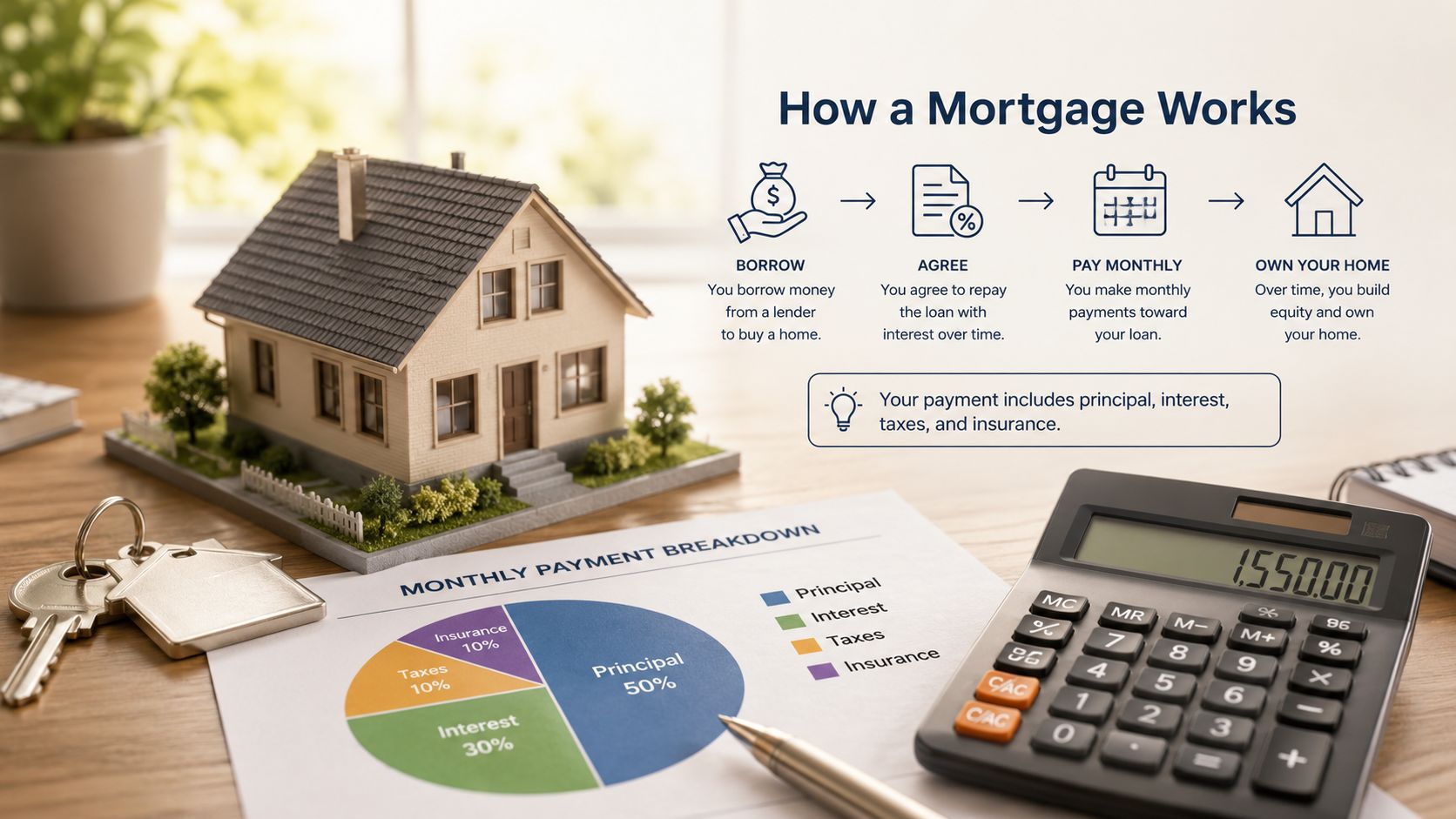
A fixed-rate mortgage is the easiest structure to explain because the loan stays on one track. The interest rate stays locked, and the principal-and-interest payment stays the same for the full loan term. The Consumer Financial Protection Bureau describes it as a loan where the rate and monthly payment do not change, which is why borrowers often use it to build a dependable household budget. Market changes do not alter that payment unless the borrower refinances.
That stability is the point. A borrower can plan around the same housing payment without wondering whether next month brings a higher bill. For a loan originator, the teaching point is simple, fixed-rate pricing trades flexibility for predictability, and many borrowers value that predictability when they want fewer moving parts in the monthly budget.
ARM building blocks
The adjustable-rate side needs more explanation because the payment path changes in stages. The CFPB explains that many ARMs begin with a fixed period lasting months, 1 year, or several years, then reset on a regular schedule tied to an index, with common fixed periods of 3, 5, 7, or 10 years and periodic changes after that CFPB guidance on fixed and adjustable-rate mortgages. That opening period can make an ARM feel like a short-term fixed loan, but the later adjustment rules are what shape the borrower's real exposure.
The first payment only tells part of the story. Borrowers also need to know when the first adjustment arrives, how often the rate can change after that, and what benchmark drives the reset. Without that timeline, they may compare loans using the teaser period alone and miss the part that affects the holding decision.
Index, margin, and reset timing
The index is the market reference the lender uses. The margin is the lender's spread added on top. Together, they determine the new rate at each reset.
That reset formula is the part many borrowers overlook. The index can move with broader market conditions, and the margin stays built into the loan, so the borrower is not just reacting to one number. The monthly payment may stay calm during the intro period, then start changing once the loan reaches its adjustment schedule. Industry explanations also describe post-intro adjustment timing as every 6 months or 1 year Bankrate's ARM overview, which is why a loan can shift from predictable to recalculated fairly quickly.
For a loan originator, the cleanest way to explain this is with a thermostat. A fixed-rate mortgage keeps the setting locked. An ARM lets the setting move after the initial period, so the borrower needs to be comfortable with that movement before the first reset date arrives. The policy backdrop for those rate moves is tied to broader benchmark changes, and this Fed-rate and mortgage-rate explainer gives useful context for how market shifts can flow into mortgage pricing.
Comparing cost structures and risk factors
The pricing difference is the reason borrowers keep asking about ARMs even when they know the risk. Market guidance notes that ARMs can still look attractive in a falling-rate environment because they often start around 1 percentage point below a comparable 30-year fixed rate, but the borrower has to refinance before the adjustment window to preserve that edge MIDFLORIDA on ARMs in a falling-rate environment. That's not just a pricing story, it's a timing story.
Cost comparison over holding periods
| Mortgage Type | Initial Rate | Reset Period | Total Cost Yr5 | Total Cost Yr10 |
|---|---|---|---|---|
| Fixed Rate | Higher starting rate | None | Higher early certainty | Higher certainty across the hold |
| Adjustable Rate | Often about 1 percentage point lower at the start | After the intro period, then periodically | Potentially lower if refinanced or sold before reset | Less predictable if held through adjustments |
The table is intentionally simple, because the break-even isn't one universal number. It depends on whether the borrower sells, refinances, or keeps the loan long enough to cross into the variable phase. A borrower who exits before the reset may care most about the lower starting rate. A borrower who stays longer usually cares more about not being surprised later.
Where borrowers misread the risk
The biggest mistake is treating the lower initial rate as free savings. It isn't free if the borrower can't qualify later, can't refinance in time, or gets caught by a reset at the wrong moment. That's why the true comparison is not just monthly payment versus monthly payment. It's also timing risk, qualification risk, and the borrower's likely holding period.
If you need a clean way to separate interest rate from APR during client conversations, this interest rate vs APR explainer is a handy teaching companion.
Borrower profiles and scenario analyses

The borrower profile matters more than the headline rate. In 2024, ARMs accounted for just 5.8% of new loan applications, yet younger, higher-income households with larger mortgages are more likely to hold them, and ARM ownership relative to fixed-rate ownership nearly tripled from the bottom to the top income decile mortgage application and borrower profile data. That tells you the market is not using ARMs randomly. It's using them selectively.
Who tends to fit an ARM
Younger borrowers often have shorter expected hold periods. A high-income buyer with a larger loan balance may also care more about preserving cash flow during the first few years than about locking in long-term certainty. That's where an ARM can make sense, especially if the borrower expects a move, a refinance, or a substantial income change before the first reset.
A first-time buyer planning to stay put for a decade is a different story. That borrower usually benefits from the simplicity of a fixed rate, because stable payments reduce stress and make budgeting easier. A retiree with a fixed household budget often lands in the same camp.
Scenario snapshots
A buyer who expects a job transfer in a few years might see the ARM as a practical bridge. A borrower building a portfolio and watching cash flow closely may like the lower intro payment. A family prioritizing long-term predictability usually leans fixed.
A mortgage that fits a short hold can be a smart tool. A mortgage that outlives the borrower's plan can become an expensive mismatch.
If the borrower is carrying other debt, the conversation gets even more sensitive. For a good warning on why mortgage refinancing should never be treated like a quick fix for unsecured balances, the risks of refinancing to pay credit cards are worth understanding before anyone blends those goals together.
Amortization schedules and payment examples
Most modern ARMs use a two-stage design. They begin with an introductory fixed period of 3, 5, 7, or 10 years, then the rate adjusts every six months or year based on a benchmark index plus a margin. Early on, the payment can look much like a fixed mortgage, then the loan becomes variable after the initial period.
What amortization really shows
An amortization schedule maps how each payment splits between principal and interest over time. In a fixed-rate loan, the payment stays level while the principal portion slowly grows. In an ARM, that pattern starts out stable, then the payment path can shift when the rate changes.
This creates confusion. Borrowers see a 30-year term and assume the whole loan behaves the same way. It does not. A 5/1 ARM can still be a 30-year loan, but after the first 5 years, the remaining schedule can move with the rate environment. That is why a payment chart matters so much during the comparison process, especially when a borrower is trying to estimate break-even timing for a planned sale or refinance.
Using tools to make it visual
A calculator makes the conversation concrete when you are walking a borrower through the numbers. A tool like the VerticalRent amortization tool shows how much of each payment goes to principal and how the balance changes over time. That visual is especially useful when the borrower assumes a lower starting ARM payment automatically means faster equity growth, because the actual result depends on the rate path after the intro period.
For a clearer walkthrough of how the schedule works, the amortization schedule explainer is a useful companion. It helps connect the monthly payment to the long-term balance picture, which is where many borrowers misread the tradeoff between short-term savings and later payment risk.
Regulatory disclosures and licensing considerations
Presenting fixed and adjustable options isn't only a sales skill. It's a disclosure skill. NMLS-licensed originators need to explain the loan terms clearly enough that the consumer can compare the payment structure, and that means naming the introductory rate, the adjustment timing, and the fact that an ARM can change after the fixed period.
APR also matters because borrowers often compare one loan to another without understanding that the headline rate isn't the full picture. The rate quote, the disclosure package, and the loan estimate all need to line up with the actual product structure. If the loan has an intro period and later resets, that can't be buried in the conversation.
State rules can add another layer, but the core exam concept stays the same, disclose the structure, explain the payment movement, and make sure the borrower knows what happens after the initial period. That's the part many new candidates miss on test prep. They memorize definitions, but they don't practice the client-facing explanation, which is exactly what the SAFE exam and the job both demand.
Sales communication tips for loan originators
Keep the conversation simple enough that the borrower can repeat it back. A clean script sounds like this, “Fixed means you're paying for certainty. Adjustable means you're paying less at the start and taking on more change later.” That phrasing helps clients focus on the tradeoff instead of the jargon.
When a borrower worries about resets, don't argue with the fear. Translate it. Say, “If you're planning to keep this home long enough to reach the adjustment, I want to show you what the payment could do and whether you'd still be comfortable.” That keeps the conversation grounded in the actual holding period.
The best originators don't sell a rate. They match a payment structure to a plan.
If the client is unsure, use the timeline as the decision filter. Ask how long they expect to keep the property, whether refinancing is realistic, and whether payment stability or early savings matters more. Those three questions usually tell you whether the borrower belongs in the fixed camp or the ARM camp.
Recommendations and FAQs
The cleanest decision framework is simple. Choose fixed rate if the borrower values predictability, expects a long hold, or would struggle with payment increases. Choose adjustable rate if the borrower expects a shorter hold, can handle some uncertainty, and has a realistic plan to refinance or sell before the first reset.
That framework also matches the borrower profile data. Fed research shows ARM use is concentrated among younger, higher-income borrowers with larger mortgages, and that profile, not just generic risk appetite, helps explain adoption St. Louis Fed research on ARM preferences. In other words, the market isn't saying “ARMs are for everyone.” It's saying they can fit a narrower set of borrowers with a specific plan.
Common questions
What are ARM caps? Caps limit how much the rate can move at a reset, but the exact cap structure depends on the loan product. The borrower still needs to know that a cap is a limit, not a guarantee of a small change.
When does break-even matter? It matters when the lower initial ARM payment might be offset by a future rate change. If the borrower leaves before the reset, the ARM may win on short-term cost. If they stay longer, the comparison shifts.
Should every borrower refinance an ARM before adjustment? No. Refinancing only helps if the borrower qualifies, the timing works, and the closing costs make sense. If those pieces don't line up, the lower intro rate can disappear fast.
Is a fixed rate always safer? It's safer from payment volatility, but not always cheaper up front. The right choice still depends on the borrower's timeline and comfort with uncertainty.
If you're training for the mortgage industry and want to turn rate comparisons into confident client conversations, 24hourEDU gives you NMLS-approved online education, exam prep support, and the practical foundation you need to explain loans clearly. Study the rules, learn the language, and build the confidence to guide borrowers through fixed rate vs adjustable rate decisions with accuracy.