Ohio requires 24 hours of NMLS-approved pre-licensing education before you can sit for the SAFE exam, and that breaks into 20 hours of national core plus 4 hours of Ohio lending law. If you've been staring at the licensing process and wondering how the pieces fit together, here's the good news, it's a structured path, not a maze.
A lot of people in Ohio get to this point at the same kitchen table. Maybe you're a sales professional in Cleveland, a parent in Columbus, or someone who's ready for a commission-based career with more flexibility and the chance to work from home once licensed. The rules sound formal, but the path is very learnable when you break it into the right steps.
What Ohio Expects From a Mortgage Loan Officer
A new Ohio applicant usually hears a mix of federal terms, state rules, and NMLS jargon before they ever apply. That is why the process feels confusing at first, even when the requirements themselves are straightforward. In plain English, Ohio wants you to learn the mortgage basics, pass the licensing exam, and then get approved to operate under state oversight.
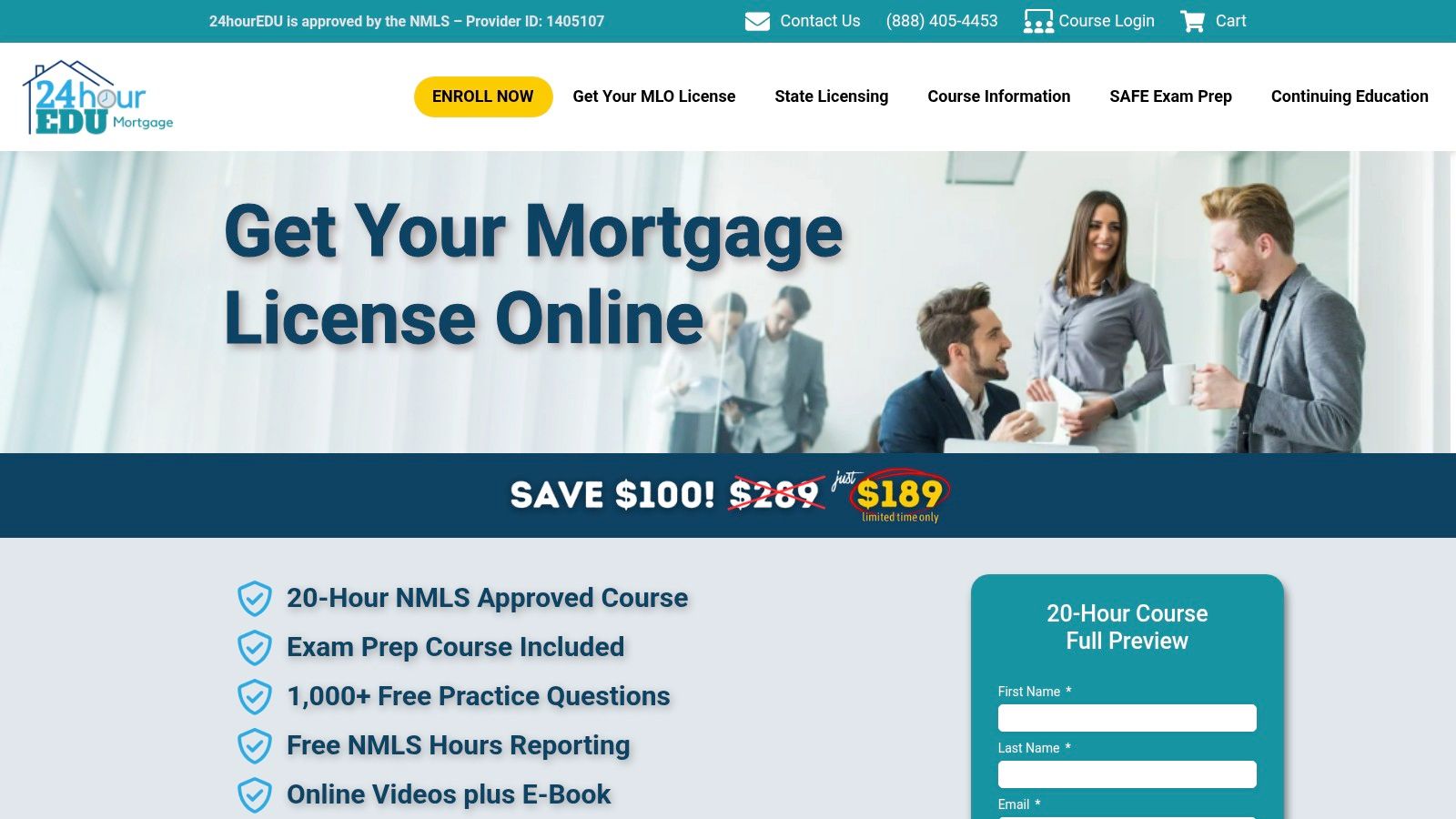
The state's education baseline is 24 hours, not just the federal 20-hour SAFE minimum, because Ohio adds a 4-hour state law block focused on Ohio lending laws and the Ohio Consumer Sales Practices ActOhio Revised Code section 1322.20. That extra state module is what makes the path Ohio-compliant. Ohio draws a sharper line here, and that is why online NMLS-approved providers matter so much for candidates who want a clear, state-specific path. The 24hourEDU mortgage loan originator license requirements page lays out that course path in a way many first-time applicants find easier to follow.
The three pieces you keep hearing about
The path is easiest to understand as three pillars. First comes pre-licensing education, then the SAFE MLO exam, then state licensure through the Ohio Division of Financial Institutions. That sequence is why terms like NMLS, MU1, MU4, and surety bond keep showing up. If you are comparing Ohio's process with what other states ask for, the LendingXpress broker licensing guide can help you see how Ohio fits into the broader licensing picture.
Practical rule: If a course leaves out Ohio law, it may help you prepare for the test, but it does not fully match the state path.
Ohio also requires that an MLO be employed by or associated with one registrant or exempt entity at a time, and no person may act as a mortgage loan originator without first obtaining a license from the superintendent Ohio Revised Code section 1322.07. If you keep those three pillars in mind, the rest starts to read like a checklist, which is usually the point where the process feels less like paperwork and more like a path you can follow.
Pre-Licensing Education for Ohio Mortgage Loan Officers
An Ohio candidate can finish the federal mortgage class and still miss the state piece if the course ignores Ohio law. The state wants 20 hours of approved national instruction plus 4 hours of Ohio-specific law, because the licensing file has to show both parts before the rest of the process can move ahead. That split is the first Ohio-specific gotcha, and it keeps the path from turning into a generic national course that only looks complete Ohio Revised Code section 1322.20.
What the Two Course Blocks Cover
The 20-hour national core covers the mortgage basics you need anywhere in the country, including federal loan origination rules, ethics, non-traditional lending, and the compliance language every MLO should recognize. The 4-hour Ohio module is the part that makes the course fit this state, since it focuses on Ohio lending law and the Ohio Consumer Sales Practices Act, the consumer-protection framework that shapes mortgage work here Regulatory Counsel's Ohio mortgage license requirements overview. For Ohio applicants, that state-law block is not extra polish, it is the part that tells the regulator you have studied the rules that apply to your files.
If you have held a valid Ohio MLO license within the prior five years, the statute says you do not need to repeat pre-licensing instruction Ohio Revised Code section 1322.20. That exception can spare a returning professional from starting over, but most first-time candidates should plan on completing both blocks together so the application does not sit waiting for education verification.
A good online course can keep the national hours and the Ohio hours in one place, which matters when you are trying to avoid chasing paperwork across different systems. 24hourEDU's fully online, NMLS-approved path includes Ohio's state-law hours and Provider ID 1405107, with video lessons, an e-textbook, exam prep materials, and phone and email support. It also reports completed hours to NMLS, so the education side of the file moves with less back-and-forth.
The smartest Ohio candidates treat the state-law hour like the hour that deserves the most attention, because that is where the Ohio-specific rules live.
If you are comparing education providers and also trying to read the broader economy, a neutral market outlook from financial advisors can help you think about timing and career planning. For licensure, though, the question stays simple, the course has to include both the national curriculum and Ohio's required law content in an NMLS-approved format.
Passing the SAFE MLO Exam Under Ohio Rules
Once the coursework is finished, the exam becomes the next gate. Many candidates expect a straightforward memory test, then the questions reward careful reading, compliance judgment, and attention to wording. Ohio raises the stakes a bit more because the written licensing test uses a 75% passing scoreNMLS Ohio state-specific testing requirements.
How the testing process usually works
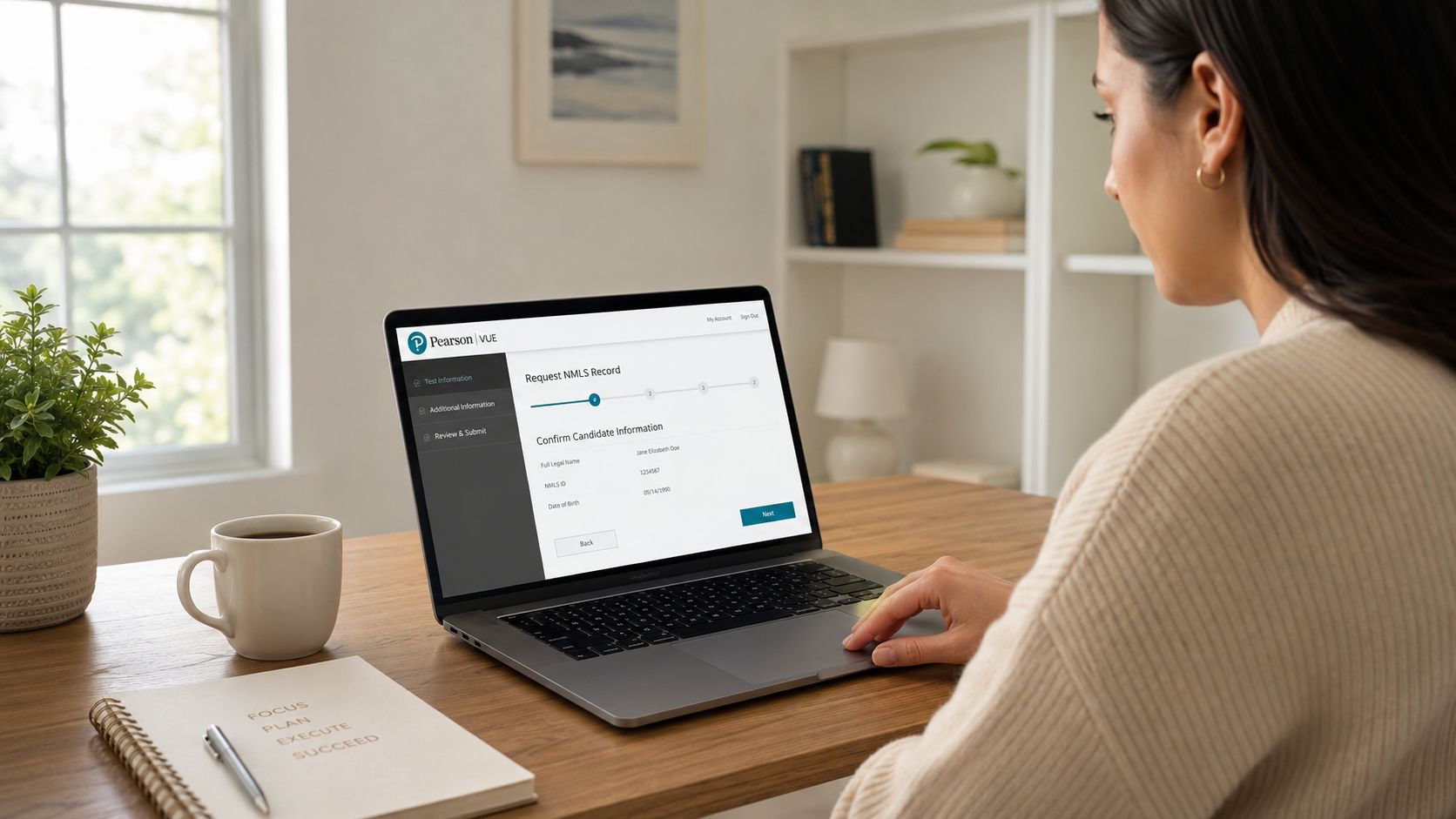
Start by creating or updating your NMLS record, then request the SAFE MLO licensing exam through the testing vendor and choose a testing time that fits your schedule. If you are still getting comfortable with NMLS terms, it helps to understand what your NMLS number is before you book anything, because that record is the thread that ties your education and licensing steps together. The exam is multiple-choice and split into two components, so your study plan should cover both knowledge and judgment, not just definitions. Practice tests matter here, especially if your course includes them, because the goal is to walk into the exam room ready for the question style, not just familiar with the material.
Ohio's retake rules are strict, but they are easy to follow once you know them. You must wait 30 days between retakes, and if you fail three consecutive attempts, you must wait six months before trying again NMLS Ohio state-specific testing requirements. The point is not punishment, it is to make sure you come back with a stronger study plan instead of rushing into another booking.
Plain advice: Do not treat the free exam prep as optional. Ohio's score requirement is high enough that a solid prep package can save you from a second round of scheduling.
A lot of Ohio candidates finish the course in about two weeks and sit for the exam in the same month when their course bundles practice questions and review tools. That timing is realistic when your study time stays focused and the prep materials match the actual test format. If you have already handled the Ohio law module, you are not starting from zero, you are turning coursework into a passing score.
Getting Sponsored, Fingerprinted, and Approved in Ohio
Passing the exam does not let you originate loans yet. Ohio still wants the business-side steps in place, and many first-time candidates get tripped up here because the licensing process reaches beyond test results. Before you can legally work, you need a license application through NMLS, the required fees, fingerprinting for a criminal background check, and sponsorship by the right company Ohio Revised Code section 1322.07.
The approval checklist
The cleanest way to understand the approval stage is to separate the moving parts.
Licensing application: File through NMLS with your personal and employment information.
Background check: Complete fingerprinting so the FBI background review can run.
Employer connection: Be employed by or associated with a registered mortgage company or licensed broker.
Single-sponsor rule: Stay tied to only one qualifying entity at a time.
Disclosures: Be ready to disclose judgments and relevant financial history.
State review: Wait for the Ohio Division of Financial Institutions to complete its review.
The single-sponsor rule catches a lot of candidates off guard. If you are thinking about side work or more than one affiliation, Ohio law does not allow you to be associated with more than one qualifying entity at the same time Ohio Revised Code section 1322.07. In plain English, your work relationship has to be settled before you start taking applications or talking with borrowers about originations.
That rule makes the sponsor relationship the gatekeeper for the rest of the process. Ohio is not just checking whether you passed a test, it is checking whether there is a real company behind your activity and whether that company is the only one connected to your license.
The approval window is often described as taking roughly two to six weeks after NMLS confirms a complete file, although the pace depends on how quickly your sponsor, fingerprints, and disclosures come together. Candidates who gather the paperwork early usually feel less pressure near the finish line. A cleaner file gives the reviewer fewer reasons to stop and ask for more.
If you are still unsure what an NMLS number does or why it shows up everywhere in the process, the what an NMLS number means explainer gives a plain-language overview. The key idea is simple. NMLS is the system that ties your education, exam, sponsorship, and license together.
Annual Continuing Education for Ohio MLOs
Getting licensed is the beginning, not the end. Ohio expects licensed MLOs to complete 8 hours of NMLS-approved continuing education every year, beginning the year the license is issued unless pre-licensing education was completed in that same year. NMLS Ohio continuing education requirements That schedule keeps your knowledge current and your license active.
The yearly hour breakdown
Ohio's annual CE is divided into 3 hours of federal law, 2 hours of ethics, 2 hours of non-traditional mortgage lending, and 1 elective hour. NMLS Ohio continuing education requirements The non-traditional lending block matters because Ohio MLOs often work with borrowers who use government-backed programs and other options that do not fit a plain conventional file. That makes the CE practical, not just procedural.
Hours must be completed through an NMLS-approved provider, and the provider reports them into the system. If CE is late, the license can be affected, which is why many active MLOs treat the annual requirement like calendar maintenance instead of a last-minute scramble. Staying ahead of it protects both your license and your reputation with employers and borrowers.
Keeping up with CE is one of the easiest ways to stay sharp without interrupting your pipeline.
The best part is that annual education does not have to disrupt your work. A few focused hours each year can keep you current, help you avoid compliance headaches, and make you more comfortable when a borrower's file gets unusual. That habit is what turns a new license into a durable career.
Loan Programs Ohio MLOs Should Master
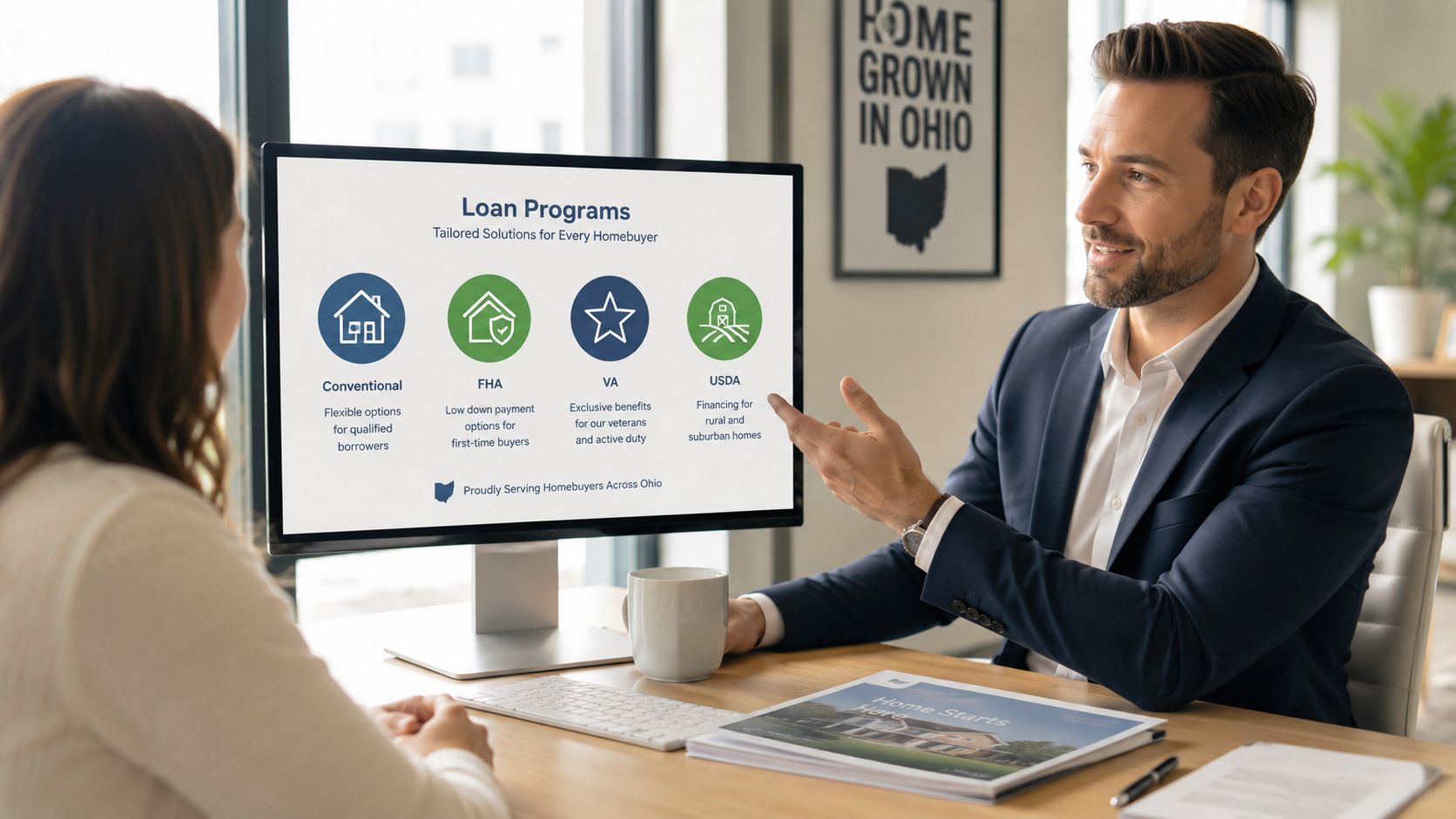
Ohio borrowers don't ask for one kind of mortgage. They ask for the right fit, and that's where a trained MLO becomes useful. A borrower in Cincinnati might need help comparing FHA and conventional financing, while a veteran near Dayton may be focused on VA eligibility, and a family in an Appalachian county may want to know whether USDA is even possible. The licensing requirement gets you in the door, but product knowledge is what helps you stay valuable.
The programs that come up most often
Loan Program
Eligible Borrower
Typical Ohio Use Case
Conventional
Borrowers who fit standard credit and income guidelines
Move-up buyers and refinances in strong suburban markets
FHA
Borrowers who want lower down payment flexibility
First-time buyers in cities like Cleveland and Cincinnati
VA
Eligible veterans and service members
Military households around Dayton and Columbus
USDA
Borrowers in eligible rural areas
Buyers in Appalachian counties and other rural parts of the state
That table is the heart of the conversation. Conventional loans can fit many borrowers, FHA often helps first-time buyers get started, VA serves eligible military families, and USDA opens the door in rural areas. Ohio Housing Finance Agency programs can also stack with some conventional financing setups, which is why MLOs who understand local assistance tools tend to sound more credible in the first conversation.
If you want one good outside perspective on how borrowers think about these products, the EmailScout guide on connecting with clients genuinely is useful because rapport matters when you're explaining loan options. The borrower usually remembers which professional made the program feel understandable, not which one recited product terms fastest.
A strong Ohio MLO doesn't just quote guidelines. They help the borrower match the loan to the county, the household, and the long-term plan.
Common Borrower Pain Points and How Ohio MLOs Solve Them
Ohio borrowers usually get stuck in the same few places, and the best MLOs learn to spot those friction points early. A rural buyer might assume USDA isn't available because they don't live on farmland, a self-employed borrower might think bank statements will sink the file, and a condo buyer might not realize FHA approval can slow everything down. Those aren't rare surprises, they're the everyday moments where a calm, licensed guide adds real value.
Four common scenarios
A buyer in southern Ohio often worries that USDA maps are too restrictive. A trained MLO explains eligibility carefully and sets expectations before the borrower falls in love with the wrong house. That upfront clarity saves time and keeps the deal from collapsing over an avoidable misunderstanding.
A Columbus entrepreneur may need a different documentation strategy than a W-2 borrower. If the file needs extra attention, the MLO can explain that early, gather the right paperwork, and prevent a last-minute scramble. That kind of preparation is what turns a complicated file into a manageable one.
A Cincinnati condo buyer may run into FHA approval questions, and a Dayton veteran may face appraisal timing on a VA loan. In both cases, the MLO's job is to calm the file, not complicate it. The borrower doesn't want jargon, they want a realistic path to closing.
Borrowers rarely refer the loan officer who sounded smartest, they refer the one who stayed clear, responsive, and honest when the file got messy.
The upside is career-building. When you solve these problems well, you build trust, and trust is what supports commission income, flexible scheduling, and the kind of work-from-home rhythm many Ohio MLOs want. If you're trying to sound human instead of scripted, the earlier EmailScout rapport guide is a helpful reminder that good conversations are part of the job, not a side skill.
Your First Two Weeks Toward an Ohio MLO License
The fastest way to lose momentum is to treat licensing like a someday project. The cleaner move is to give yourself a two-week sprint and make each day count. Ohio's requirements are specific, but they're absolutely manageable when you line them up in order.
A simple 14-day plan
Day 1: Verify eligibility and choose an NMLS-approved online provider.
Days 2 to 10: Complete the 20-hour national coursework and the 4-hour Ohio law module.
Days 11 and 12: Work through the free exam prep package and practice tests.
Day 13: Schedule and pass the SAFE MLO exam.
Day 14: File the NMLS application, finish fingerprinting, and line up an Ohio-registered sponsor.
That's a realistic pace for someone who wants to move quickly without cutting corners. Once the education is done, the rest of the process is mostly about organization, timing, and staying responsive to your sponsor and the state. If you've ever wanted a career with flexibility, naming your own hours, and the possibility of working from home after licensure, this is the point where the path starts to look real.
24hourEDU offers an online Ohio MLO education path with the required NMLS-approved coursework, the Ohio law module, and exam prep materials included at no extra cost. If you're ready to start, visit 24hourEDU and take the first step toward meeting every Ohio mortgage loan officer requirement on your own schedule.
24hourEDU gives aspiring Ohio MLOs an online path that lines up with the state's education and exam requirements, including the Ohio law portion and exam prep materials. If you want a clear, flexible way to move from studying to testing to licensure, visit 24hourEDU and get started today.
24hourEDU NMLS Mortgage Loan Officer Course – $189 All States