
61% of U.S. undergraduates took at least one distance-education course in fall 2021, according to the National Center for Education Statistics. Online learning isn't an unusual alternative anymore. For someone considering a mortgage career, the more useful question is whether a course provides approved education, practical preparation, and a clear total cost.
Among online financial services courses, Mortgage Loan Originator training offers a particularly direct connection between study and a regulated career. Choosing well means looking beyond a completion certificate. You want to know what your tuition includes, how deadlines work, and whether you can apply what you've learned when a borrower asks a difficult question.
Course Types and the Hours Each One Requires
The 20-hour national SAFE pre-licensing course is the starting point for a new applicant pursuing state MLO licensure. At 24hourEDU, our NMLS-approved national course uses online prerecorded instructor-led video lessons and includes a free state law course. Completing it satisfies the national education component, not the entire licensing process.
The other course types serve different stages of your career. Exam prep supports your test preparation, continuing education supports renewal, and networking instruction helps you build professional relationships after licensing.
Online financial services course types, hours and purpose
| Course type | Hours | Best for | What it unlocks |
|---|---|---|---|
| Pre-licensing, national SAFE course | 20 hours | New applicants before the SAFE MLO test | Education component of the first state license |
| State law course | Included free with the national course; required hours follow state rules | Applicants licensing in a specific state | State-specific rules |
| Annual continuing education | At least 8 hours annually, plus applicable state requirements | Licensed MLOs at renewal | Education component of active license renewal |
| SAFE MLO exam prep | Included with the national course; supplemental study | Students preparing for the national test | Practice on course content |
| Networking course | Supplemental training, not a licensing-hour requirement | Loan officers building referral relationships | Professional and community group participation |
Pre-licensing teaches the national mortgage concepts a new applicant needs before moving through the remaining licensing steps. A course completion certificate doesn't authorize you to originate loans by itself.
State law instruction adds jurisdiction-specific rules. Our included state law course helps address that part of your preparation, but you should still match your course selection to your state's education requirements.
Choose for your current career stage
We offer continuing education for annual NMLS education requirements, including a 2026 CE Course. When choosing renewal education, match the approved course content to the state licenses you're maintaining rather than assuming any finance class earns renewal credit.
Exam prep has a different purpose. It helps you revisit the national course material and practice recalling rules under test conditions; it doesn't replace approved pre-licensing education.
Our Networking Course teaches loan officers how to join and actively participate in professional organizations and community groups that connect them with potential clients. Think of it as business-development instruction, not another licensing prerequisite.
Choose by purpose: Start with pre-licensing if you're new, select continuing education if you're renewing, and add networking instruction when you're ready to develop referral relationships.
Why Mortgage Loan Originator Courses Stand Out in Online Finance Training
In 2025, 17% of U.S. adults said they'd taken a personal-finance course or training outside school, including through a community program, nonprofit, employer, or online course, according to the National Endowment for Financial Education. That establishes participation in structured financial education, but it doesn't rank mortgage courses against other subjects.
For a career changer, MLO training stands out for a more useful reason: it serves a defined licensing purpose. A general personal-finance class can help you understand borrowing and budgeting. Approved mortgage pre-licensing education prepares you for the education component of entry into a regulated profession.

A direct route rather than a popularity ranking
A general finance course is a road map: it helps you understand the terrain. MLO pre-licensing is part of earning the permit to work in that terrain, although the regulator must still approve your license.
This distinction matters to people moving from sales, retail management, or property management. Recent graduates, notaries, and house flippers considering lending also need to separate useful background knowledge from the specific education their intended license requires.
We serve students across the United States through online mortgage education. That makes training practical for someone who can't relocate or regularly attend a classroom.
The right course isn't necessarily the one with the most students. It's the one that advances your intended license without unnecessary expense or confusion.
Can completing the education over a short study period be worthwhile? Yes, when the approval is appropriate, the requirements are clear, and you understand that course completion and license issuance are separate milestones. That clarity makes a career transition easier to plan.
Approval and Provider Checks to Make Before You Enroll
Start with the NMLS approval, not the advertising headline. Our 20-Hour SAFE national course is NMLS Approved Course #16623, and our NMLS Provider ID is 1405107. We list course approvals and provider information on each course page.
Under the federal SAFE Act baseline, applicants seeking state MLO licensure need at least 20 hours of approved pre-licensing education, a qualified written mortgage test, fingerprints for an FBI criminal-background review, and authorization for an independent credit report, as explained by the Conference of State Bank Supervisors. States can impose additional conditions, so national approval isn't a substitute for checking your state's application requirements.
Verify what you're buying
Use this checklist before paying for any provider's course:
- Match the course identity. Find the approval number on the actual product page, not just a general claim that the school offers approved education.
- Match the education purpose. Pre-licensing, continuing education, and exam prep aren't interchangeable. Confirm that the course earns the type of credit you need.
- Check the state component. Our national course includes a state law course. Confirm that your selected module addresses your intended jurisdiction's requirements.
- Confirm credit reporting. We include NMLS hours reporting with the national course. Keep your account details accurate so your completed education can be associated with your record.
- Understand support access. Our team helps with enrollment, accounts, certificates, NMLS credit reporting, and technical questions.
- Read the written terms. Understand the completion window, reset conditions, and refund policy before committing your study time.
Separate service standards from licensing approval
Business accreditation and education approval answer different questions. Our BBB accreditation standards information can help you evaluate service expectations, but BBB accreditation isn't the approval that makes a mortgage course eligible for NMLS education credit.
Keep copies of your enrollment confirmation and completion certificate. If an education record doesn't appear as expected, those documents help support resolve the issue without asking you to reconstruct your purchase.
Before enrollment, review your state's licensing checklist for additional education and application conditions. This is especially important if you intend to work across state lines: a national course supplies the common foundation, but each relevant regulator determines the remaining requirements.
What the Curriculum Covers and How the SAFE Exam Is Passed
The SAFE curriculum addresses federal law, ethics, nontraditional mortgage products, and mortgage origination, while NMLS separately requires a 70% minimum passing score on the end-of-course assessment for online self-study courses, as described in its SAFE Act education requirements. Your state law module adds the jurisdiction-specific rules relevant to your application.
Don't confuse a course assessment with the licensing examination. The national SAFE MLO test requires a minimum passing score of 75%, and state-licensed MLOs must complete at least eight hours of continuing education annually, subject to additional state rules, according to CSBS's continuing education guidance.
Use each study tool for a specific job
Our national course includes prerecorded, fully narrated video clips, with a full script displayed alongside each video. An e-textbook gives you a written reference, and the included SAFE MLO Exam Prep Course provides access to all MLO video content from the national course.
Use the video to understand a concept, the script to review precise wording, and the e-textbook to locate related terms. Our NMLS exam study guide can help you organize that preparation.
- Test recall. Answer a practice question without opening your notes, then explain why the other choices are wrong.
- Test application. Apply the same rule to a borrower scenario, including any facts you'd need before answering.
- Test communication. Write a plain-language explanation that a borrower could understand without knowing mortgage terminology.
Prepare for work as well as the test
Say a borrower asks whether a proposed payment is manageable. Build a simple spreadsheet showing documented income, recurring obligations, and estimated housing costs. Check the applicable lending criteria rather than treating a rough affordability calculation as an approval.
Financial-statement analysis, spreadsheet accuracy, and data interpretation deserve practice beyond test questions. So do fair-lending judgment and recognizing when an automated result needs human review.
Job-readiness check: Can you explain your conclusion, identify the documents supporting it, and state what still needs verification?
A compliant course provides required education. Your next responsibility is learning to apply those rules consistently on actual files, with employer training and supervision where appropriate.
Delivery Formats and Whether Online Learning Holds Up
A randomized controlled trial of more than 10,000 adults in Portugal, studying a 10-hour personal-finance course, found knowledge gains in both online and in-person formats and no statistically significant difference between delivery modes, according to the American Finance Association study listing. That's encouraging evidence for structured online financial education, although it isn't a mortgage licensing exam study.
The practical lesson is to inspect the teaching design, not just whether the class meets on a screen. Clear objectives, assessment, and opportunities to revisit difficult material matter more than a polished video player.

Online course delivery formats compared
| Format | How it works | Best for | Trade-off |
|---|---|---|---|
| Online instructor-led sessions | Scheduled sessions led by an instructor | Learners who need real-time questions and answers | Set session times |
| Prerecorded instructor-led video | Narrated lessons you can replay, with a full script alongside | Busy learners studying in short blocks | Less live interaction |
| E-textbook reading | Written reference reviewed alongside the video | Checking terms and rules before the test | Works best paired with video |
| Scenario-based practice | Simulated loan decisions with feedback | Practicing applied decisions | Confirm availability per course |
Our national course uses prerecorded instructor-led videos, not scheduled live classroom sessions. You can complete the education from anywhere with an internet connection, without classroom travel, while still observing the course's completion deadline.
Live teaching may suit someone who wants immediate discussion. Prerecorded instruction suits someone who needs to replay a calculation or study around evening and weekend commitments.
For another perspective on matching instruction to your habits, Colibri Trader's guide to which trading learning format suits you offers a useful comparison. Its subject is trading education, not mortgage approval requirements, so use it to consider learning preferences rather than licensing eligibility.
Make online study active
A game-based financial-education trial involving 2,220 students across four countries improved financial-literacy scores by an average of 0.313 standard deviations, according to the Amsterdam University of Applied Sciences study record. That supports adding decision practice to instruction rather than relying on reading or watching alone.
Pause after a lesson and work through a loan-cost comparison. Explain why a disclosure matters, identify a missing document, or draft a response to a borrower who doesn't understand a fee.
Testing arrangements deserve separate attention. In 2021, approximately 25% of SAFE MLO test candidates used online proctoring, according to the CSBS annual report. Confirm current scheduling options and technical requirements before booking; an online course doesn't automatically determine how you'll take the licensing test.
Cost Versus Value for the Full Licensing Path
Our 20-Hour SAFE national course costs $189.00, equivalent to $9.45 per course hour. The purchase includes a state law course, an e-textbook, SAFE exam prep, and NMLS hours reporting.
That makes the enrollment price useful, but it still isn't the complete cost of obtaining a license. Compare education expenses separately from examination, background-check, credit-report, and state application charges.
Cost and included value of the pre-licensing path
| Item | Cost | What it covers |
|---|---|---|
| 20-hour SAFE Comprehensive national course | $189.00 | NMLS Approved Course #16623, online video lessons and e-textbook |
| State law course | Free with the national course | Bonus state law module |
| NMLS hours reporting | Free, valued at $30 | Completed hours reported to NMLS |
| SAFE MLO exam prep | Free | Video content from the national course |
| Course reset fee | $44 | Restarting after missing the 14-calendar-day completion window |
| SAFE MLO test, fingerprints and credit report | Separately charged at applicable published rates | Confirm with your state and testing provider |
| Other providers | Their published tuition plus mandatory extras | Compare total cost, approval, hours and support |
The reporting value isn't cash returned to you, and included exam prep doesn't mean the licensing test itself is free. Keeping those distinctions clear prevents a common budgeting mistake: treating every included service as a reduction in government or testing charges.
Calculate the consequence of a missed deadline
If you don't complete our course within 14 calendar days, you can pay a $44 reset fee to start it over. A single reset brings the course-related payment to $233.00, before separately charged licensing expenses.
That makes your calendar part of the purchasing decision. Someone beginning during a demanding work assignment may face a higher practical cost than someone who reserves uninterrupted study time before enrolling.
A low sticker price isn't a bargain if you must purchase missing essentials or pay to restart a course you couldn't finish.
Build a simple comparison sheet with tuition, required add-ons, reporting charges, exam-prep costs, deadlines, and support access. Leave unconfirmed external charges marked for verification rather than assuming they're included or guessing an amount.
Also consider what happens when something goes wrong. Help resolving a login problem or locating a completion certificate can matter when you're trying to keep an application moving.
Choose the lowest complete cost that includes appropriate approval and usable support, not merely the smallest advertised tuition. You should be able to explain both what you're paying for and what remains outside the purchase before you enroll.
Career Outcomes for New Mortgage Loan Originators
Consider a retail manager changing careers. They're comfortable asking questions, explaining choices, and following up, but mortgage documentation is new territory. After completing education and securing the required license and employment arrangements, they begin translating those existing strengths into borrower service.
An MLO takes applications, explains loan options, gathers documents, and helps borrowers progress toward a lending decision. The originator doesn't replace the underwriter or promise approval. Good work means setting accurate expectations and keeping the file organized.
Turn existing skills into a lending routine
The former manager starts by learning the employer's systems and checking document requests carefully. They practice explaining why a pay statement, bank statement, or clarification is needed without making the borrower feel blamed.
- Customer service becomes borrower communication. Listen before recommending a next step, and explain unfamiliar terms without talking down to anyone.
- Organization becomes file discipline. Track outstanding documents, promised callbacks, and approaching milestones.
- Sales experience becomes responsible relationship building. Follow up consistently without pressuring borrowers or overstating their options.
They also participate in local community groups and professional organizations. In a large city such as Chicago or Houston, they might focus on a manageable community rather than trying to serve everyone across the metropolitan area.
Build flexibility on realistic expectations
Some mortgage roles offer home-based work and meaningful control over scheduling. That flexibility still has boundaries: borrowers, employers, compliance obligations, and transaction deadlines influence the workday.
Commission-based compensation can offer substantial earning potential, but earnings depend on the compensation arrangement, loan volume, market conditions, and effective follow-up. A closed loan may create an opportunity for a referral; it doesn't guarantee another client or steady income.
Our guide to whether a mortgage loan originator is a good career can help you assess that fit. Continuing education supports ongoing license compliance, while networking instruction can help you develop relationships deliberately rather than waiting for business to appear.
Plan Your 14-Day Path to an MLO License
- Confirm eligibility. Review NMLS approval and your state's education and application requirements before paying.
- Enroll in our 20-hour SAFE national course, NMLS Approved Course #16623, and reserve study time throughout its 14-calendar-day window.
- Complete the appropriate included state law module.
- Work through the e-textbook and included SAFE exam prep.
- Arrange your test. Confirm current scheduling rules and prepare for the national exam's passing standard.
- Verify your completed education appears correctly in NMLS.
- Submit your state application through NMLS and complete the required fingerprint, credit-report, and other state steps.
- Calendar renewal education so it doesn't become a last-minute task.
Protect your study window
The course window is an education deadline, not a promise of license issuance. Testing, application processing, and regulatory review have separate schedules.
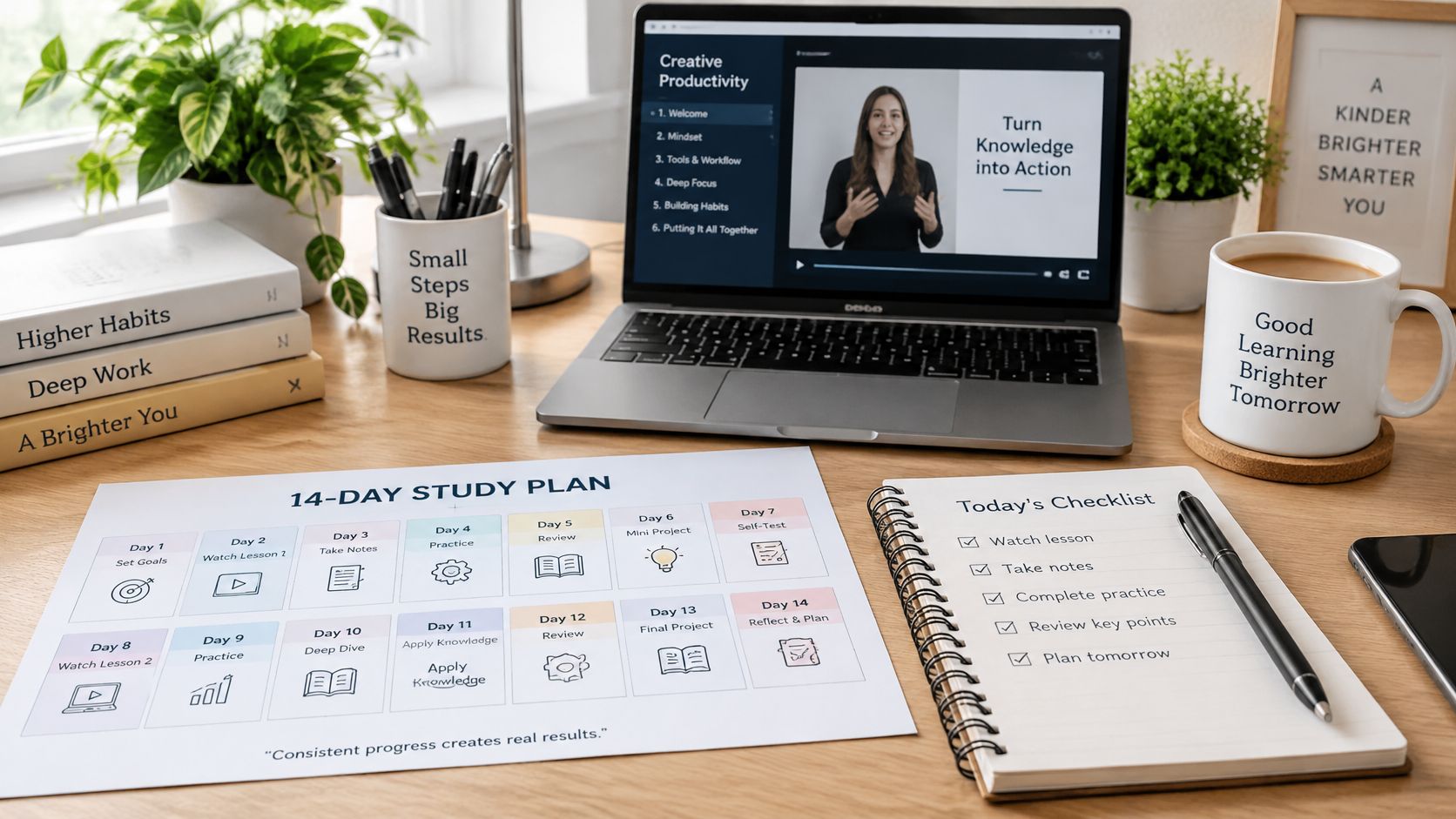
For a workable routine, try short weeknight study sessions and reserve weekend time for state law. Put the deadline in your calendar before starting so you can avoid a reset.
Our support team helps with enrollment, purchasing, login, completion certificates, NMLS credit reporting, technical issues, and refund-policy questions. Once you've confirmed your state's extra requirements, review the national course and choose a start date you can protect.
24hourEDU offers NMLS-approved online MLO pre-licensing education with instructor-led video lessons, an e-textbook, a free state law course, and exam prep included at no extra cost. Visit 24hourEDU to review the $189.00 national course and plan your next step toward a mortgage lending career.