


Online instructor-led training can mean different things depending on the provider. In this case, it means prerecorded video lessons with instructor support available through the course mailbox. You are not waiting for a scheduled class to begin or trying to fit your education around fixed meeting times. Instead, you can access the lessons anytime, move through the material at your own pace, and still reach out to a live instructor when questions come up. For aspiring MLOs, that format fits the licensing process well because the SAFE Act requires defined education topics and approved course completion.
What Online Instructor-Led Training Actually Means for MLO Candidates
A working parent might log in on a Tuesday night from the kitchen table, open a prerecorded lesson on mortgage regulations, pause to take notes, and replay a section that did not fully click the first time. If a lending term or compliance point still feels unclear, the student can send a question through the course mailbox and get help from an instructor without having to wait for the next scheduled class session.
That is the key difference in this format. The instruction is delivered through prerecorded video lessons, while instructor support remains available when students need guidance. Everyone is not required to attend at the same time, and students do not have to wait for an instructor to unlock the next step. The defining feature is flexible access to the lessons, paired with a way to ask questions and get clarification from a knowledgeable instructor.
A fully scheduled virtual class works differently. In that model, students attend at set times and learn alongside a cohort in real time. That structure can help some learners, but it also requires them to organize work, family, and other responsibilities around the provider’s calendar. With prerecorded lessons, the calendar pressure is lower, while the student still has a path to ask for help when needed.
Why the format fits MLO education
The SAFE Act requires state-licensed Mortgage Loan Originators to complete 20 hours of NMLS-approved pre-licensure education. The federal education requirement includes specific subject areas, so candidates are not just collecting general professional-development hours. They are learning rules, ethics, lending practices, and concepts that connect directly to the work.
A self-paced online format can be especially useful for that requirement. Students can review difficult topics more than once, pause to take careful notes, and complete lessons during evenings, weekends, or other open blocks of time. That matters when you are changing careers and do not yet have coworkers nearby to explain terms such as underwriting, fair lending, or nontraditional mortgage products.
Practical rule: Choose a course that gives you clear instruction, flexible access, and a reliable way to get answers when you need them.
The best program also treats the course as preparation for the profession itself. MLOs explain loan options, communicate with applicants, handle sensitive information, and work through detailed requirements. Studying independently, tracking your progress, and asking thoughtful questions through instructor support can help build habits you will use with clients and lending partners.
How This Format Differs From Other Delivery Options
The central choice is simple. Do you want the freedom to complete lessons on your own schedule, a blend of independent work and scheduled meetings, or a fully live class held at fixed times? Each format can work, but they create very different levels of flexibility, structure, and support.
Research points to trade-offs between synchronous and asynchronous learning. A meta-analysis of synchronous online learning reported a statistically significant small-to-moderate cognitive advantage for synchronous delivery, while highlighting engagement, immediate feedback, and community as important benefits. A separate randomized comparison of synchronous and asynchronous training found higher intrinsic motivation and perceived autonomy in the synchronous format, although it also found higher pressure and tension, with equivalent knowledge gains after training.
That combination leads to a practical conclusion. Live instruction can be useful, but it is not the only effective way to learn. Prerecorded lessons can work very well when the content is clear, the course is organized well, and students have a dependable way to get answers from an instructor when they need clarification.
Delivery Formats Side by Side
| Feature | Prerecorded Video with Instructor Support | Blended | Synchronous Live Online |
|---|---|---|---|
| Instructor access | Questions submitted through the course mailbox, with support available as needed | Live access during selected sessions, with digital work between classes | Live questions and explanations during scheduled sessions |
| Accountability | Mostly depends on the learner, with structure provided by course progression and deadlines if applicable | Shared between live attendance and independent assignments | Attendance, calendar commitments, and active participation |
| Flexibility | Maximum scheduling freedom with anytime lesson access | More scheduling flexibility between live meetings | Remote access, but fixed class times |
| Best use | Busy learners who want to study on their own schedule and replay lessons as needed | Learners who want some live guidance plus independent review | Learners who prefer real-time instruction and discussion |
| Main risk | Procrastination if you do not create a study routine | A weak live component can reduce the value of the program | Missed sessions or scheduling conflicts |
A practical guide from Tutorial AI can help course designers think through online delivery, interaction, and learner support. For an MLO candidate, the same principle applies: the course should make learning clear, provide dependable support, and let you move from instruction to practice without confusion.
Blended learning can be excellent when the live component has real substance. Fully live learning can also be effective for students who want scheduled accountability. But if your priority is flexibility, prerecorded lessons with instructor support may be the better fit. Review online learning best practices before enrolling, then ask exactly how instructor questions are handled, how quickly students receive responses, and what resources are available if a learner falls behind.
Breaking Down the SAFE Act 20-Hour Education Requirement
The federal requirement is easier to evaluate when you separate it into its required subjects. The NMLS SAFE Act education specification identifies 20 hours of pre-licensure education for state-licensed MLOs, including federal law, ethics, nontraditional lending, and mortgage origination instruction.
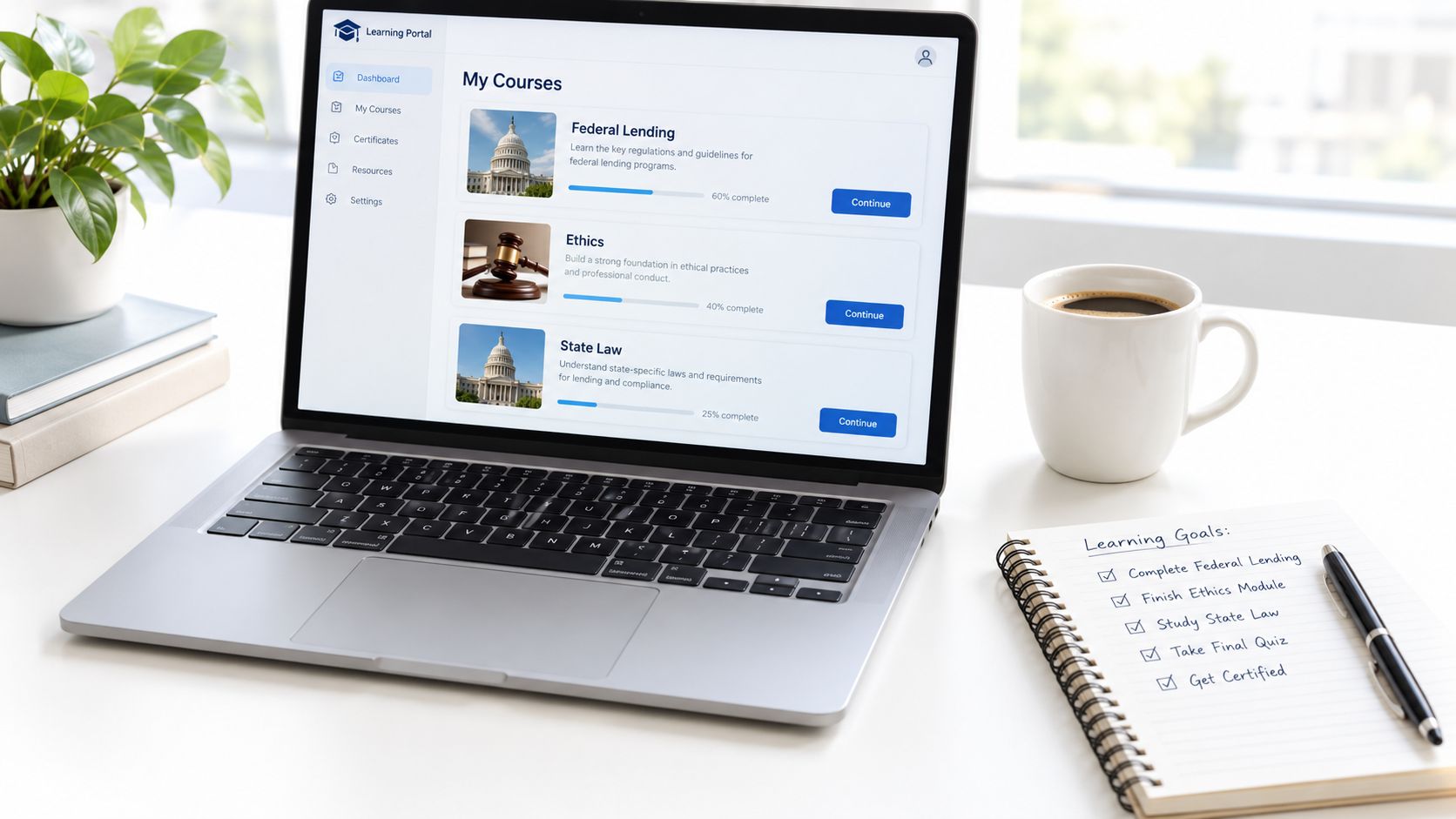
The required subjects
- Federal law and regulations, 3 hours: This area covers the federal rules that shape mortgage origination and borrower interactions. Prerecorded lessons are especially useful here because students can replay complex sections and review terminology carefully.
- Ethics, 3 hours: Ethics instruction includes subjects such as fraud, consumer protection, and fair lending. These topics deserve more than memorization because they influence daily decisions and professional conduct.
- Nontraditional mortgage lending, 2 hours: You will study lending products and practices outside the most familiar conventional scenarios. Ask whether the course uses examples that make the terminology understandable.
- Mortgage origination instruction, 12 hours: The remaining hours cover the broader origination foundation. Providers commonly use this portion for loan products, origination activities, and underwriting fundamentals.
The 20-hour federal requirement is a floor, not a universal final total. States can add education. Texas, for example, requires at least the federal 20 hours plus 3 additional hours covering Texas laws, rules, and practice considerations, according to the Texas mortgage licensing FAQ. Maryland states that the 20-hour SAFE pre-licensing requirement only needs to be completed once, even when an originator holds licenses in multiple states.
NMLS must review and approve courses intended to satisfy MLO pre-licensing or continuing education requirements. The NMLS course approval policy explains that approval is required before a course can be used for state-licensed MLO education.
Use the MLO 20-hour course breakdown to compare the required categories before enrolling. A provider that compresses the origination material or treats state requirements as an afterthought deserves scrutiny.
Why This Format Works for Career Changers and Busy Professionals
Career changers rarely need more motivation. They need a course that fits around an existing life. A parent may have reliable availability only after dinner, a shift worker may need to study in short blocks across the week, and a recent graduate may need time to review mortgage vocabulary more than once.
Prerecorded online lessons solve much of that problem without requiring relocation or attendance at fixed times. You can join from a home office, a quiet room, or another suitable location with a dependable connection. Because the lessons are available anytime, you can study when your schedule allows instead of reshaping your life around a class calendar.
The trade-off is also clear. A self-paced course requires you to create and protect your own study routine. That is a strength for many candidates, because it allows progress on evenings, weekends, lunch breaks, or any other open window. But it also means consistency matters.
The flexibility advantage
The biggest benefit of prerecorded instruction is control over pace. If you confuse a federal requirement with a state-specific rule, you can replay the lesson, revisit your notes, and then send a question through the course mailbox if you still need clarification. If a loan scenario seems inconsistent, you are not forced to keep up with a live class before you are ready.
That kind of flexibility matters for adult learners. It reduces scheduling stress while still preserving access to instructor guidance. Career changers also benefit from being able to spend extra time on unfamiliar material instead of moving forward simply because the clock says the class is over.
Read this guide on how to balance work and study before you begin. Set recurring calendar blocks, prepare your workspace, and keep a notebook for questions that need follow-up through the course mailbox.
Employers may value the discipline that self-paced coursework develops, but do not choose a course based on an unsupported promise about hiring. Choose it because you need a dependable learning environment that prepares you to discuss lending clearly, meet deadlines, and handle client questions with confidence.
How to Evaluate an NMLS-Approved Online Course
Approval comes first, but it is not the whole decision. An NMLS-approved course can satisfy the education requirement, while still offering a learning experience that varies widely in instructor access, practice materials, technical support, and state coverage.
Start with the provider’s current NMLS information. The provider ID supplied by 24hourEDU is 1405107, but you should still confirm the provider and course details through NMLS before enrolling. Approval is a compliance checkpoint, not a substitute for examining how the course teaches.
A practical vetting checklist
- Confirm the hour map: The course should clearly account for federal law, ethics, nontraditional lending, and mortgage origination instruction. It should also identify any additional education required by your licensing state.
- Check exam preparation: Look for a national practice exam, relevant state practice material, explanations for incorrect answers, and a method for reviewing weak areas. Exam prep should be integrated into the learning experience, not added as a vague promise.
- Ask about instructor access: Find out how students submit questions, how the course mailbox works, and when students can expect responses. “Instructor-led” should mean meaningful access to a knowledgeable person, even if the lessons themselves are prerecorded.
- Review attendance controls: NMLS education requires reliable identity and attendance procedures. Ask how the provider verifies participation and records completion.
- Test the support process: A course should make it clear when technical and academic help is available. Slow answers are especially frustrating when you are trying to complete a required module.
- Understand reporting: Ask how the provider reports completed hours to NMLS and what confirmation you receive. The NMLS testing FAQ clarifies that candidates do not have to finish pre-licensure education before taking the test, but they still must complete the required education to satisfy licensing requirements.
A course portal should also make documents, attendance records, assessments, and support requests easy to manage. Tools such as a form builder for courses illustrate how structured digital workflows can reduce administrative friction, although the provider remains responsible for meeting NMLS requirements.
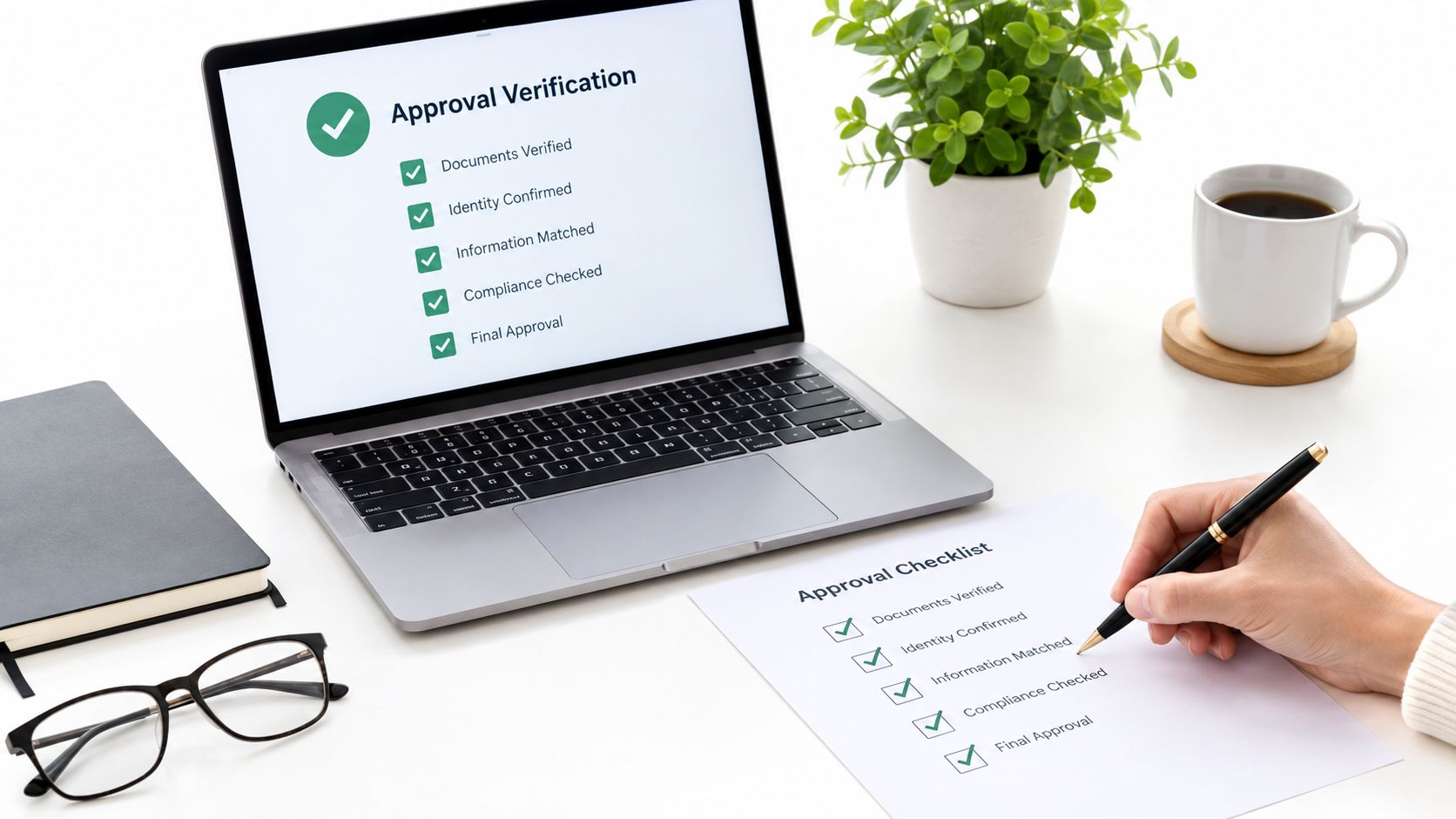
Avoid choosing on price alone. The cheapest option becomes expensive if unclear instruction leaves you repeatedly reviewing the same subjects or searching elsewhere for explanations.
From Enrollment to License in Just a Few Weeks
A focused plan can move quickly, but no responsible provider should promise that every candidate will follow the same schedule. Your pace depends on class access, work obligations, state requirements, NMLS processing, background checks, and test appointments.
A sensible sequence begins with enrollment, identity verification, and access to the course materials. From there, complete the federal subject areas, work through state-specific content as required for your intended license, and keep a running list of questions instead of waiting until the final assessment to discover gaps.
A disciplined licensing sequence
- Set your target: Confirm the state where you intend to seek licensure and identify any education beyond the federal requirement.
- Study consistently: Treat your coursework like a professional appointment, even though the lessons are available anytime. Log in prepared, make steady progress, and address confusing concepts promptly.
- Practice deliberately: Use national and state practice questions to identify weak subjects. Review the reasoning behind each answer, not just the score.
- Confirm completion: Make sure your provider has recorded the required hours and that you understand what documentation is available.
- Schedule the test: Once your preparation is strong, arrange the SAFE MLO test through the appropriate testing process. The NMLS FAQ confirms that pre-licensing education is not required before sitting for the test, although it remains necessary for licensing.
- Complete the remaining licensing steps: Follow NMLS and state instructions for testing, sponsorship, background checks, and any other application requirements.
A flexible program can remove avoidable friction because students can move ahead without waiting for a class meeting and still reach out for guidance when needed. It cannot control appointment availability or guarantee a passing result. Your advantage comes from completing the education carefully, practicing under realistic conditions, and handling each administrative step without delay.
Launching a Flexible MLO Career After You Pass
Passing the SAFE exam is a milestone, not the entire career. You will still need to complete the applicable NMLS and state process, satisfy background requirements, and work with an organization that can sponsor or employ you according to the rules that apply to your position.
The professional upside is substantial. Mortgage Loan Originators can work with depository institutions, mortgage banks, or brokerages, and each setting may offer different lead support, technology, training, compensation structures, and expectations. Ask detailed questions before choosing a sponsor. You are selecting the environment where you will build your first professional habits.
Build a career around how you work best
Some originators focus on purchase lending. Others develop expertise with refinancing, government-backed programs, or jumbo lending. You do not need to master every niche on your first day, but you should learn which borrowers you want to serve and which products your employer supports.
The role can also offer schedule flexibility. Many MLOs use remote tools to communicate with applicants, real estate professionals, processors, and underwriters, allowing them to organize work around family commitments. Flexibility is not the same as working less. Successful originators often answer questions quickly, maintain careful records, and stay available when a transaction demands attention.
Income can scale with production and relationships rather than being tied only to hours worked. That entrepreneurial upside attracts people from sales, customer service, property management, and other careers where communication and follow-through already matter. Over time, an originator can build a durable book of business, deepen referral relationships, and pursue leadership or brokerage opportunities where permitted.
Continuing education keeps your knowledge current and supports ongoing compliance. The mortgage profession rewards people who remain curious, communicate openly, and understand that every applicant deserves careful treatment. Prerecorded instruction with instructor support gives career changers a strong starting point because it develops regulatory knowledge in a format that fits real life.
If you are ready to turn a flexible online classroom into a practical MLO licensing plan, 24hourEDU offers NMLS-approved online pre-licensing education, prerecorded video lessons, and a free exam prep package. Visit 24hourEDU to review the course options, confirm the requirements for your state, and begin preparing for the SAFE exam with flexible structured support.