7 Commonly Asked Questions About Getting Your Texas MLO License
Your guide to the commonly asked questions about getting your Texas MLO license. Get clear answers on education, costs, the NMLS exam, and requirements.



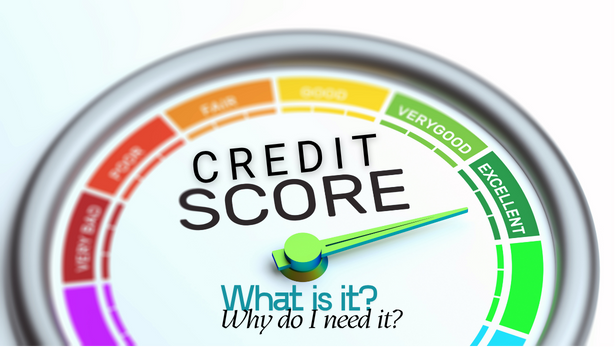
This single number carries a lot of weight, especially when you’re looking to get a mortgage.

Let’s use an analogy. If a friend asked to borrow $100, you’d mentally run through their track record. Do they pay people back? Are they good with money? Your decision would be based on your past experiences with them.
A credit score does the exact same thing for lenders, but on a much larger, more formal scale. It’s an objective score based on your financial history, giving banks, mortgage companies, and credit card issuers a standardized way to gauge your creditworthiness.
This number isn’t just pulled out of thin air. It’s calculated by sophisticated algorithms that analyze the data in your credit reports. These reports are detailed records of your borrowing and repayment habits, maintained by the three major credit bureaus: Experian, Equifax, and TransUnion.
While the idea is straightforward, there isn’t just one universal credit score. You’ll mainly run into two big players in the credit scoring world: FICO® Score and VantageScore.
Both models typically use a scoring range from 300 to 850. The goal is always the same: a higher score means you’re seen as a lower risk, making you a much more attractive candidate for any kind of loan.
So, what do all these numbers actually mean in the real world? Lenders group scores into different tiers to quickly assess how much risk a borrower represents. While the exact cutoffs can differ slightly from one lender to the next, they generally follow this common framework.
Here’s a breakdown of the standard credit score ranges and how lenders typically see borrowers in each category.
| Score Range | Rating | Lender Perception |
|---|---|---|
| 800-850 | Exceptional | You’re considered a top-tier, prime borrower. Lenders will roll out the red carpet, offering you their very best interest rates and most favorable terms with complete confidence. |
| 740-799 | Very Good | You are seen as a highly dependable borrower. You’ll have no problem getting approved for most loans and will easily qualify for very competitive interest rates. |
| 670-739 | Good | This is where the average American consumer falls. Lenders view you as a solid, low-risk applicant, and you’ll qualify for good rates on most financial products. |
| 580-669 | Fair | Lenders start to get a bit cautious here, viewing you as a “subprime” borrower. You might still get approved for a loan, but expect to see higher interest rates and less attractive terms. |
| 300-579 | Poor | In this range, you are considered a high-risk borrower. It will be challenging to secure new credit, and any loans you are offered will come with very high interest rates and fees. |
Knowing where you stand in these ranges is the first step. It gives you a clear idea of what to expect when you apply for a loan and helps you identify areas for improvement.

Your credit score isn’t some arbitrary number pulled out of thin air. It’s actually a carefully calculated grade based on five specific factors from your credit report. If you can get a handle on these “ingredients” and how much each one matters, you’re well on your way to mastering your financial health.
Think of it like baking a cake. Some ingredients, like flour and sugar, are absolutely critical. Others, like the decorative sprinkles, have a much smaller impact. Getting the big stuff right is what really makes the difference.
Let’s break down the recipe for your credit score so you can see exactly which financial habits pack the biggest punch.
This is the heavyweight champion of your credit score, making up a massive 35% of the whole calculation. It all boils down to one simple question: do you pay your bills on time? Lenders see a clean record of on-time payments as the single best sign that you’re a reliable borrower.
Even a single payment that’s 30 days late can knock your score down significantly, and that negative mark can linger on your report for seven long years. The more recent and the more late a payment is, the more it hurts.
This slice of the pie also includes major negative events like bankruptcies, foreclosures, or accounts that have been sent to collections. A clean record here is your most powerful asset.
Running a very close second, the amount of debt you’re carrying accounts for 30% of your score. Now, this isn’t just about the raw dollar amount you owe. It’s more about the percentage of your available credit that you’re currently using—a metric known as your credit utilization ratio.
For instance, if you have a credit card with a $10,000 limit and you’re carrying a $5,000 balance, your utilization is 50%. Most lenders want to see that number stay below 30%. A high ratio can be a red flag, suggesting you might be stretched thin and at a greater risk of falling behind.
A lower credit utilization ratio demonstrates that you can manage credit responsibly without relying on it to make ends meet. It shows financial stability and control, which lenders love to see.
This factor also takes into account the total amount you owe across all your accounts and what you still have left to pay on loans like mortgages or car payments.
Making up 15% of your score, this piece of the puzzle is all about how long you’ve been in the credit game. Generally, a longer credit history is better. It gives lenders a bigger, clearer picture of your borrowing habits over time.
This category looks at a few different timelines:
This is exactly why you’ll often hear advice not to close your oldest credit card, even if it’s just gathering dust in a drawer. Shutting it down can shorten your credit history and potentially ding your score.
A little variety can be a good thing, and that’s true for your credit, too. This factor accounts for 10% of your score and shows lenders you can handle different kinds of debt responsibly.
There are two main flavors of credit:
Having a healthy combination of both shows lenders you’re a versatile and experienced borrower. Just remember, you should never take out a loan just to improve your mix. It’s a minor part of your score and will develop naturally over time.
The final 10% of your score is all about your recent credit-seeking activity. This looks at how many new accounts you’ve opened and how many “hard inquiries” are on your report. A hard inquiry happens anytime a lender pulls your credit because you’ve applied for something new.
Opening several new accounts in a short period can make lenders nervous, as it might signal you’re in financial trouble. While one inquiry might only drop your score by a few points, a flurry of them can add up. It pays to be strategic about when you apply for new credit.

If you’re dreaming of owning a home, your credit score isn’t just a number—it’s the single most important key to unlocking that dream. Think of it as your financial report card. Before a lender hands over hundreds of thousands of dollars for a mortgage, they look at this three-digit score to see how you’ve handled debt in the past.
A strong credit score sends a clear message: you’re a reliable borrower. This one number has a massive impact on whether you get approved, what interest rate you’ll lock in, and even the kinds of home loans you’ll have access to.
When you apply for a home loan, your credit score is the first hurdle. It’s the gatekeeper that determines if your application even moves forward. Different loan programs—like Conventional, FHA, or VA loans—all have their own minimum score requirements.
While the exact numbers vary, one thing is universal: a higher score dramatically boosts your odds of approval. Before you get too far down the road, understanding the pre-approval process is a must, as your credit history gets put under a microscope during this stage. A low score doesn’t just mean you’ll pay more; it can lead to an outright rejection.
You can’t afford to ignore this metric, especially when you see how central it is to the lending world. As of 2025, the average FICO score in the U.S. was 715, landing squarely in the “Good” range. And with a staggering 90% of top lenders relying on FICO scores, it’s the standard you’ll be measured against.
Here’s where your credit score really hits your wallet: the interest rate. A higher score tells lenders you’re a low-risk investment, and they reward that confidence with a lower rate. A half-percent or even a full percent might not sound like much, but over a 30-year mortgage, the difference is life-changing.
Let’s look at a simple side-by-side comparison:
| Borrower | Credit Score | Interest Rate | Monthly Payment | Total Interest Paid |
|---|---|---|---|---|
| Alex | 760 (Excellent) | 6.0% | $2,158 | $376,998 |
| Ben | 650 (Fair) | 7.5% | $2,517 | $506,078 |
Alex’s excellent score saves him $359 every single month. Over the life of the loan, that adds up to a jaw-dropping $129,080 in savings. That’s the incredible power of a great credit score.
This is a core concept for any aspiring Mortgage Loan Originator (MLO). Being able to break this down for clients is fundamental to building trust and helping them make smart financial decisions.
A great credit score does more than just save you money on interest—it opens up a world of better loan options. Borrowers with high scores often qualify for a wider range of products, many with more attractive terms like a lower down payment.
For instance, a solid score could help you sidestep Private Mortgage Insurance (PMI), which is typically required on conventional loans when you put down less than 20%. You can learn more about how that works in our guide on what is mortgage insurance. Beyond PMI, better credit can also mean lower closing costs and fewer fees tacked on at the end.
For anyone looking to build a successful career as an MLO, mastering these details is non-negotiable. Our fully online, NMLS-approved education is designed to make these complex relationships crystal clear. We give you everything you need, including a free exam prep package, to confidently lead your future clients through their homebuying journey.
Knowing your credit score is a great starting point, but it’s just the tip of the iceberg. Think of it like the final grade on a report card. To really understand your financial health and see why your score is what it is, you need to look at the report card itself—your full credit report.
Fortunately, checking your score is easier than ever. Most banks, credit card companies, and personal finance apps will show you your FICO® Score or VantageScore for free, right in their app. It’s a fantastic way to keep a casual eye on things month to month.
When it’s time to dig deeper, you’ll want the official, detailed reports from the three big credit bureaus: Experian, Equifax, and TransUnion. The U.S. government made this simple and free for everyone.
By law, you are entitled to a free copy of your credit report from each of the three major credit reporting agencies once every week. The only official website authorized by federal law to provide these free reports is AnnualCreditReport.com.
Be wary of other sites that pop up in a search. Many promise “free” reports but are really just trying to sign you up for a paid service you don’t need. Stick with the government-mandated site to keep your information safe and your wallet closed. Making this a regular habit is a pro move, especially if you’re serious about a career as a Mortgage Loan Originator.
At first glance, a credit report can look like a wall of text and numbers. It’s dense, but it’s not as complicated as it seems once you know what to look for. Just break it down into four main sections.
Here’s what to focus on:
Believe it or not, mistakes on credit reports happen all the time. An incorrect late payment, an account that isn’t yours, or a simple typo can unfairly drag your score down. This is exactly why you need to check your reports regularly.
If you spot something that looks wrong, you have the right to challenge it. You can file a dispute directly with the credit bureau reporting the error. By law, they have to investigate your claim, usually within 30 days, and remove any information they can’t verify. A clean, accurate report is the true foundation of a great credit score.

Alright, you understand what a credit score is and the basics of how it’s calculated. Now for the important part: taking control. Improving your score isn’t about finding some secret loophole; it’s all about building consistent, positive financial habits.
These strategies get right to the heart of what lenders care about by targeting the five core factors that make up your score. Think of it as building a stronger financial foundation, one good decision at a time. Small, steady actions really do lead to big improvements.
This one is the heavyweight champion of credit factors. Your payment history accounts for a massive 35% of your score, making it the single most important piece of the puzzle. The absolute best thing you can do for your score is to never, ever miss a due date. Seriously. Even a single late payment can knock your score down and will stick around on your report for seven long years.
The easiest way to make this foolproof? Set up automatic payments. Even if it’s just for the minimum amount due on all your accounts, it creates a safety net that ensures your bills are paid on time, every time. Life gets busy, but this simple habit is your best defense against score-damaging marks.
Coming in at a close second is your credit utilization, which makes up 30% of your score. This is simply the percentage of your available credit that you’re currently using. Lenders want to see this number stay low—ideally below 30%. A high ratio can look like you’re overextended, which makes you seem like a riskier borrower.
There are two straightforward ways to keep this ratio in check:
Recent data shows just how much credit Americans are managing. The number of active credit cards in the U.S. climbed to 554.5 million by late 2024, and total balances are on track to hit $1.1 trillion by the end of 2025. But here’s the interesting part: despite those huge numbers, the average credit utilization has held steady at around 29%. You can dig into these consumer credit trends over on TransUnion.com.
It might feel like good housekeeping to close out an old credit card you never use, but hold off. That old account is actually helping your score. It plays a big role in the length of your credit history (15% of your score), and closing it can shorten the average age of your accounts, which can cause your score to dip. It’s better to keep it open, even if you just use it for a small, recurring purchase to keep it active.
Think of your oldest credit account as the foundation of your financial history. The longer it stands, the more stability it provides to your overall credit profile.
At the same time, you want to be thoughtful about opening new credit (10% of your score). Every application you submit triggers a “hard inquiry,” which can temporarily drop your score a few points. If lenders see a bunch of applications in a short period, it can look like you’re in financial trouble. The takeaway? Only apply for new credit when you actually need it.
For a more comprehensive look at boosting your score, you can explore additional tips specifically designed to teach you how to improve your credit score.
We’ve covered the basics of what a credit score is, how it’s put together, and why it’s a huge deal when you’re after a mortgage. But you probably still have some questions floating around. Let’s clear up a few of the most common ones that come up, especially for folks thinking about becoming a Mortgage Loan Originator.
Think of it like Coke vs. Pepsi. Both FICO and VantageScore want to figure out how risky you are as a borrower, and they both use that familiar 300-850 scale. But they’re different products with their own secret formulas.
FICO has been the gold standard for a long time, and you’ll find that over 90% of top lenders—especially in the mortgage world—rely on it. VantageScore is a bit newer, created by the big three credit bureaus themselves. It’s what you usually see on free credit-tracking apps and websites.
While your scores will probably be in the same ballpark, they won’t be identical. For a mortgage application, it’s almost always the FICO score that carries the most weight.
Your credit score isn’t set in stone. It’s a dynamic number that can change any time new information hits your credit report. Most lenders report your activity, like payments and balances, about once a month. So, in theory, your score could get a little refresh every 30 days.
But it only moves if there’s something new to report. If your balances and payment history look the same month after month, your score might not budge. Big moves—like paying off a loan, missing a payment, or opening a new credit card—are what cause those more immediate and noticeable shifts.
It’s tempting to clean out your wallet and close that old credit card you never use. Resist the urge! In most cases, it’s a bad idea. That dusty piece of plastic is actually a powerful tool for your credit score.
Here are two big reasons why:
The better move? Use the card for a tiny, recurring purchase every few months (like a streaming service) and set up autopay to pay it off in full. This keeps the account active and working for you.
This is a big one for anyone looking to become a Mortgage Loan Originator, and the answer is a clear yes. When you apply for your license through the Nationwide Multi State Licensing System and Registry (NMLS), a credit report is a mandatory part of the process.
The credit check isn’t about hitting a certain score. Instead, regulators are looking at your overall financial responsibility. They want to see that people who will be in a position of major financial trust have a good track record of managing their own money.
There is no national minimum credit score required to get an MLO license, so a lower score won’t automatically disqualify you. What regulators will look for are serious red flags, like outstanding judgments, tax liens, foreclosures, or a pattern of missed payments. They review these on a case-by-case basis, and you often have a chance to provide an explanation.
Around the world, credit habits change with the economy. For example, from Q1 2024 to Q1 2025, non-mortgage debt in Canada jumped by 5.4%, mostly from car loans. These kinds of shifts show how financial behaviors adapt everywhere. You can dig into more global consumer credit trends on Equifax.com.
At the end of the day, proving you have financial integrity is a core requirement for becoming a trusted MLO, and the credit report is one way regulators check that box.
Ready to take the next step and launch your high-income career as a Mortgage Loan Originator? At 24hourEDU, we make it easy. Our fully online, NMLS-approved education gives you everything you need to succeed, including our exam prep package for free. Get started today and see how simple it can be to achieve your professional goals. https://24houredu.com



Your guide to the commonly asked questions about getting your Texas MLO license. Get clear answers on education, costs, the NMLS exam, and requirements.

Discover 10 high paying jobs you can do from home. Find top remote careers with high salaries & a clear path to becoming a Mortgage Loan Originator.

Texas contractors: Leverage your skills! Find out why Texas Contractors should consider an MLO Certification for a high-income, flexible career. Start here.

Considering a career in wealth management? Discover how becoming a Mortgage Loan Originator (MLO) offers a faster, more direct path to a high-income career.

Explore the top jobs with a MLO license. From Mortgage Broker to Underwriter, discover high-paying career paths you can unlock with NMLS certification.

Learn how to finance house flipping with our complete 2026 guide. Explore hard money, private loans, and the secret MLO advantage for securing the best deals.

A complete guide to anti-money laundering training for MLOs. Understand BSA/FinCEN rules, what’s required for your license, and how to get started online.

Learn what is a good debt to income ratio for mortgages. This guide for MLOs covers calculations, FHA/VA/Conventional limits, and how to help clients qualify.

Master the verification of deposit (VOD) process. Our guide helps aspiring MLOs understand VOD types, documentation, and red flags to close loans faster.

Do Texas SML Licensed MLOs Earn More than OCCC MLOs? Uncover the financial advantages & career path for SML licensed professionals in 2026.

Your complete guide to NMLS education courses. Learn about the 20-hour SAFE course, state requirements, and how to get your MLO license online with ease.

Commercial loan officers – Explore a career as a commercial loan officer. Learn about the high-income potential, key responsibilities, and how to get licensed
