Owensboro, KY Approved Training Course for MLO Licensing
An Owensboro, KY approved MLO training course is the NMLS-approved 20-hour SAFE pre-licensing program that every Kentucky applicant must complete before registration. It’s the education requirement for becoming a Mortgage Loan Originator, not a separate license issued by Owensboro.
You may be looking at course descriptions after work, wondering whether an online class will count or whether you need to find a classroom nearby. The terminology can make a straightforward decision feel complicated: approved provider, SAFE education, national test, Kentucky registration.
You don’t need to untangle everything at once. Start by choosing education that Kentucky can recognize, then organize the remaining requirements around your NMLS record.
Defining an Owensboro, KY Approved MLO Training Course
Approval determines whether your education counts toward registration. A course can explain mortgage lending clearly and still be the wrong purchase if it doesn’t meet the required approval standard. For an Owensboro applicant, the important question isn’t where the classroom is located. It’s whether the education satisfies Kentucky’s requirements.
Kentucky requires evidence of 20 hours of mortgage-related pre-licensing education, reviewed and approved through NMLS, with the initial registration application. Applicants must also maintain an NMLS unique identifier and register with the Kentucky Department of Financial Institutions before conducting MLO business, according to Kentucky’s mortgage loan originator registration statute.
Your city identifies your location, not a different license
Suppose you’re an Owensboro career changer searching for a locally approved mortgage class. You might reasonably assume that the city has its own training rules or approved-school list. In this case, you’re looking for Kentucky-compliant education, not municipal approval.
That distinction makes your search easier. You can evaluate an eligible online program rather than limit yourself to a physical classroom in Owensboro. Your home address doesn’t turn the statewide education requirement into a different local curriculum.
Practical rule: Choose a course because its approval makes it usable for your Kentucky application, not because its advertising mentions your city.
Know which mortgage career you’re preparing for
In plain language, a Mortgage Loan Originator, or MLO, helps borrowers handle mortgage financing. Think of conversations about a borrower’s application, loan choices, and the information needed to move the financing process forward. Your education should prepare you to approach those conversations responsibly, not memorize unfamiliar terms.
A mortgage broker is associated with arranging mortgage financing, while a property sales agent focuses on the property transaction. Those roles can interact, but their training paths aren’t interchangeable. If your goal is mortgage origination, a property-sales course isn’t a substitute for approved MLO education.
A useful way to answer “what is an Owensboro, KY approved training course for MLO licensing?” is to focus on three things:
Purpose: It prepares you for the mortgage-origination education requirement.
Approval: NMLS must recognize the qualifying course.
Destination: You’re preparing for Kentucky registration, not a city-issued credential.
You don’t have to find a special Owensboro exception. You need the right course for the statewide pathway.
What the 20-Hour SAFE Curriculum Actually Covers
The required curriculum isn’t an unspecified collection of mortgage videos. NMLS sets minimum allocations of 3 hours of federal law, 3 hours of ethics, 2 hours of nontraditional mortgage lending, and 12 hours of mortgage-origination instruction or electives, as described in the SAFE Act education requirements.
Those subject blocks serve different purposes. Together, they help you connect lending rules, responsible conduct, product knowledge, and the practical work of handling mortgage applications.
The Four Required Blocks of an Approved MLO Course in Kentucky
The required hours below follow the NMLS curriculum allocation cited above.
Subject Block
Required Hours
What the Student Learns
Federal law and regulations
3
The federal legal framework surrounding mortgage lending
Ethics
3
Fraud awareness, consumer protection, and fair-lending issues
Nontraditional mortgage lending
2
Lending standards for nontraditional mortgage products
Mortgage origination and electives
12
Mortgage-origination instruction and related lending topics
Federal law is like learning the rules of the road before driving. You need to understand the framework before you can confidently handle situations involving borrowers. Rather than treating legal vocabulary as isolated definitions, connect each topic to the decisions an originator may face.
Ethics asks a different question: how should you behave when a situation requires judgment? For example, consider a hypothetical borrower whose application information seems inconsistent. Use that scenario to think about accuracy, fraud awareness, and responsible handling of information rather than rushing past a concern.
Connect each lesson to a borrower conversation
Nontraditional lending instruction helps you think beyond a single familiar loan structure. As a study exercise, practice explaining how a product works in plain language. If your explanation depends on unexplained jargon, return to the lesson until you can describe the underlying concept clearly.
Mortgage-origination instruction helps connect the broader subjects to a borrower’s financing journey. You can organize your notes around questions such as what information is being collected, why it matters, and how the relevant lending principle applies. This approach makes the material easier to understand than a disconnected vocabulary list.
An online program should make these categories visible in its syllabus. Don’t assume that a long lesson library automatically satisfies the curriculum, and don’t treat exam practice as a replacement for qualifying instruction. Approved education and exam preparation have related but different jobs: one meets the education requirement, while the other helps you practice applying what you’ve learned.
How NMLS Approval Works and Why the Provider ID Matters
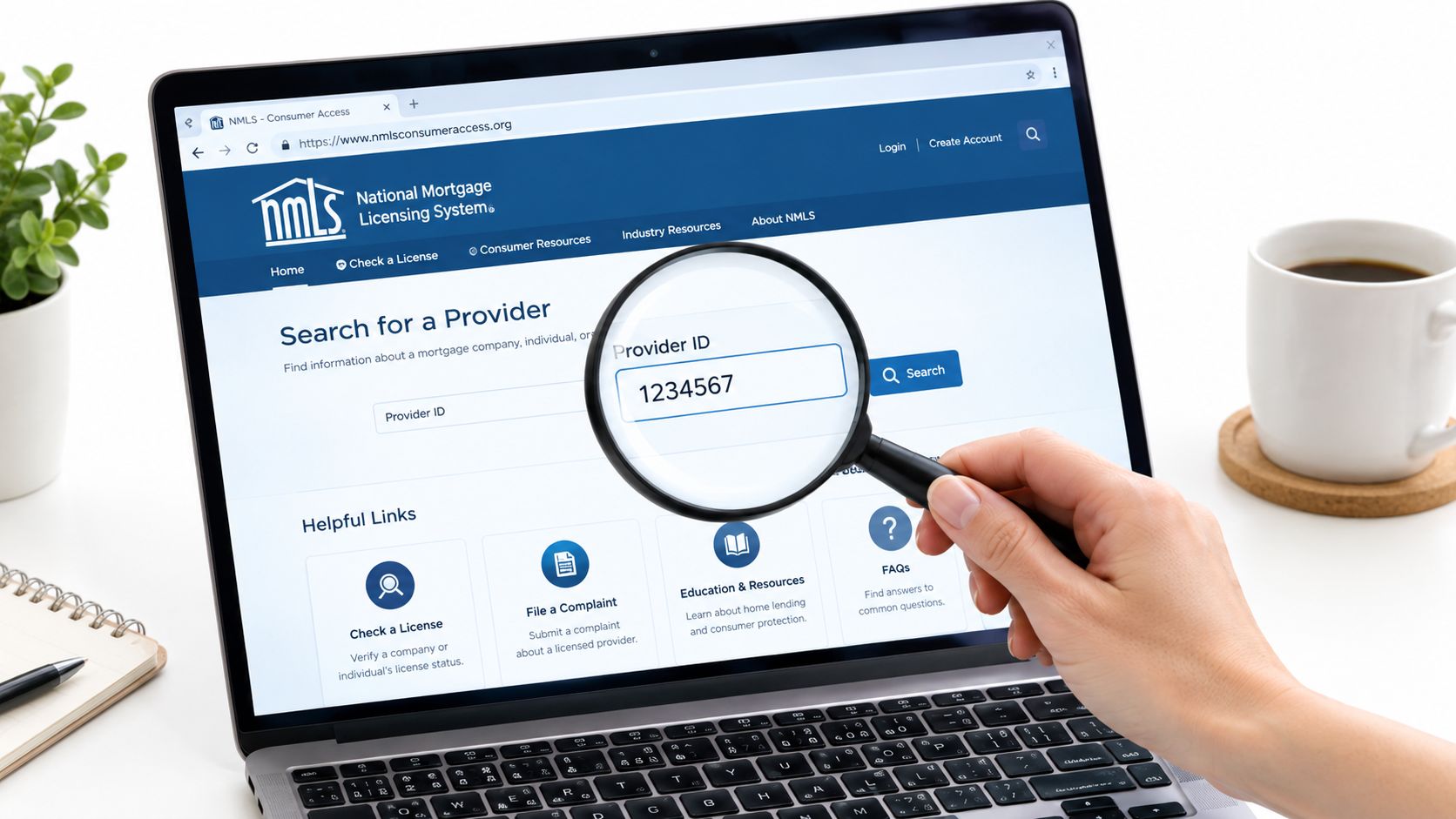
A provider’s approval claim should be something you can verify, not something you have to accept on faith. NMLS, the Nationwide Multistate Licensing System and Registry, provides the approval framework for the education Kentucky applicants need. The provider’s identity gives you a concrete starting point for checking a course.
For example, 24hourEDU’s NMLS Provider ID is 1405107, and its relevant Kentucky offering is an NMLS-approved SAFE pre-licensing course usable by Kentucky applicants, consistent with NMLS’s Kentucky education requirements.
Use the provider identifier to check the actual course
Think of a provider identifier as a license plate for the education business. It helps you distinguish a real provider record from a similar name, an advertisement, or a course description copied elsewhere. It doesn’t mean that you can skip checking the individual product you intend to purchase.
Before enrolling, work through this verification checklist:
Find the education listing: Use NMLS education-provider and course information, rather than relying solely on a search-engine advertisement.
Match the provider: Compare the business name and provider identifier with the course seller’s information.
Check the course itself: Confirm that you’re selecting approved pre-licensing education, not only test preparation or continuing education.
Review Kentucky suitability: Compare the listing and syllabus with the statewide education requirements.
Ask about reporting: Confirm how the provider will report qualifying completion to your NMLS education record.
Don’t confuse an education-provider search with a search for a licensed mortgage professional. You’re verifying a training provider and its course, not checking someone’s authority to originate loans.
Approval must lead to usable completion evidence
The final check happens after you finish studying. Save your completion documentation and inspect your NMLS education record before applying. If the record doesn’t reflect what you completed, contact the provider and resolve the discrepancy.
Approval isn’t just a logo on the enrollment page. You need qualifying education that can be documented in your application record.
Also distinguish required education from supplemental Kentucky preparation. A Kentucky-law module may help you understand local practice, but its presence doesn’t automatically make it a separately required pre-licensing category. Ask how the provider labels that material and whether it carries approved education credit.
This is a manageable verification task. You’re matching the provider, the course type, Kentucky eligibility, and the completion record, rather than trying to judge approval from marketing language alone.
Why an Online NMLS-Approved Course Fits Owensboro Students Best
For an Owensboro adult balancing work, family, and a career change, online education can be the most practical choice. You can study from home without organizing your day around a classroom commute. The approval status matters more than the distance between your home and the instructor.
That doesn’t mean every online format fits every learner. A classroom may appeal to someone who prefers face-to-face interaction and a fixed meeting routine. Online study can be a better fit when travel, childcare arrangements, or work commitments make classroom attendance inconvenient.
Compare the learning experience, not just the location
Decision Factor
Online Education
In-Person Education
Travel
Study from your chosen location
Attend a physical classroom
Scheduling
Plan around the course’s delivery rules and deadlines
Plan around classroom meeting times
Study materials
Review the digital resources included with enrollment
Check what materials the classroom provider supplies
Total expense
Consider tuition and required technology
Consider tuition, travel, and related attendance costs
Interaction
Check instructor and support access
Consider the value of face-to-face discussion
Avoid assuming that online enrollment means unlimited control over timing. Check start dates, deadlines, participation requirements, and the course format before paying. You can build a personal study routine while still following the provider’s approved delivery requirements.
24hourEDU offers online instructor-led video lessons, an e-textbook, supplemental state-law material, and a free exam prep package. The package also includes unlimited phone and email support and complimentary NMLS hours reporting. These features address different needs: instruction, reference material, practice, help with questions, and documentation of completion.
Use them deliberately. Watch a lesson, summarize the concept in your own words, then consult the e-textbook when you need clarification. Use exam prep to identify topics you haven’t understood yet, rather than merely memorizing answers.
Study habit: Keep a short list of confusing terms and ask for help before those gaps spread into later lessons.
For a working parent in Owensboro, a practical routine might mean protecting study time after household responsibilities are handled. For a career changer, it might mean treating study sessions like scheduled professional appointments. Neither approach requires abandoning your existing responsibilities, but both require consistent attention.
Online education removes the classroom commute. Your commitment to learning still matters, and accessible support can make that commitment easier to maintain.
From Approved Course to Kentucky MLO Registration
Completing approved education is an important milestone, but a course completion record isn’t permission to begin originating loans. Kentucky’s application pathway also includes testing, screening, credit authorization, and an electronic application. Keeping those tasks separate helps you avoid mistaking progress for final approval.
The Kentucky Department of Financial Institutions directs applicants to review the applicable mortgage statute, complete an NMLS electronic background check, satisfy pre-licensing education, pass the national test component with uniform state content, submit an electronic application, and consent to a credit report. These statewide requirements are set out in Kentucky’s official MLO registration guidance.
Organize your application around clear checkpoints
Use the following as an organizational checklist, not a promise that every task must occur in an inflexible order:
Confirm your education record: Make sure qualifying completion appears under your NMLS account and keep your own documentation.
Prepare for the national test: Use your course materials and exam prep before scheduling the national component with uniform state content.
Complete background screening: Follow the NMLS process for the electronic background check.
Authorize the credit report: Treat this as a separate application requirement, not something your education enrollment handles.
Submit the Kentucky application: Apply electronically through NMLS and follow the Department of Financial Institutions’ instructions.
Resolve remaining requirements: Address any applicable employer, entity, or application-review items before conducting MLO business.
You’re not looking for an Owensboro-specific shortcut. You’re completing Kentucky’s statewide requirements from your Owensboro home.
Build a realistic plan without assuming an approval date
Separate your calendar into study time, exam preparation, testing, and application administration. You can control when you study and how promptly you respond to requests. You can’t control every scheduling opportunity or regulatory review decision.
A focused plan can help you avoid preventable delays, but don’t treat a short course schedule as a guaranteed licensing timeline. The education provider delivers training; Kentucky makes the registration decision.
Before filing, compare your saved records with the NMLS education history. Confirm any applicable state-specific education requirements, and clarify whether supplemental Kentucky material is approved credit or additional preparation. That distinction is especially useful when a package contains more learning resources than the required course alone.
Finish with a complete record, not just a finished lesson list. Accurate documentation gives reviewers the evidence they need and gives you a clearer understanding of what remains.
Common Questions Owensboro MLO Applicants Ask
The remaining questions usually concern acceptance, timing, and what happens when something doesn’t go as planned. You don’t need a perfect background in finance to begin learning, but you do need to distinguish educational progress from registration eligibility.
Do Owensboro residents need a different course?
No. Owensboro applicants follow Kentucky’s statewide pathway, just as applicants elsewhere in the state do. Choose education that qualifies for Kentucky rather than assuming a city name in a course title proves eligibility.
Are online courses really accepted?
Eligible online education can satisfy the requirement when the course has the appropriate NMLS approval. Online delivery alone doesn’t prove acceptance, just as a physical classroom alone doesn’t prove it. Verify the listing and course type before enrolling.
Can I take the test before finishing the course?
NMLS allows applicants to take the national test before completing pre-licensing education, but the 20-hour education requirement still must be satisfied before the license application, according to NMLS’s pre-licensing education FAQ. Passing the test first doesn’t replace education.
For a beginner, studying before testing may be a sensible learning choice. That’s a practical recommendation, not a separate Kentucky rule.
What if I don’t pass the national test?
Don’t interpret an unsuccessful attempt as proof that you can’t learn mortgage lending. Return to the concepts you found difficult and use your exam prep materials to guide review. Check current NMLS retesting rules before arranging another attempt rather than assuming immediate availability.
How soon can I finish and register?
There isn’t a guaranteed completion-to-registration timeline for every applicant. Your study schedule, testing availability, application completeness, and regulatory review all affect the process. Set concrete study goals without promising yourself a registration date before those separate checkpoints are complete.
What happens after registration?
Kentucky registered MLOs must complete at least 8 hours of approved continuing education annually, including 1 Kentucky-specific hour, and renew through NMLS. This is an ongoing obligation, separate from initial pre-licensing education.
Keep a continuing-education reminder with your professional records. The long-term habit is the same as the enrollment habit: check the correct education type, verify approval, and confirm completion reporting.
Your Next Step Toward an Owensboro Mortgage Career
Your most useful early decision is choosing education that qualifies for Kentucky and gives you a clear way to verify completion. From there, you can work through testing and registration with a checklist instead of guessing.
A mortgage career may appeal to you because you want borrower-facing work, commission-based earning opportunities, or the possibility of working from home. Remote work, scheduling freedom, and compensation depend on the employer and role, not on the license alone. Treat them as job-search criteria rather than automatic benefits of course completion.
Make your first move concrete
Visit the 24hourEDU Kentucky MLO licensing page, review the approved online course and enrollment details, and choose a start date that fits your responsibilities. Keep your provider-verification information and application checklist together.
You don’t need to master the entire mortgage profession today. Begin with qualifying education, ask questions as you learn, and complete each registration requirement carefully.
24hourEDU offers NMLS-approved online pre-licensing education with a free exam prep package, instructor support, and completion reporting for aspiring Owensboro mortgage loan originators. Visit 24hourEDU to review the Kentucky course and enroll when you’re ready to begin your mortgage career preparation.
20-Hour SAFE Comprehensive: Online National MLO Course
This is the course needed to obtain your Mortgage Loan Originator license. Unlike other schools, we include our Exam Prep Course Free (includes 1,000+ practice questions and a study guide), so you have everything in one package designed to get your license!
Owensboro Kentucky Loan Origination Process Steps: 7 Stages
A young nurse in Owensboro finds a house that fits her steady salary and calls a local loan officer for the first time. She doesn’t need industry jargon. She needs someone to explain what she can afford, what happens next, and when she’ll know if the loan is approved.
That’s where a loan officer and a loan processor become a team. The officer guides the borrower, explains options, and builds the financing strategy. The processor organizes the file, tracks documents, and keeps every deadline visible.
The Owensboro Kentucky loan origination process steps move through seven stages, from first call to keys. Each stage has a clear owner, specific paperwork, and a compliance clock that can’t be ignored.
Following one file through all seven stages shows why this career rewards organized, people-focused professionals. It also shows where aspiring Mortgage Loan Originators and processors add the most value for Daviess County families.
1. Conduct the Borrower Consultation and Mortgage Prequalification
Our nurse starts with a conversation about goals, income, debts, savings, and the monthly payment she wants to target. The loan officer listens first, then outlines mortgage options in plain language and builds an early plan around her budget.
The processor works behind the scenes from day one. They set up a secure file, list what’s missing, and confirm how the borrower prefers to communicate. That early organization prevents the rushed document chase that slows so many files later.
Prequalification Is Not a Promise
For the nurse, overtime pay and an auto loan shape the first estimate. The officer explains that prequalification is a useful starting range, but the lender still has to decide whether overtime counts as qualifying income before issuing a stronger, documented preapproval. Neither step guarantees final approval.
A consistent interview checklist keeps this stage clean and fair for every borrower. You’ll ask the same core questions, note the answers carefully, and give the borrower a clear next step before the call ends.
This front end role is also why many people love the career. Mortgage loan officers may find remote-work opportunities, scheduling flexibility, and strong commission-based earning potential. Those arrangements depend on employer policies, licensing rules, borrower needs, and your actual production, so no outcome is automatic.
Practical rule: End every first call by telling the borrower exactly what happens next and who owns that task.
If you’re preparing to do this work, starting is straightforward with the right support. For aspiring state-licensed MLOs, 24hourEDU offers online NMLS-approved pre-licensing education through Provider ID 1405107, including a 20-hour SAFE course and free exam prep. Confirm current Kentucky-specific requirements before enrolling.
Education alone doesn’t authorize you to originate loans. You’ll also need applicable testing, background checks, licensing or federal registration, and employer approval. Whether a processor needs a license depends on their actual duties and employment arrangement.
2. Take the Mortgage Application and Deliver Required Disclosures
A casual chat becomes a formal application when the lender receives six specific items. The loan officer collects this information, commonly on the Uniform Residential Loan Application, and the processor checks it for completeness and opens the official loan file.
For an Owensboro borrower, the CFPB explains the six application elements and what follows: the applicant’s name, income, Social Security number, property address, estimated property value, and requested loan amount. Once those items arrive, the federal disclosure timeline generally requires a Loan Estimate within 3 business days.
The Clock Starts Before the Pay Stubs Arrive
Say our nurse signs a contract on a home and sends the property address plus the other five elements on a Monday. The team’s disclosure clock starts then, even if her pay stubs haven’t arrived yet. Waiting for supporting documents is not a reason to delay disclosures.
After receiving the Loan Estimate, the borrower tells the lender whether she wants to proceed. If she doesn’t respond within 10 business days, the lender may revise the estimate or close the application as incomplete, as noted in the CFPB guidance above. That intent decision matters, and the processor should document it clearly.
Good intake habits protect both the borrower and the lender:
Timestamp the application: Record exactly when the sixth element arrived so the disclosure deadline is easy to prove.
Respect fee limits: For covered loans, don’t impose application or appraisal fees before the borrower receives the Loan Estimate and shows intent to proceed, except for a bona fide and reasonable credit-report fee.
Separate rate-lock talk: Explain lock status, expiration dates, and possible extension costs as their own conversation, not buried in application details.
Use approved systems: Keep sensitive documents in employer-approved tools, not personal email or text attachments.
Accurate intake also sets honest expectations about timing. Federal data discussed later in this guide show origination is an iterative process, not a single approval event.
3. Verify Income, Employment, Assets, and Credit
Now the processor turns the borrower’s statements into a documented financial profile. They gather records, reconcile differences, and flag gaps early. The loan officer explains how the verified picture affects the financing options still on the table.
Our nurse works rotating shifts, so her file includes base pay, shift differentials, and overtime. The processor organizes the income history in order. The lender then decides which earnings meet the selected program’s rules for history, stability, and continuance.
Asset verification deserves the same care as income. Learning how a verification of deposit confirms bank balances and account history helps new processors understand why lenders look beyond a simple screenshot. Source, seasoning, and large deposits all matter to the underwriting decision.
Ask for the documents this borrower’s file actually needs. A tailored checklist gets faster, cleaner responses than requesting every possible record from every applicant.
What Processors Reconcile in This Stage
Credit reports, liabilities, and the borrower’s own statements have to tell the same story. When they don’t match, the processor documents the reason instead of leaving the underwriter to guess.
Gift funds are a common example. They require documentation and must come from an acceptable source under the chosen program. A short, clear gift letter process today prevents a painful condition two weeks from now.
Borrowers also need coaching during verification. Advise them to check with the lending team before taking on new debt, changing jobs, or moving substantial funds between accounts. A new truck payment or an unexplained transfer can change the qualifying math overnight, even when the borrower means well.
4. Match the Borrower to a Loan Program and Confirm Property Eligibility
Now the verified file becomes a choice among structures. The loan officer owns the comparison: rate, points, lender fees, mortgage insurance, monthly payment, and cash to close. The processor turns the chosen program into a checklist and collects any assistance paperwork before conditions pile up.
Owensboro changes the order of operations. Check the address before promising a program: a house inside city limits and a property in a nearby rural pocket can have different USDA eligibility. Run that lookup before the offer is firm, and re-check Kentucky Housing Corporation participation and current rules before telling a buyer assistance is available.
Those figures do not crown a cheapest channel. They explain why comparing an independent mortgage company, a credit union, and a bank can matter before prequalification, after a denial, or before a lock. Product menus, underwriting overlays, and escalation paths differ.
For VA financing, military service alone is not final approval, because eligibility and lender approval both apply. Relocating or cross-border buyers sometimes research mortgages for non-resident buyers before selecting a program. Whatever the scenario, write down why the product fits and apply consistent fair-lending standards to every applicant.
5. Coordinate the Appraisal, Title Review, Insurance, and Flood Determination
Property work now runs alongside the borrower file. The processor coordinates title services, homeowners insurance information, the flood determination, and an appraisal or another permitted valuation method. The loan officer keeps the borrower informed when findings could affect financing.
Owensboro sits on the Ohio River, and that detail shapes this stage. Proximity to the river doesn’t by itself prove flood insurance is required for a specific home. The lender’s formal flood determination controls, not a seller’s statement or a general impression of the neighborhood.
Suppose our nurse’s home sits near the river and triggers an early flood review. If the determination requires flood insurance, the team gathers coverage information right away. That cost affects her monthly payment and cash to close, so she shouldn’t learn about it at the last minute.
Protecting Valuation Integrity
Appraisal independence protects everyone in the transaction. You never pressure a valuation professional to reach a target value, and you route questions through proper channels. A clean, documented process keeps the file credible with underwriting and regulators.
For covered first-lien dwelling applications, valuation copies generally must reach the borrower promptly upon completion and no later than three business days before consummation, unless a permitted timing waiver applies. The processor tracks that delivery like any other deadline.
For properties in a Special Flood Hazard Area, address applicable flood-insurance requirements promptly rather than hoping the issue resolves itself. Title findings deserve the same urgency, since liens, ownership questions, or missing documents can lead to closing delays if nobody takes responsibility for them early.
6. Submit to Underwriting and Clear Approval Conditions
Underwriting brings the whole story together. The underwriter compares the borrower’s documented finances, the property information, and the program rules, then decides whether the loan can be approved.
A strong processor makes that review easier. They submit an organized file, track each condition, and confirm every response answers what the underwriter asked. The loan officer explains the decision without treating an automated finding or conditional approval as a final commitment to fund.
Here’s a typical moment. The underwriter spots a large deposit in our nurse’s account and asks for its source. The processor collects documentation showing where the money came from, and the underwriter decides whether the funds are acceptable under the program. One clear explanation, sent with supporting records, beats five disconnected uploads.
Data Discipline Behind Every Decision
Clean files also support HMDA-grade data discipline from intake through final disposition. Under federal HMDA filing instructions for the loan application register, covered institutions submit records through the FFIEC HMDA Platform, including the application-received date and the originator’s unique NMLS identifier. The 2024 publication covered loan-level data from approximately 4,898 reporting institutions.
That means teams should capture action taken, pricing and underwriting attributes, denial reasons, and originator IDs when events happen, not reconstruct them at closing. Reconciling the register against the loan origination system and documenting pricing overrides are practical local controls.
A simple condition tracker keeps this stage moving:
Name the item: Write the condition in plain words the borrower can understand.
Assign an owner: Note whether the borrower, processor, officer, or a third party is responsible.
Set a due date: Track submission and review status until the underwriter clears it.
Never alter borrower documents or coach applicants to hide information. Clear status updates and secure collaboration tools also let approved hybrid or remote teams process efficiently without losing control of the file.
7. Deliver the Closing Disclosure, Close the Loan, and Complete the Handoff
Approval becomes a finished purchase here, and the work splits cleanly by role. The settlement agent prepares final figures, the processor confirms every funding condition is satisfied, and the loan officer reviews final terms with the borrower before anyone sits down to sign.
One federal clock controls the calendar. Under the Closing Disclosure timing requirements recorded in the federal rulemaking record, the Closing Disclosure must generally reach the consumer at least 3 business days before consummation. Treat that delivery date like a countdown timer. A late change to pricing or fees can restart the waiting period, so Owensboro teams push to finalize numbers early rather than at the last hour.
Before our nurse signs, the officer walks her through the final payment and cash to close line by line. Borrowers who study a clear breakdown of closing costs and final figures arrive at the table already knowing where every dollar goes. The processor confirms insurance, title items, and funding conditions are complete.
Wire fraud warning: Have borrowers independently verify wiring instructions using a trusted, previously established phone number before sending any funds.
The Handoff After Signing
Three events close out the file, and they can land on different days: consummation (the borrower signs and becomes obligated), disbursement (funds move), and recording (the deed and mortgage enter Daviess County land records). Walk the borrower through the first payment date, escrow arrangements, and how to recognize legitimate servicing communications so confidence outlasts closing day.
For aspiring Owensboro loan officers, 24hourEDU offers NMLS-approved education with a free exam prep package. Course completion is one part of licensing, not a guarantee of licensure, employment, or earnings.
How Each Owensboro Origination Stage Compares by Owner, Deliverable, and Risk
Each stage belongs to one owner, and knowing who that is shows a new officer or processor exactly where their work begins and where a file passes to the next set of hands.
Stage
Owner
Primary Focus
Key Deliverable
Main Risk
1. Borrower Consultation and Prequalification
Loan Officer
Goals, finances, and initial mortgage options
Initial borrowing-capacity estimate
Prequalification is not final approval
2. Application and Required Disclosures
Loan Officer
Complete application intake and timely disclosures
Loan Estimate and organized loan file
Incomplete intake can cause rework or missed deadlines
3. Financial Verification
Loan Processor
Documenting income, employment, assets, and credit
Verified borrower financial profile
Complex or changing finances can delay processing
4. Loan Program and Property Eligibility
Loan Officer
Matching borrower and property to suitable financing
Documented program recommendation
Eligibility limits or costs may rule out an option
5. Property Review and Valuation
Loan Processor
Appraisal, title, insurance, and flood review
Completed property-related assessments
Valuation, title, or insurance issues can delay closing
6. Underwriting and Conditions
Underwriter
Assessing repayment ability and collateral
Approval decision with conditions cleared
Conditional approval does not guarantee closing
7. Closing and Handoff
Settlement Team
Final disclosures, signing, funding, and servicing transition
Completed mortgage transaction
Unresolved conditions or late changes can postpone closing
The pattern holds across Owensboro lenders: officers own the conversations, processors own the file, and the underwriter and settlement team own the decision and the finish. Local work like river flood determinations, USDA rural address checks, and Kentucky Housing Corporation paperwork changes what sits inside the processor’s rows.
Ready to Start Your Owensboro Mortgage Career With Confidence
A new processor in Owensboro might open a file where the borrower is paid through a local plant schedule, the home sits near the Ohio River, and the household hopes to pair financing with Kentucky Housing Corporation assistance. That one file touches almost every stage: consultation, application, verification, program matching, flood review, underwriting, and closing. The work rewards people who can explain each step plainly and keep the clock straight.
Loan officers turn goals into strategies and help borrowers compare choices without jargon. Processors build reliable files, track disclosure and appraisal timing, and keep underwriters, borrowers, title partners, and insurance contacts moving together. In Owensboro, local details matter early: a river-adjacent address can trigger closer flood review, a rural property may need a USDA eligibility check, and a first-time buyer may benefit from KHC program knowledge before the application is even complete.
The local market gives new professionals real room to learn and grow. In 2024, 25 lenders originated 1,133 mortgage loans in Owensboro, based on federal HMDA data. Daviess County also recorded 856 conventional mortgage originations in 2024, according to county mortgage data analysis. Conventional loans are only part of the work, so government programs, assistance options, property eligibility rules, and flood review broaden the borrowers you can help.
Kentucky licensing follows a statewide framework rather than a separate Owensboro system. Before conducting mortgage loan originator activity, you must register with the Department of Financial Institutions and hold a valid unique identifier through the NMLS, with the process covering application, background investigation, credit report authorization, testing, and fees under Kentucky Department of Financial Institutions registration guidance. Bond requirements can sit inside that licensing path, so confirm the current amount and any volume threshold directly with the state before you apply.
With 24hourEDU, that first step is easier to fit around work or family. The online, NMLS-approved course includes instructor-led video lessons, a free exam prep package, and phone and email support from people who know the mortgage business.
Start learning the Owensboro workflow the simple way with online, NMLS-approved pre-licensing education, a 20-hour SAFE course, and a free exam prep package from 24hourEDU. Visit 24hourEDU today to explore the course, check how the Kentucky path fits your goals, and take your first step toward becoming a licensed Mortgage Loan Originator.
24hourEDU NMLS Mortgage Loan Officer Course – $189 All States