



When you buy a home, you’re buying the property itself—but you’re also buying its entire history. Title insurance is the shield that protects you from skeletons in that property’s closet.
Unlike car or homeowner's insurance, which covers you for future accidents, title insurance looks backward. It defends you against financial loss from past events—things like hidden liens, forged signatures on old deeds, or a long-lost heir who suddenly shows up claiming ownership. It’s a one-time purchase that secures your right to the property forever.
Why Title Insurance Is Crucial in California
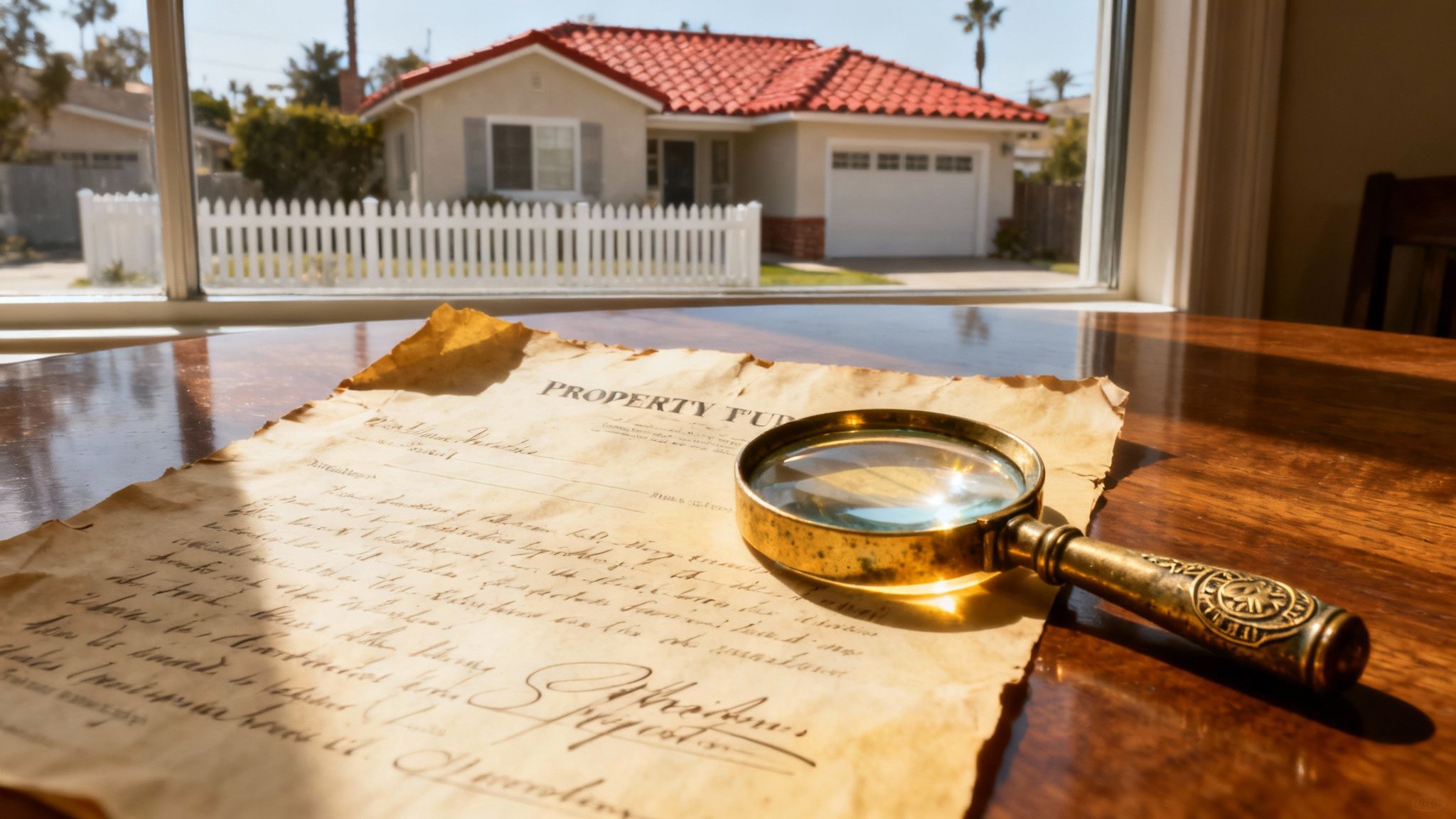
So, is title insurance a must-have in California? While the law doesn't force a homebuyer to purchase it, good luck finding a mortgage lender who will give you a loan without it. It's a non-negotiable for them, and honestly, it should be for you, too.
Think of it as the ultimate background check on what is likely the biggest purchase of your life. The entire point is to make sure you’re getting a “clear title,” which means your right to own the property is solid and free from any nasty surprises.
This is especially critical in California’s white-hot real estate markets, where existing home sales are on the rise. From the trendy neighborhoods of Silver Lake in Los Angeles to the steep streets of Noe Valley in San Francisco, property histories can get tangled. Every time a home changes hands, another layer of complexity is added, increasing the odds that a hidden issue could pop up later.
A Quick Breakdown of Title Insurance
To get a clearer picture, here’s a simple table summarizing what title insurance is all about.
| Feature | Description |
|---|---|
| Coverage Type | Protects against past events and historical title defects. |
| Payment | A one-time premium paid at closing. |
| Primary Goal | To ensure you have a "clear title" and legal ownership. |
| Key Protections | Covers hidden liens, fraud, forgery, and unknown heirs. |
| Policy Duration | Lasts as long as you or your heirs own the property. |
This table shows just how different title insurance is from the other insurance products you'll encounter on your home-buying journey.
Securing Your Financial Stake
A title insurance policy delivers two massive benefits.
First, it provides financial protection. If someone challenges your ownership down the road, the policy covers the legal fees and court costs to defend your title. Without it, you’d be on the hook for those bills yourself.
Second, it gives you priceless peace of mind. You can rest easy knowing that an old tax bill, a forgotten heir, or a simple clerical error from decades ago won’t come back to haunt you and threaten your home.
It’s important not to confuse this with other policies. For example, many buyers want to know what mortgage insurance is, but that’s completely different. Mortgage insurance protects the lender if you stop making payments, while title insurance protects your ownership rights.
The global title insurance market was valued at approximately $4.01 billion USD in 2024 and is projected to grow substantially. This highlights just how vital this protection is for real estate deals around the world. The United States is by far the biggest player in this market, driven by our active real estate sector and the sheer volume of property sales. You can dig deeper into the title insurance market through various industry research reports.
Understanding Owner vs. Lender Policies

When you get to the closing table, you'll hear the term "title insurance," but it’s not a one-size-fits-all product. There are actually two completely different policies in play: one that protects your lender, and another that protects you. It’s a common point of confusion, but they serve two very distinct purposes.
First up is the Lender's Policy. Think of this as the bank's personal safety net. They're about to hand over a huge sum of money for your mortgage, and they need to know their investment is secure. This policy protects their financial stake in the property from any title defects that might pop up.
Because of this, a lender's title insurance policy is almost always mandatory to get a home loan. If an old claim suddenly challenges the validity of their mortgage, this policy is what covers their losses. It’s crucial to remember: this protects the loan, not your down payment or the equity you've built.
Your Personal Shield: The Owner's Policy
The second type is the Owner's Policy, and this one is all about you. While the lender's policy is a requirement, an owner's policy is technically optional—but skipping it is a gamble you don’t want to take. This policy is your shield, defending your right to the property for as long as you or your heirs own it.
An owner's policy protects your entire financial investment, from the down payment to every dollar of equity you build. If a ghost from the property’s past appears—like an unpaid lien, a forged signature on a decade-old deed, or a surprise heir—your policy steps in. It covers the legal firepower needed to defend your ownership. You pay a one-time fee at closing for a lifetime of peace of mind.
The global title insurance market is seeing accelerated growth, with some analyses predicting a CAGR of 7.4% between 2025 and 2034. This trend is driven by strong real estate markets and a greater focus on risk mitigation, which you'll see firsthand in bustling California cities like San Diego and Sacramento. The market is clearly segmented between owner's policies, which protect buyers, and lender's policies that secure loans. You can explore more about this growing market and see how it impacts homebuyers and lenders. Learn more about title market growth projections from Radian.
The key difference really just boils down to who is being protected.
- Lender's Policy: Protects the bank or financial institution that gave you the mortgage.
- Owner's Policy: Protects you—the person who actually owns the home.
Both policies are critical for a secure real estate transaction, especially with existing home sales on the rise in popular California neighborhoods from Venice in Los Angeles to The Mission in San Francisco. While one is for them and one is for you, they work together to make sure everyone’s investment is safe from the past.
Common Title Problems That Can Derail Your Homeownership
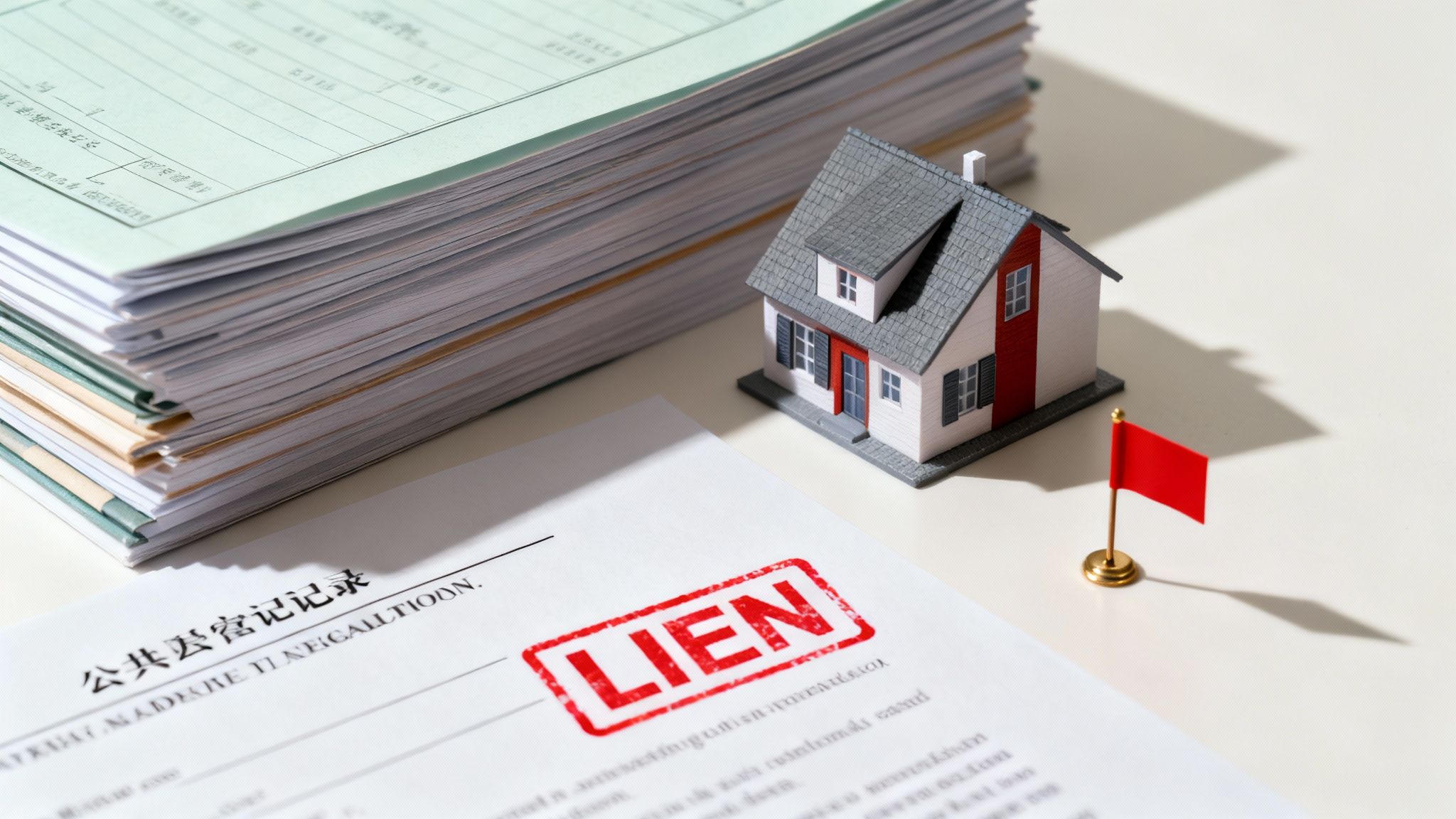
While the idea of title insurance can feel a bit abstract, the problems it protects you from are terrifyingly real. These "title defects" are like hidden landmines in your property's history that can detonate years after you’ve moved in, turning your dream home into a legal and financial nightmare.
Think of it this way: you just closed on a beautiful home. A few months later, a certified letter arrives. It’s from a contractor claiming the previous owner never paid them $20,000 for a kitchen remodel. They’ve slapped a mechanic’s lien on your property, and now, it's your problem.
This is a classic title defect. Without an owner's policy, you’d be on the hook for that bill or stuck in a costly legal fight just to clear your own title.
Hidden Heirs and Forged Signatures
Another surprisingly common issue involves unknown heirs. Let's say the person who sold you the home inherited it. But what if a long-lost sibling suddenly appears with a valid claim to the property? Your ownership is now in question, and you’re tangled in a legal mess that could potentially cost you the house.
And it gets worse. Outright fraud, like forged signatures on past deeds, can invalidate the entire chain of ownership. You might think you bought your home from the rightful owner, but a deep title search could reveal that a signature from a sale 30 years ago was faked. These are exactly the kinds of historical skeletons that only a thorough title search can uncover.
A clear title is the bedrock of property ownership. Any unresolved issue, no matter how small it seems, can create significant financial and legal challenges for the current owner. Protecting against these legacy problems is the core function of title insurance.
Clerical Errors and Boundary Disputes
Not all title problems come from drama or deception. Sometimes, it’s just simple human error. A county clerk could misfile a document, or a legal description might have a tiny typo, creating massive confusion about property lines. These small clerical mistakes can explode into serious boundary disputes with your neighbors.
For instance, you might build a new fence based on what you believe is your property line, only to find out a surveying error from decades ago means it's actually on your neighbor's land. Trying to resolve these disputes is expensive, stressful, and can poison neighborly relations for years.
Even well-intentioned moves, like adding a family member to your deed, can create issues. It's always wise to understand the potential title risks of adding a child to your home's title before making changes. Each of these scenarios highlights exactly why knowing what is title insurance is so critical. It’s not just another closing cost; it’s a crucial shield for your single biggest investment.
How the Title Insurance Process Works in California

So, how does title insurance actually come to be? It's not some mysterious document that just appears at closing. It’s the result of a structured investigation designed to protect everyone involved in the deal. This process transforms a property from a question mark into a secure asset you can confidently call your own.
The journey kicks off the moment you go under contract on a home. From that point, your escrow or title company gets to work, starting with the most important phase of all.
Step 1: The Title Search
Think of a title professional as a property detective. Their first mission is to perform a meticulous title search, which means digging through years—sometimes decades—of public records. They're on the hunt for any red flags that could come back to haunt you later.
This deep dive involves combing through records like:
- Deeds and Ownership Transfers: Is the chain of ownership clean and unbroken?
- Mortgages and Liens: Are there any outstanding debts tied to the property, like an old mortgage, unpaid contractor bills, or back taxes?
- Easements and Restrictions: Does a utility company or a neighbor have a legal right to use part of your land?
- Court Records: Could a past bankruptcy, divorce, or lawsuit affect your claim to the property?
This step is the foundation for everything that follows. It’s all about uncovering the property's complete history, warts and all.
Step 2: The Preliminary Report
Once the search is done, the title company issues a document called a preliminary report. You can think of this as a summary of their findings. It outlines the current state of the property’s title and lists any "exceptions"—basically, any problems that need to be fixed before a clear policy can be issued.
This report gives both you and your lender a heads-up about potential snags. It might reveal an old mortgage that was paid off but never officially removed from the records, or a tax lien that the seller needs to settle. These items have to be cleared up before you can close on the home, making this a critical part of the overall home-buying process.
Step 3: Issuing the Final Policy
After all the issues from the preliminary report are resolved, the title is considered “clean.” At your closing appointment, the title company will officially record the new deed in your name with the county and then issue the final title insurance policies.
You’ll pay a one-time premium, and in exchange, you get an owner's policy that protects you for as long as you or your heirs own the property. Your lender gets their own policy at the same time, securing their financial stake. This final step provides the legal and financial peace of mind that your new California home is truly, completely yours.
How Much Does Title Insurance Cost in California?
Alright, let's get down to the question on every homebuyer's mind: what is this actually going to cost me? Unlike your homeowner's insurance policy that sends you a bill every month, title insurance is a one-time premium you pay at closing. Think of it as a single investment for long-term peace of mind, not an ongoing expense.
The final number is tied directly to your home's purchase price—the more valuable the property, the higher the premium. This fee covers all the behind-the-scenes detective work, the cost of fixing any title clouds that pop up, and the final policy that protects your ownership rights for as long as you or your heirs own the home.
Cost Ranges in Major California Markets
In California's red-hot real estate market, where existing homes are selling fast, the cost of title insurance varies from city to city. From the trendy enclaves of Silver Lake and Venice in Los Angeles to the iconic streets of The Mission and Noe Valley in San Francisco, prices are a reflection of the local property values.
Here’s a ballpark idea of what you can expect for an owner's title insurance policy:
- Los Angeles & San Diego: For homes in vibrant areas like North Park or La Jolla, you might see costs land somewhere between $2,000 to $4,500 for a median-priced property.
- San Francisco Bay Area: With some of the highest property values in the country, it's no surprise that premiums here often range from $3,000 to $6,000, and sometimes more.
- Sacramento: In neighborhoods like East Sacramento or Land Park, costs are generally more moderate, often falling in the $1,500 to $3,500 range.
These are just estimates, of course, but they show you how the policy cost scales with the size of your investment. Title insurance is just one piece of the puzzle, and you can get a fuller picture by understanding mortgage closing costs and how they all fit together.
A Crucial Investment, Not Just Another Fee
It’s easy to look at this as just another fee tacked on at closing, but that’s the wrong way to think about it. It’s a critical, one-time investment in your financial security. Spending a few thousand dollars now gives you priceless protection against future legal headaches that could cost you tens of thousands of dollars and endless stress down the road.
The numbers show just how essential buyers find this protection. By the second quarter of 2025, the U.S. title insurance industry had already generated $4.5 billion in premiums, with California being a top state. This underscores just how vital this coverage is in securing real estate deals.
For a complete breakdown of all the fees you'll see at the closing table, check out our other resources on closing costs. Getting a handle on these expenses is a huge step toward a smooth and confident home-buying journey.
Turn Your Real Estate Expertise into a High-Income Career
If you found yourself genuinely interested in a topic like title insurance, you’re already one step ahead. That curiosity—the drive to understand the nuts and bolts of a real estate deal—is exactly what separates a good Mortgage Loan Originator (MLO) from a great one. It’s what allows you to guide homebuyers with real confidence.
A career as a Mortgage Loan Originator isn't just another job; it's a direct path to a high income where your earnings are a reflection of your effort. Imagine the freedom of working from home, naming your own hours, and earning commissions that reward your hard work. You could be helping families in vibrant markets like Los Angeles, San Diego, and San Francisco secure the keys to their dream homes.
Making the switch is easy with our help. Our NMLS-approved online education is designed to get you licensed without the hassle. We’ve bundled everything you need into one convenient package, and we even include our exam prep materials for free because we want you to succeed. The entire program is online and built to get you into your new career fast.
Let us help you turn that interest in real estate into a career that’s not only prosperous but also incredibly fulfilling. You can get started today and be on your way to helping others achieve the dream of homeownership, all while building a successful business for yourself. This is your chance to transform what you know into a high-earning profession with limitless potential.
Quick Answers to Your California Title Insurance Questions
Let's clear up some of the most common questions California homebuyers have about title insurance.
Is an Owner's Policy Really Necessary?
While the law doesn't force you to buy one, skipping an owner's policy is like leaving the front door to your investment wide open. It’s the only safeguard for your down payment and hard-earned equity against claims from the property's past. In a high-stakes market like California, from San Diego to Sacramento, it's a small one-time cost for huge peace of mind.
How Is the Premium Calculated?
It's a one-time fee you pay at closing, and the cost is tied directly to your home's purchase price. A higher price tag in markets like Los Angeles or San Francisco means a higher premium because the insurance company is taking on more financial risk.
What Happens if a Title Problem Pops Up After Closing?
This is precisely why you have an owner's policy. If a covered issue—like an old, unpaid contractor's lien or a surprise boundary dispute—surfaces after you've moved in, you just file a claim. The title company then takes over, handling the legal mess and paying the costs to defend your ownership.
Isn't Title Insurance Just Another Name for Homeowner's Insurance?
Nope, they’re two totally different things. Think of it this way:
- Homeowner's insurance protects you from future disasters like fires, break-ins, or a visitor slipping on your walkway.
- Title insurance protects you from ghosts of the property's past—things like forged signatures on old deeds or clerical errors in public records that happened long before you got the keys.
You absolutely need both, as they cover completely separate types of risk.
If you find the ins and outs of real estate deals like this fascinating, a career as a Mortgage Loan Originator could be a great fit. 24hourEDU offers an easy path to get started with NMLS-approved online education, including free exam prep to help you launch a high-income, work-from-home career. Learn more about our MLO licensing courses here.







11 Comments