


Which free career quiz will finally tell you what to do with your working life? None of them, and the fastest way to waste an afternoon is to keep taking them until one does.
That answer disappoints people. It also saves them weeks. A quiz sorts your preferences into patterns: it can tell you that you like persuasion more than solitary analysis, or that you'd rather review financial documents than manage a team of twelve. It cannot weigh your rent, your tolerance for risk, or the fact that you'd be good at a job you've never heard of.
The urge to look is real. In 2024, 28% of workers worldwide said they were likely to switch employers within the next 12 months, according to PwC's Global Workforce Hopes and Fears Survey. That's a lot of people typing "what is the best career for me quiz free" into a search bar late at night.
This guide compares ten free tools by what they measure, how long they take, and whether the result leads anywhere. One career surfaces far less often than it should, the Mortgage Loan Originator, and by the end you'll know how to test that idea against real job requirements instead of a personality label.
1. My Next Move and the O*NET Interest Profiler
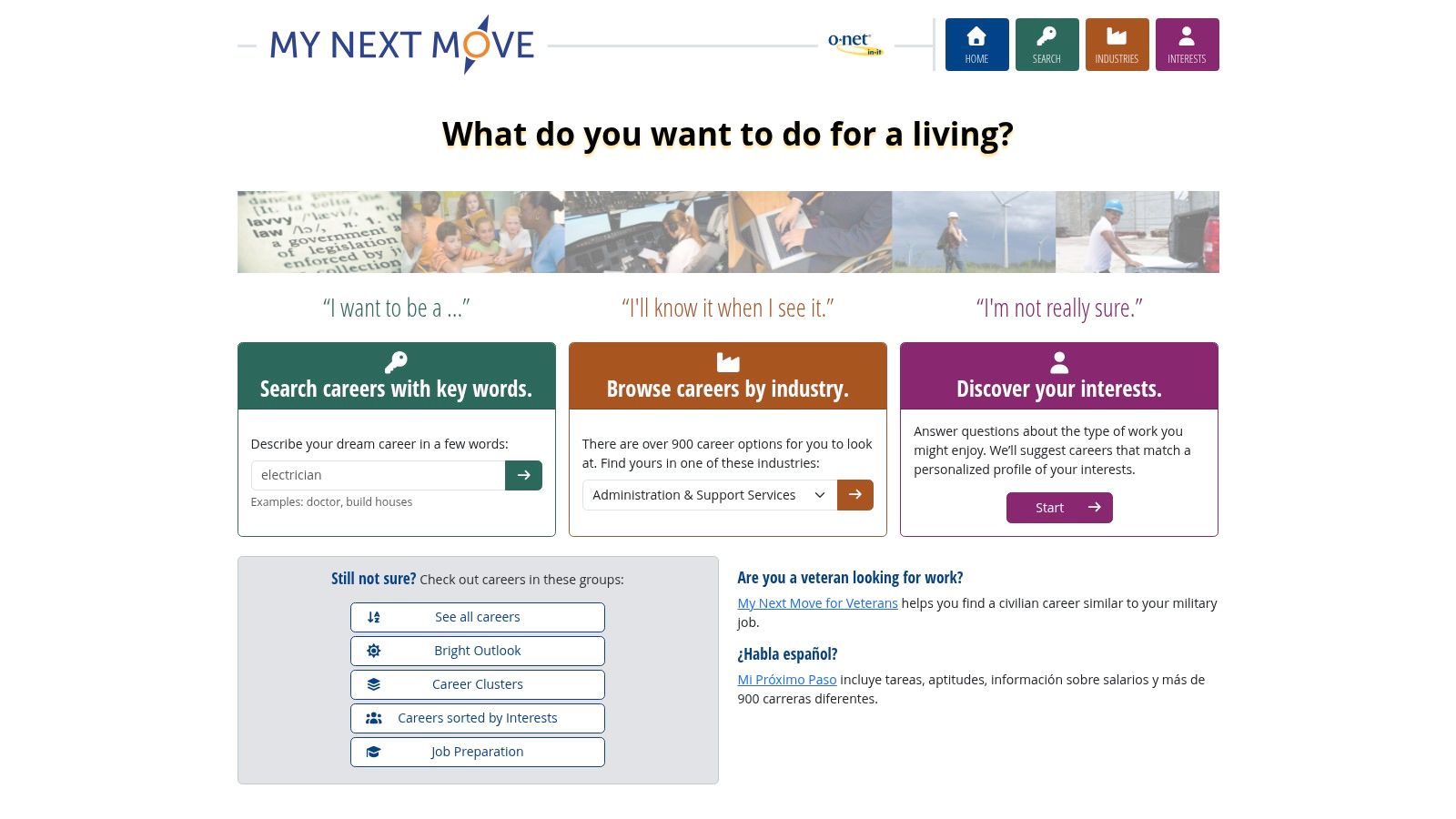
This is the tool I'd hand almost anyone first. It's free, it takes ten to twenty minutes, it doesn't ask for an email address, and it's run by the U.S. Department of Labor's O*NET program rather than an ad network.
You rate how much you'd enjoy everyday work activities, and your answers sort into the six Holland areas: Realistic, Investigative, Artistic, Social, Enterprising, and Conventional. Validation work on the profiler found very high internal consistency, with reliability estimates ranging from 0.93 to 0.96 across its interest scales, as documented in the O*NET Interest Profiler reliability and validity report. In plain terms, the questions hang together and measure steady underlying interests rather than noise.
Why the result is worth opening
Each occupation profile shows tasks, skills, typical education, wages, and outlook. That turns a label into a research list you can act on. Career search runs by interest area, industry, or occupation name, so you're not locked into one path of inquiry.
- Strength: free, U.S.-focused, and built for turning a score into actual occupation research.
- Strength: the results are grouped by how much training each job needs, which matters if you're watching costs.
- Weakness: it measures what you like, not what you can do. A high Enterprising score says nothing about whether you can sell.
- Weakness: the output is a prompt to explore, never a verdict.
Practical rule: treat your top two Holland areas as a filter on job titles, not as a description of your personality.
If Enterprising and Conventional come out on top, one path worth pricing out is the list of jobs you can hold with an MLO license. It's a short course and an exam away, not a four-year detour.
2. CareerOneStop Interest Assessment
CareerOneStop is the other federal tool, and it's built for people who want to compare more than one angle on themselves. The Interest Assessment runs 30 questions. If you want a fuller picture, the site also runs a Skills Matcher and a Work Values Matcher, so interests, abilities, and priorities can be checked against each other instead of one at a time.
The Department of Labor describes its O*NET framework as a whole-person approach that combines work interests, values, and abilities, then links results to more than 900 occupations with labor-market information attached, as the DOL's O*NET tools overview sets out. CareerOneStop draws on that same occupational data, which is why a suggestion arrives with wages, education requirements, and state-level employment numbers rather than a compliment.
Where it beats the flashier tests
Most free quizzes stop at a type. This one hands you a research file. You can look up what a job pays in your state, what training it needs, and whether openings are growing or shrinking, all in the same session.
Take the Interest Assessment and the Work Values Matcher on the same afternoon and notice where they disagree. A career that fits your interests but starves your values is the one people quit in year two.
The weakness is interpretation. Results come back as lists to browse, and nobody walks you through what they mean. If you want a clean recommendation, you'll have to build it yourself from the occupation pages.
3. CareerExplorer
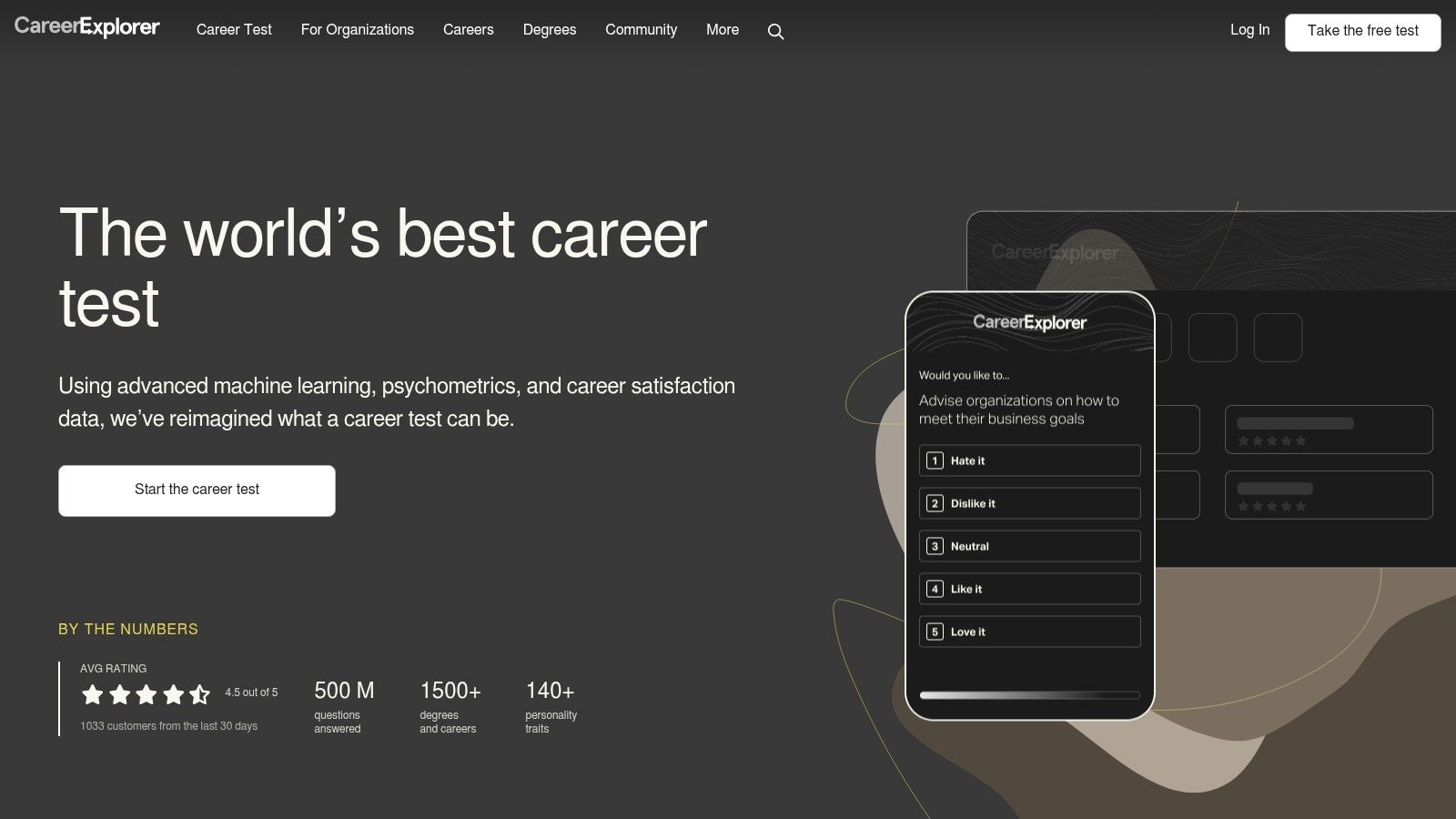
Thirty minutes is a long time for a free quiz, and CareerExplorer is one of the few that earns it. The assessment runs in multiple sections, mixes interest questions with work-preference items, and returns career matches, degree matches, and written insights about how you tend to operate.
Whether that extra depth pays off depends on what you're comparing it to. Short interest quizzes tell you where you might want to go. A longer assessment tries to tell you how you'd behave once you got there.
What good guidance looks like
The benchmark isn't a quiz score, it's whether the advice is personalized and backed by labor-market facts. In an OECD survey of adults across multiple countries, 75% of people who had received career guidance reported being satisfied or very satisfied, and 70% said their employment, education, or training status improved within six months, according to the OECD report on career guidance for adults. Those figures describe guidance services, not a single online quiz, so don't read them as proof that a test changes a life.
- Use it when: you've already taken a short interest quiz and want a second, longer read on the same question.
- Skip it when: you need an answer today and you haven't yet looked at wages for anything.
- Watch for: recommendations presented as matches. A match is a hypothesis, and it needs checking against the daily tasks.
The results are presented as free, including career matches and reports, which puts it ahead of tests that hide the useful half behind a checkout page.
4. 123test Career Test
If you want a second opinion on your Holland result without paying for one, 123test runs a career test built on the same six themes. It's a short, plain-spoken assessment that describes work environments and activities, and the site says tests can be taken anonymously without creating an account.
That anonymity matters more than it sounds. People answer more openly when they aren't building a profile that follows them around.
How to use it well
Run it after the O*NET profiler, not instead of it. If both tools point at the same two or three interest areas, you've got a pattern worth acting on. If they diverge, look at which questions you hesitated over, because hesitation carries information.
- Free: core results for selected tests, no login required.
- Paid: some extended reports and additional assessments carry a fee, so read what you're getting before you enter payment details.
- Best for: a quick cross-check when you don't trust a single result.
The limitation is the same one that runs through this whole category. Career suggestions are only as useful as the research you do afterward. Check training time, licensing, and local pay before you get attached to a title.
5. Truity Career Personality Profiler
Say you're 41, you've run a small insurance office for nine years, and you're done with it. An interest quiz might suggest sales, which is what you're already doing. What you need to know is which parts of the work drained you.
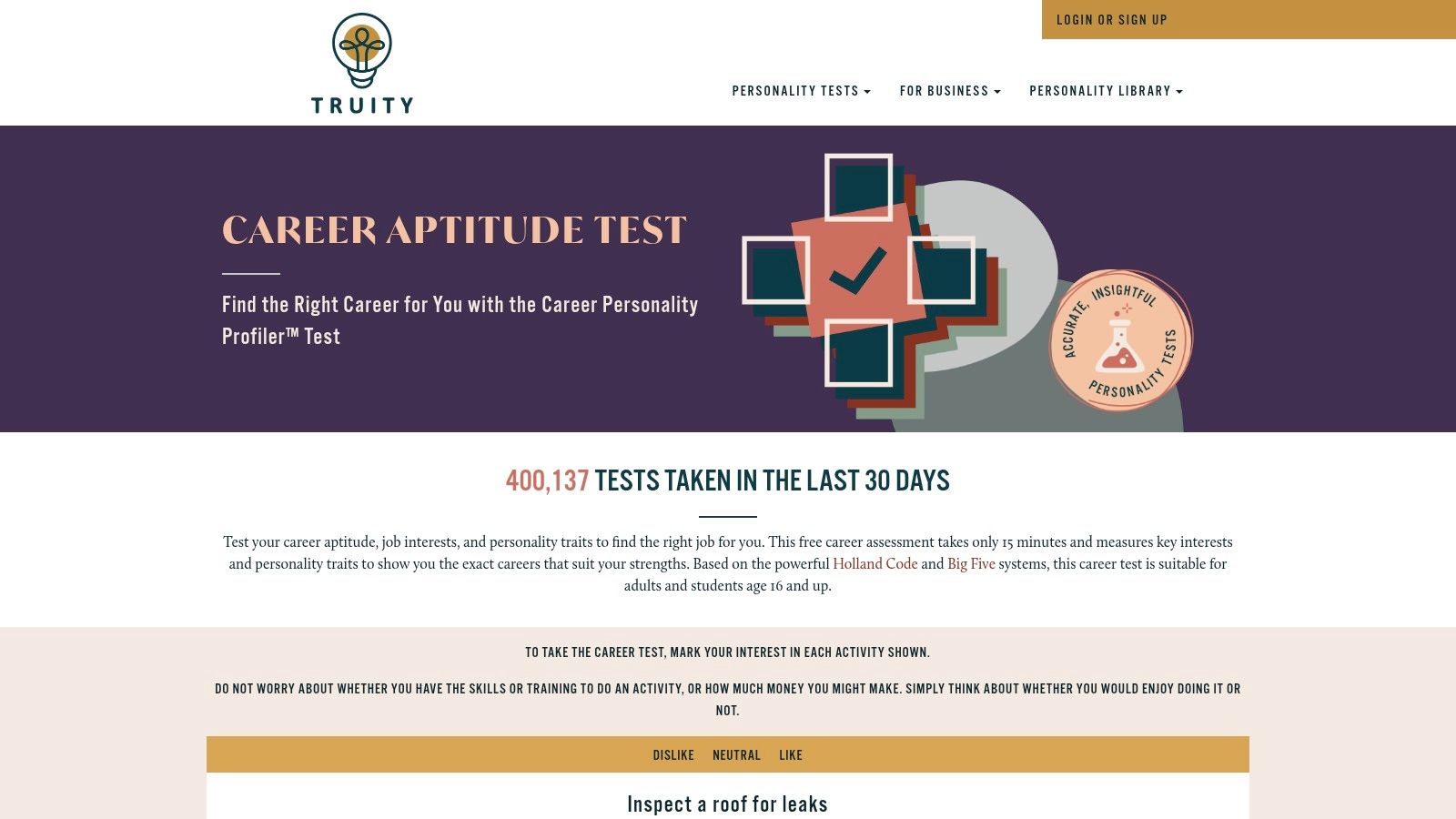
Truity earns its place here. The assessment combines a Big Five-style personality read with Holland-style career interests in a single sitting, so you get both angles from one tool. Results come back as a free summary with career recommendations, and a paid full report is available if you want the deeper trait breakdown.
Why mixing two models helps
Interests tell you what you'd choose. Personality traits tell you how you'd work once the novelty wears off. Someone who scores high on extraversion and Enterprising interests but low on conscientiousness has a very different mortgage career ahead of them than someone with the reverse profile, because the job is part document discipline and part conversation.
Read the trait scores, not just the job list. The list is a prompt. The traits tell you which parts of a job will cost you energy every week.
The free summary is enough to spot your pattern. Pay for the full report only if the trait scores raise questions the short version leaves open.
If the timing question is really the one keeping you stuck, the best career changes to make at 40 tend to be the ones that reuse skills you already have rather than starting from zero. Keep that in mind before you chase a match that requires three years of retraining.
6. Princeton Review Career Quiz
Some people need a tool they will finish. Princeton Review keeps this to a short set of activity-preference questions that takes only a few minutes, so it works when the bigger assessments feel like too much.
The profile is built across broad interest areas and draws on the same O*NET occupational categories the federal tools use, which keeps the vocabulary familiar if you move between quizzes. The output pairs career suggestions with college-program suggestions.
What the speed costs
A fast sort can separate broad likes, but it cannot always tell helping customers from winning them over. Those two patterns point toward different weeks at work.
Use it for motion; bring in a heavier tool for the decision. It suits students comparing programs and stalled career changers who need a first list. Adults with a long work history should treat the college framing as a prompt to investigate job tasks, pay, and licensing rather than a match.
7. BigFuture Career Quiz
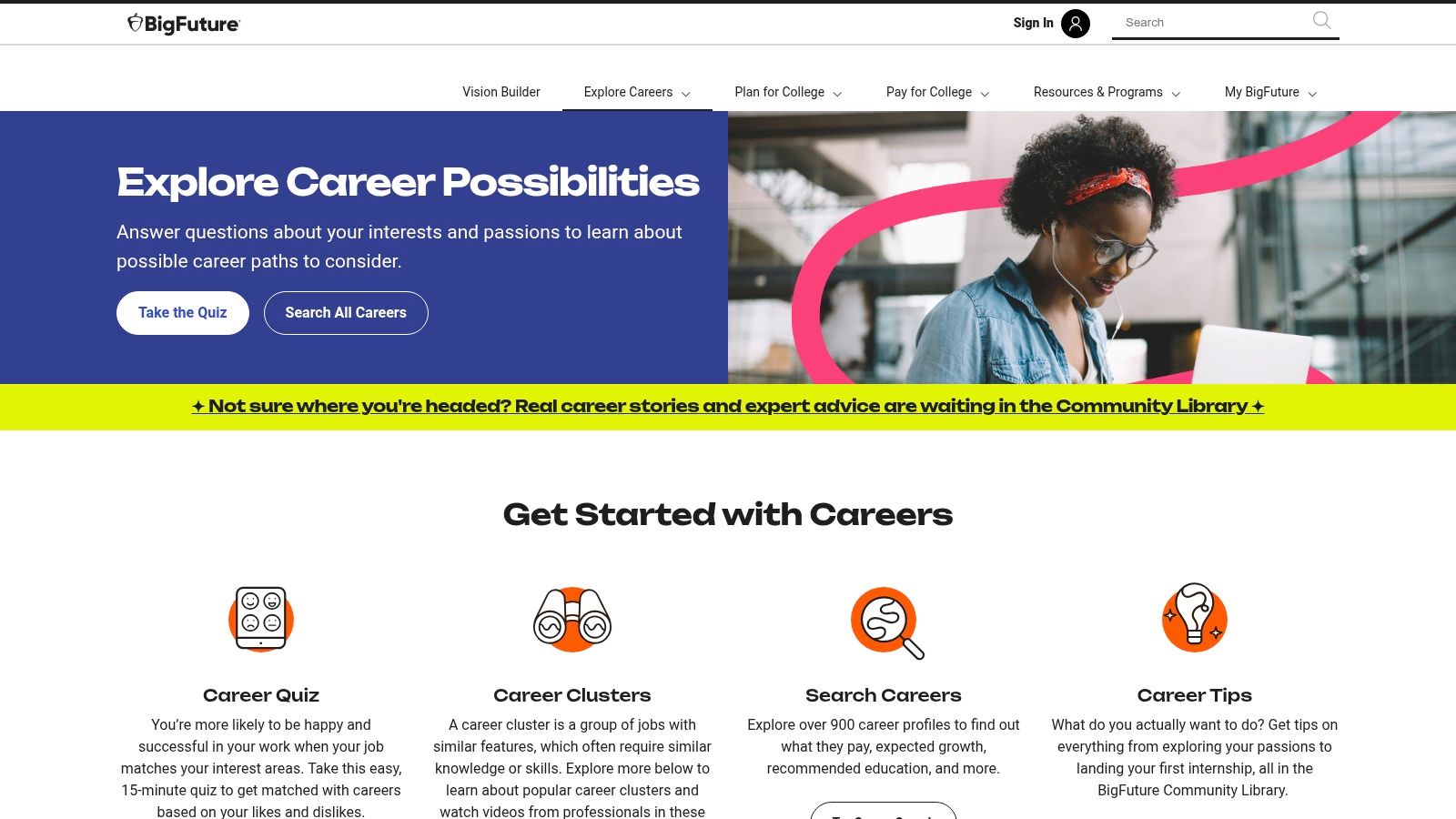
College Board's career quiz asks roughly 60 questions, takes about 15 minutes, and matches you with 30 careers to explore. An account is optional, which means you can take it and leave without building a profile.
The output is deliberately manageable. Thirty careers is enough to browse seriously and few enough that you won't drown.
Read the profiles, not the ranking
Each suggested career comes with details such as education and income. That's where the value sits, because it forces a comparison between what a job requires and what it pays.
- Strength: free, no sign-in, connected to a large career-search library.
- Strength: links career exploration to education planning, which suits anyone still deciding whether to enroll in anything.
- Weakness: designed primarily for students, so the framing assumes a first career, not a fourth one.
If you're 35 with a work history, take the results as titles to investigate rather than answers. Interest matching without a wage check is a hobby list.
8. CareerFitter Free Career Test
CareerFitter runs a short work-personality assessment and gives you a free summary of how you tend to operate at work. It's quick, it's painless, and the free version shows you enough to decide whether you want more.
The paid report is listed at $19.95 as a one-time payment, not a subscription. That's a fairer structure than most, though it does mean the detailed career-matching features sit behind the paywall.
When paying is worth it
Almost never as a first step. If you've taken two free assessments and the results point in the same direction, you don't need a third paid opinion. You need to look up what the job pays and what it takes to get licensed.
Spend money on training before you spend it on another test. A course changes what you can do. A report changes what you think about what you can do.
Use the free summary as a check on your work style: whether you're the person who wants a defined process or the person who wants to be turned loose. That distinction matters more in commission work than any personality label.
9. HIGH5 Strengths Test
This isn't a career test, and that's the point of including it. HIGH5 identifies five strengths from your responses, in an untimed format, and the basic results are free.
Strengths results answer a question interest tests ignore. Not what you'd enjoy, but what you'd be useful at on a bad day.
The sentence to write down
After you finish, complete this line: "I'm the person who ___ when a project goes sideways." That answer is what you say in an interview, and it's more persuasive than "I'm an ENFP."
- Free: your five strengths.
- Paid: deeper reports and coaching.
- Limitation: no job list, no labor-market data, no next step unless you build one.
Compare your strengths against the actual tasks of a shortlisted job. If the role is mostly solo analysis and your top strength is winning people over, the fit is wrong no matter what the label says.
10. CareerOneStop Skills Matcher
Here's the tool most career changers skip, and it's usually the one they needed. The Skills Matcher asks you to rate your own level on a list of work skills, then lists occupations that use the ones you scored highest. It measures capability rather than preference.
That difference matters more now than it used to. Employers have been steadily putting more weight on demonstrated skills and hands-on experience, and less on degrees alone. A tool that starts from what you can already do shortens the path into a new field, because it shows you which gaps are real and which ones exist only on paper.
Where experience converts into a new career
Sales, customer service, administration, property management, notary work, and financial-document handling all transfer into mortgage origination. What doesn't transfer automatically is the licensing, the regulatory discipline, and the tolerance for rejection that commission work demands.
- Strength: ideal for career changers with a work record and no fresh credential.
- Strength: pairs naturally with the Interest Assessment and the Work Values Matcher.
- Weakness: it won't tell you whether you'd enjoy the work, and self-ratings are only as good as your honesty.
Run the results against training requirements before you commit. If your scores cluster around financial and persuasive skills, compare your matches against the highest paying finance jobs to see where the ceiling sits.
How the 10 Free Career Quizzes Compare at a Glance
| Item | Time Required | Cost | Best For | Results Format |
|---|---|---|---|---|
| My Next Move, O*NET Interest Profiler | Not specified | Free | Exploring U.S. careers by interest | Occupation suggestions and career profiles |
| CareerOneStop Interest Assessment | 30 questions; time not specified | Free | Comparing interests, skills, and work values | Career matches and occupation profiles |
| CareerExplorer | About 30 minutes | Free for matches, insights, and reports | In-depth career and degree exploration | Career and degree matches, insights, and reports |
| 123test Career Test | Not specified | Selected tests free; extended reports may be paid | Exploring Holland Code work preferences | Career suggestions and optional extended reports |
| Truity Career Personality Profiler | About 10–15 minutes | Free summary; full report optional and paid | Exploring career fit through personality and interests | Summary and career recommendations; optional full report |
| Princeton Review Career Quiz | About 5–10 minutes | Free | Students beginning career exploration | Interest profile, career suggestions, and college-program suggestions |
| BigFuture Career Quiz | About 15 minutes | Free | Students connecting career and education planning | Matches with 30 careers and career profiles |
| CareerFitter Free Career Test | Short; exact time not specified | Free summary; paid report listed at $19.95 | Quick work-personality exploration | Limited free summary or detailed paid report |
| HIGH5 Strengths Test | Untimed | Basic results free; reports and coaching optional and paid | Reflecting on personal strengths and work preferences | Five-strength results; optional reports and coaching |
| CareerOneStop Skills Matcher | Not specified | Free | Career changers identifying transferable skills | Skills-based occupation suggestions |
Your Quiz Result Is a Starting Point, and a Mortgage Career Could Be Next
Take two or three of these tools, not ten. Compare where the results overlap, shortlist two occupations that show up more than once, and then verify each one against wages, education requirements, and outlook before you spend a dollar on training. A result that survives that check is worth acting on. A result that doesn't was still useful, because it saved you a year.
Mortgage Loan Originator survives that check better than many expect. The BLS occupational outlook for loan officers puts 2025 median pay at $76,690 and lists a bachelor's degree as the typical entry-level education, while projecting employment growth of 1% from 2025 through 2035, slower than the average for all occupations. Modest growth doesn't mean no opportunity, since replacement hiring, regional lending cycles, and individual production drive real prospects far more than the national number does.
The work itself is specific. State regulatory materials define the activity as taking a residential mortgage loan application, or offering or negotiating the terms of a residential mortgage loan for compensation or gain, as the CSBS licensing reference on MLO activity describes it. That's narrower and more regulated than a generic sales job.
The questions people actually ask
Can I work from home? Yes. Many originators work from a home office and meet clients by phone and video, and remote-friendly roles are common in the field.
Can I set my own hours? Many MLOs manage their own schedules around client needs and production goals, which is one reason the role attracts parents, caregivers, and people leaving rigid shift work.
Is income unlimited? No income is guaranteed, and you should be skeptical of anyone who says otherwise. Pay is typically commission-based, so earnings track production. Federal rules also restrict how compensation works: it can be tied to a percentage of the loan amount, but not to the interest rate or other loan terms, per the mortgage examination manual on loan originator compensation. You can't boost your own pay by raising a borrower's rate.
Do I need a degree or prior experience? Not for the license. The federal SAFE Act baseline is 20 hours of approved pre-licensing education, a national test with a minimum score of 75%, and 8 hours of approved continuing education every year, plus NMLS registration, credit report authorization, and an FBI background check, as the CSBS annual report on SAFE licensing sets out. You do need a sponsoring employer, and states can add their own requirements.
That's a short path compared with a degree, which is why so many people move into it after a quiz tells them they like persuading people and organizing documents. If you want to explore career paths that fit your values before committing, do it this week rather than this year. Then check the licensing requirements for your state on NMLS. 24hourEDU delivers the 20-hour SAFE course online, with the Exam Prep Course included free (1,000+ practice questions and a study guide), an e-textbook, and flexible start dates, and we hold NMLS approval under Provider ID 1405107.
Ready to turn a quiz result into a license? 24hourEDU's NMLS-approved 20-hour SAFE course is delivered entirely online, includes the Exam Prep Course free with 1,000+ practice questions and a study guide, and lets you start today or pick a future date that fits your week. You can finish in two weeks or less, then walk into the national exam knowing how the questions are worded. Visit 24hourEDU to enroll and start your Mortgage Loan Originator career.